
We are happy to announce the two winners of this year’s Dissertation Fellowships, Ruixue Hu and Flannery McIntyre.
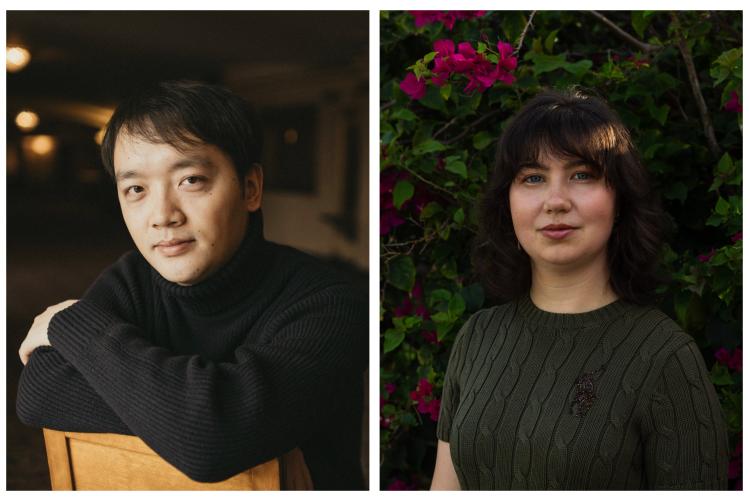
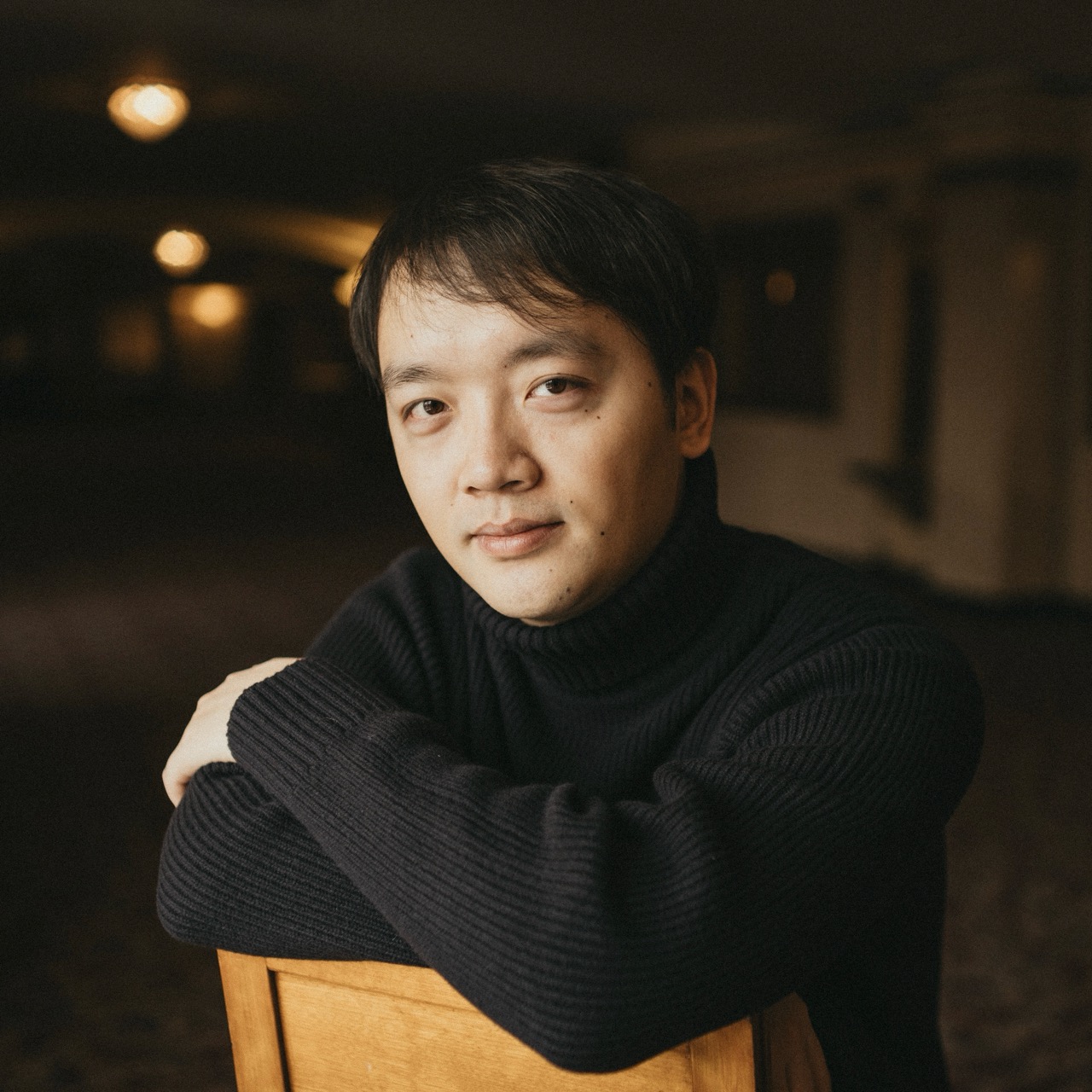
Ruixue Hu
Eastman School of Music
Bio
Ruixue Hu is a Ph.D. Candidate and Graduate Teaching Assistant in Music Theory at the Eastman School of Music. Focusing on East Asian music, historical and contemporary, his research explores form, kinesthetics, and the intersection of music and language. His work on the qin has been supported by the Presser Foundation and the American Musicological Society. His syllabus, “Engaging with Timbre,” received an Honorable Mention for SMT’s Diversity Course Design Award. A current co-chair of SMT’s Analysis of World Musics Interest Group, Ruixue holds a B.A. in Composition from the Chinese University of Hong Kong and an MMus from Durham University.
"Harmony in Diversity 和⽽不同: Theorizing Form, Performance, and Aesthetics in Traditional Qin Music"
Dissertation summary
Using the Chinese philosophical concept of “harmony” as a thread, my dissertation takes form as a pivot for insights into organology, kinesthetics, and aesthetics in traditional qin music. One of the oldest Chinese chordophones, the qin boasts a vast traditional repertoire preserved in jianzipu減字譜, a tablature using elements of Chinese characters. First, I theorize how the course of the hands, as directed by jianzipu, connects the qin’s performative and musical spaces. Second, I conduct a pioneering corpus study of four of the earliest surviving jianzipu anthologies from the Ming Dynasty (1368–1644 CE), including Shenqi Mipu 神奇秘譜 (1425) and Xilutang Qintong 西麓堂琴統 (1525), to gain empirical knowledge of qin musical form, from articulations and phrases to large-scale forms. Discussing the various ways the qin embodies and symbolizes “harmony” within and beyond its dynamic musical forms and performance, I also reflect on its role as a source for the study of the history of music theory in ancient China.
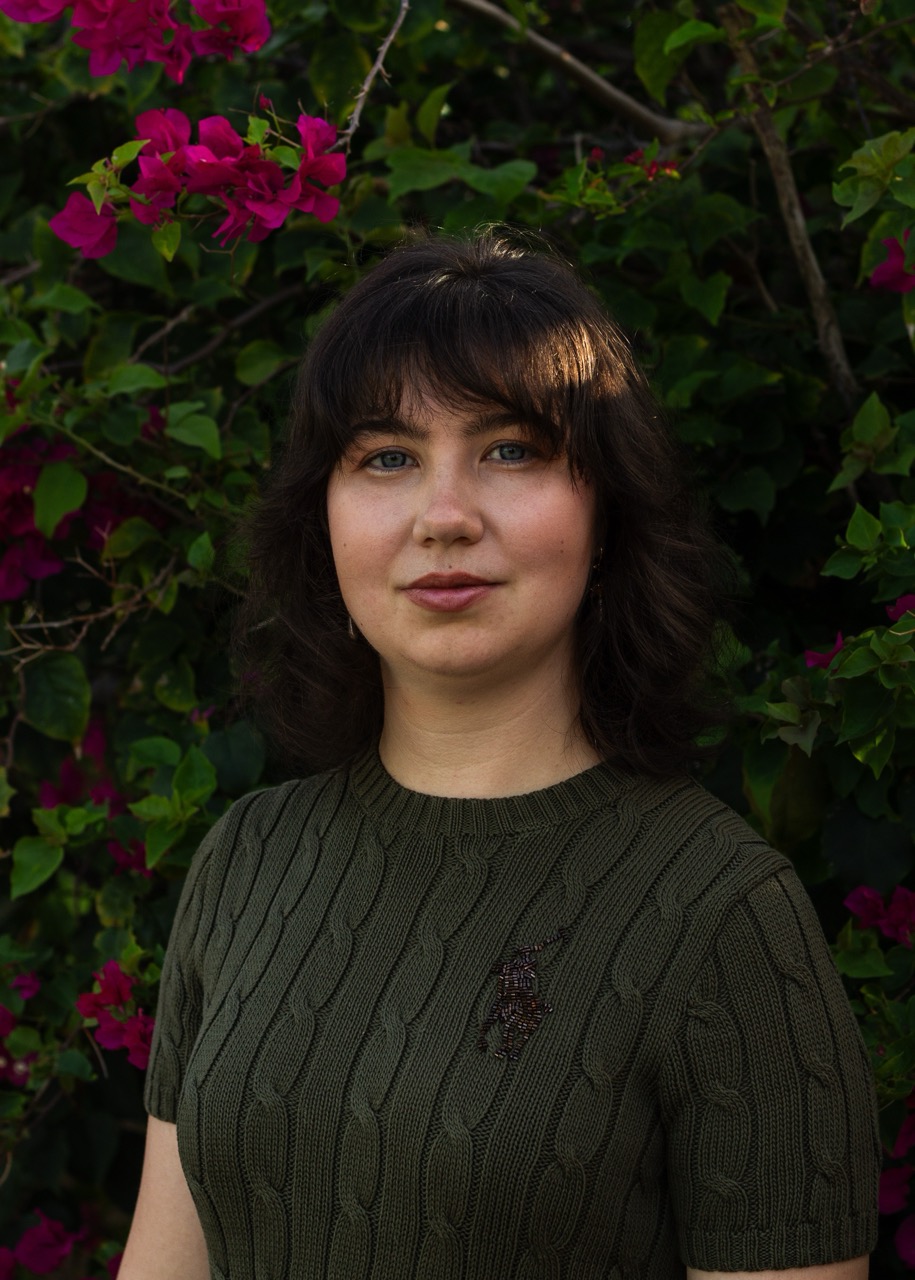
Flannery McIntyre
University of California, Berkley
Bio
Flannery McIntyre is a PhD candidate in musicology and medieval studies at the University of California, Berkeley. She has presented her work at the AMS-SMT Joint Annual Meeting, the Medieval and Renaissance Music Conference (MedRen), the Leeds International Medieval Congress, and the Congress on Medieval Studies. Her research has been supported by grants from the American Musicological Society and the Medieval Academy of America. She holds an A.B. in Archaeology and the Ancient World, Medieval Cultures, and Music from Brown University, and a MPhil in Medieval Archaeology from the University of Cambridge, where she received a fellowship from the Cambridge Trust in partnership with Newnham College.
"Music and the Materiality of Knowledge in Late Antiquity and the Early Middle Ages"
Dissertation summary
My project proposes an alternative narrative for the role of music in Late Antique and Early Medieval culture. Whereas music in this period (fourth to tenth century) has traditionally been understood as a precursor to the liturgical standardization and the development of music notation in the ninth century, such a teleological focus obscures many other facets of musical activity that flourished in the preceding centuries. This emphasis is all but inevitable given previous scholars’ concentration on textual readings and musical reconstruction. My approach, by contrast, centers material culture, allowing for a larger and more eclectic source base, which, in turn, allows me to ask a more varied set of questions. Through these materials, which include canonical music sources alongside historical, literary, and archaeological materials not previously studied by musicologists, I show that music was used as a tool for scientific inquiry, a means of political legitimization, a way to establish women’s intellectual authority, and a bridge between classical and medieval intellectual traditions. While scholars have long since stopped pejoratively referring to this period as “the dark ages,” its effects on musical scholarship are still palpable. My dissertation dispels this myth of a musical and intellectual lack, illuminating the richness and multivalence of early medieval music.