Image


Volume 49, Issue 2
The SMT Newsletter is posted online in February and August. The Newsletter features information on national and regional theory conferences, awards, calls for papers and articles, grant and fellowship information, and general news about people in the field.
The Society for Music Theory's 49th Annual Meeting is coming to Milwaukee, Wisconsin this November 5–8. More than 650 music theorists from colleges, universities, and conservatories around the world will gather for four days of connection, collaboration, and exploration of new directions in music research and practice.
SMT's 1,200-member community spans academics, graduate students, and professionals at the forefront of music theory in higher education. This year's meeting features 150+ presentations alongside workshops, receptions, small-group meetings, and plenty of opportunities to forge meaningful connections. Whether you're faculty, a graduate student, publisher, or administrator, this is where your field comes together.
The city and hotel have helpful webpages that list events, nearby restaurants, parks, shopping, and more. Visit the Hyatt Regency or the Visit Milwaukee websites to learn more.
Information about the conference can be found on the joint conference website.
The Hyatt Regency has reserved a block of rooms for conference attendees. Rates start at $179/night and reservations may be made here.
Using the conference room block at this hotel helps us meet our contractual obligations and keeps you close to all conference activities.
Registration is open and available on the conference website.
In exchange for 6.5 hours of service, Annual Meeting volunteers receive complimentary registration to the conference. Volunteers must be current SMT student members. The deadline to apply is September 8, 2026. Apply now!
Every effort will be made to meet the unique requirements of all attendees. For specific needs or questions please e-mail smt@societymusictheory.org.
Reach a targeted audience of music theorists by exhibiting and advertising at this year's meeting. Reserve your exhibit booth and program guide ad by September 18.
Organize a party or session of up to two hours at the Annual Meeting to feature your program or service. Reserve your session by September 18 and begin planning your event!
Judith Lochhead
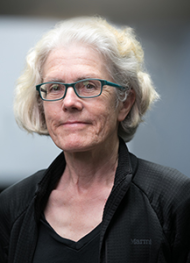
Greetings SMT Colleagues,
I hope you all have had and are continuing to have a restorative and productive summer. I look forward to seeing colleagues and hearing your latest work in music-theoretical research and innovative approaches to music theory pedagogy at the upcoming Annual Meeting in Milwaukee. I want to thank the 2026 Program Committee for all its hard work in putting together this program. Thanks go to Chelsea Burns (Chair), William Ayers, Alyssa Barna, Inessa Bazayev, Dan Shanahan, August Sheehy, Naomi Walthan-Smith, and Jon Wild.
Over the last… Read More
Greetings SMT Colleagues,
I hope you all have had and are continuing to have a restorative and productive summer. I look forward to seeing colleagues and hearing your latest work in music-theoretical research and innovative approaches to music theory pedagogy at the upcoming Annual Meeting in Milwaukee. I want to thank the 2026 Program Committee for all its hard work in putting together this program. Thanks go to Chelsea Burns (Chair), William Ayers, Alyssa Barna, Inessa Bazayev, Dan Shanahan, August Sheehy, Naomi Walthan-Smith, and Jon Wild.
Over the last several months, I, along with the Executive Board, have been focused on establishing the Student Advisory Committee and planning for the SMT 50th Anniversary Meeting in Baltimore, MD in November 2027. Our thinking about the organization and role of the Student Advisory Committee is coming into focus, and the Board looks forward to establishing formal channels of communication with our student membership. An SMT 50 Anniversary Planning Committee is meeting over the summer to plan activities both to commemorate the founding of the Society for Music Theory and to map out the directions we collectively envision for an inclusive and vibrant society of music theorists.
In June 2026, the Development Committee kicked off the second annual Incorporation Day Campaign. Founding SMT Treasurer Mary Wennerstrom, Professor Emerita at Indiana University, generously added $25 to each donation of $5 or more, to a maximum of 300 donations. This initiative has been very successful. Thanks go to Mary Wennerstrom for her visionary work and her steadfast support of SMT. Thanks also go to members of the Development Committee—Chris Seagall (Chair), Leah Frederick, Sarah Iker, Evan Tanovich, and Jennifer Diaz—who reminded us of the importance of all donations, no matter how small.
The 2026 Incorporation Day Campaign raised $20,469 through the generous support of Mary Wennerstrom. These donations contribute to SMT’s family care, accessibility, travel grants, dissertation fellowships, open-access publications, and more. Thanks to Mary and to all who contributed.
In addition to my appreciation of the monetary support of members of the Society, I want also to thank those members of the Society who volunteer to serve on our Executive Board, our ad hoc and Standing Committees, and our publications, including Music Theory Spectrum, Music Theory Online, SMT-V, SMT-POD, and the SMT Newsletter. If any member of the Society has an interest in serving on one of our many committees, please feel free to contact me at president@societymusictheory.org.
This fall, we will welcome new members of the Executive Board: Nancy Rogers, president-elect; Táhirih Motazedian, treasurer; Chris Seagall and Orit Hilewicz, members-at-large to the Board. We will also heap praise on those leaders of SMT who are cycling off the Board: Jan Miyake, past-president; Nora Engebretsen, treasurer; and Horace Maxile and Melissa Hoag, members-at-large.
Finally, I thank past-president Jan Miyake who is spearheading a Climate Study of our field. As Jan writes, the goals of this climate study “are to better understand the degree to which members feel a sense of belonging in the field and within the Society, identify factors that contribute to member attrition, and collect concrete data about workloads, compensation, and contract structures.” Please keep a look-out for future communication from Jan and her task-force.
Feel free to contact me with your ideas and concerns.
Greetings SMT Colleagues,
I hope you all have had and are continuing to have a restorative and productive summer. I look forward to seeing colleagues and hearing your latest work in music-theoretical research and innovative approaches to music theory pedagogy at the upcoming Annual Meeting in Milwaukee. I want to thank the 2026 Program Committee for all its hard work in putting together this program. Thanks go to Chelsea Burns (Chair), William Ayers, Alyssa Barna, Inessa Bazayev, Dan Shanahan, August Sheehy, Naomi Walthan-Smith, and Jon Wild.
Over the last several months, I, along with the Executive Board, have been focused on establishing the Student Advisory Committee and planning for the SMT 50th Anniversary Meeting in Baltimore, MD in November 2027. Our thinking about the organization and role of the Student Advisory Committee is coming into focus, and the Board looks forward to establishing formal channels of communication with our student membership. An SMT 50 Anniversary Planning Committee is meeting over the summer to plan activities both to commemorate the founding of the Society for Music Theory and to map out the directions we collectively envision for an inclusive and vibrant society of music theorists.
In June 2026, the Development Committee kicked off the second annual Incorporation Day Campaign. Founding SMT Treasurer Mary Wennerstrom, Professor Emerita at Indiana University, generously added $25 to each donation of $5 or more, to a maximum of 300 donations. This initiative has been very successful. Thanks go to Mary Wennerstrom for her visionary work and her steadfast support of SMT. Thanks also go to members of the Development Committee—Chris Seagall (Chair), Leah Frederick, Sarah Iker, Evan Tanovich, and Jennifer Diaz—who reminded us of the importance of all donations, no matter how small.
The 2026 Incorporation Day Campaign raised $20,469 through the generous support of Mary Wennerstrom. These donations contribute to SMT’s family care, accessibility, travel grants, dissertation fellowships, open-access publications, and more. Thanks to Mary and to all who contributed.
In addition to my appreciation of the monetary support of members of the Society, I want also to thank those members of the Society who volunteer to serve on our Executive Board, our ad hoc and Standing Committees, and our publications, including Music Theory Spectrum, Music Theory Online, SMT-V, SMT-POD, and the SMT Newsletter. If any member of the Society has an interest in serving on one of our many committees, please feel free to contact me at president@societymusictheory.org.
This fall, we will welcome new members of the Executive Board: Nancy Rogers, president-elect; Táhirih Motazedian, treasurer; Chris Seagall and Orit Hilewicz, members-at-large to the Board. We will also heap praise on those leaders of SMT who are cycling off the Board: Jan Miyake, past-president; Nora Engebretsen, treasurer; and Horace Maxile and Melissa Hoag, members-at-large.
Finally, I thank past-president Jan Miyake who is spearheading a Climate Study of our field. As Jan writes, the goals of this climate study “are to better understand the degree to which members feel a sense of belonging in the field and within the Society, identify factors that contribute to member attrition, and collect concrete data about workloads, compensation, and contract structures.” Please keep a look-out for future communication from Jan and her task-force.
Feel free to contact me with your ideas and concerns.
Stephen Rodgers
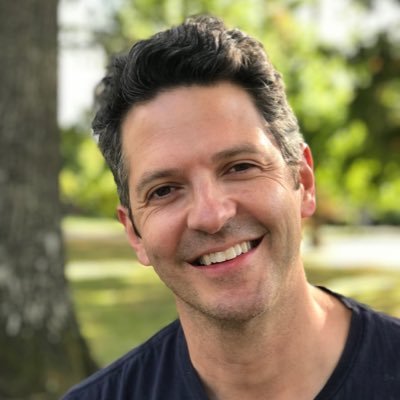
The Subventions Committee will meet in August to review applications for the SMT Subvention Grants. These grants are intended to assist with publication expenses and occasionally with organizing conferences or workshops. The deadline for applications is August 3. I thank the Subvention Committee (Amy Fleming, David Heetderks, Gordon Root, and Olga Sánchez-Kisielewska) for their service on this important committee.
One of the main jobs of the Vice President is to serve as the liaison with the Interest Groups and Regional Societies. The Interest Group chairs have been… Read More
The Subventions Committee will meet in August to review applications for the SMT Subvention Grants. These grants are intended to assist with publication expenses and occasionally with organizing conferences or workshops. The deadline for applications is August 3. I thank the Subvention Committee (Amy Fleming, David Heetderks, Gordon Root, and Olga Sánchez-Kisielewska) for their service on this important committee.
One of the main jobs of the Vice President is to serve as the liaison with the Interest Groups and Regional Societies. The Interest Group chairs have been preparing their sessions for our Annual Meeting in Milwaukee. I’ll be meeting with them in July, with the aim of drafting a policy related to creating (and also sunsetting) Interest Groups. I’m hoping that this will allow us to develop a smoother and more transparent process, and also to help us as we continue to manage the growing number of Interest Groups.
In May, I met with the Regional Society presidents. We discussed a number of topics: strategies for making conferences more welcoming to students, especially undergraduate students; pedagogical “think tanks” with local high school and/or community college teachers; workshops that allow for more dialogue among conference participants; etc. We’ve created a repository of resources that we can add to and draw upon as we plan future regional meetings. We also discussed the idea of sharing updates about past conferences not only via the SMT Newsletter but also perhaps on the SMT homepage. This could include short videos, photographs, etc.—something that would be visually engaging and would show the creative things happening at these regional meetings. Stay tuned!
If you have any questions, comments, or suggestions feel free to e-mail me at vicepresident@societymusictheory.org.
It’s been an honor to serve the Society in my first year as Vice President, and I’m excited about what's in store for year two. Many thanks to those of you who have worked so generously with me and supported the Society in countless ways over the past year.
The Subventions Committee will meet in August to review applications for the SMT Subvention Grants. These grants are intended to assist with publication expenses and occasionally with organizing conferences or workshops. The deadline for applications is August 3. I thank the Subvention Committee (Amy Fleming, David Heetderks, Gordon Root, and Olga Sánchez-Kisielewska) for their service on this important committee.
One of the main jobs of the Vice President is to serve as the liaison with the Interest Groups and Regional Societies. The Interest Group chairs have been preparing their sessions for our Annual Meeting in Milwaukee. I’ll be meeting with them in July, with the aim of drafting a policy related to creating (and also sunsetting) Interest Groups. I’m hoping that this will allow us to develop a smoother and more transparent process, and also to help us as we continue to manage the growing number of Interest Groups.
In May, I met with the Regional Society presidents. We discussed a number of topics: strategies for making conferences more welcoming to students, especially undergraduate students; pedagogical “think tanks” with local high school and/or community college teachers; workshops that allow for more dialogue among conference participants; etc. We’ve created a repository of resources that we can add to and draw upon as we plan future regional meetings. We also discussed the idea of sharing updates about past conferences not only via the SMT Newsletter but also perhaps on the SMT homepage. This could include short videos, photographs, etc.—something that would be visually engaging and would show the creative things happening at these regional meetings. Stay tuned!
If you have any questions, comments, or suggestions feel free to e-mail me at vicepresident@societymusictheory.org.
It’s been an honor to serve the Society in my first year as Vice President, and I’m excited about what's in store for year two. Many thanks to those of you who have worked so generously with me and supported the Society in countless ways over the past year.
Mitchell Ohriner
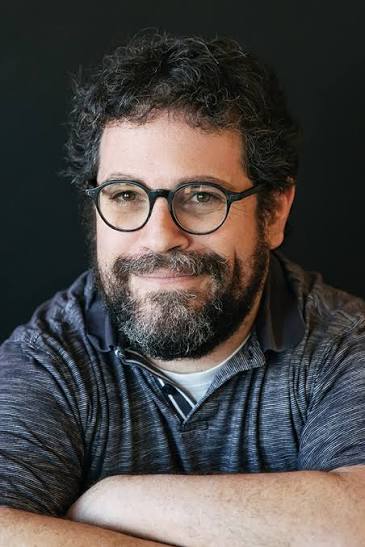
It is my pleasure to communicate the following motions passed by the SMT Executive Board since my last report in February, including those passed at Board meetings in January, March, and May of this year. These motions were all passed by unanimous consent.
At all three meetings, the Board approved the Consent Agenda, which includes the minutes and officer reports. In March, the Board passed a motion to clarify how appeals of Editors' decisions in the Society’s publications should be handled. The motion reads as follows: “If an author wishes to appeal an editorial decision of a Society… Read More
It is my pleasure to communicate the following motions passed by the SMT Executive Board since my last report in February, including those passed at Board meetings in January, March, and May of this year. These motions were all passed by unanimous consent.
Wishing all a good start to the school year,
—Mitch Ohriner, Secretary, 2025–2028
It is my pleasure to communicate the following motions passed by the SMT Executive Board since my last report in February, including those passed at Board meetings in January, March, and May of this year. These motions were all passed by unanimous consent.
Wishing all a good start to the school year,
—Mitch Ohriner, Secretary, 2025–2028
Nora Engebretsen
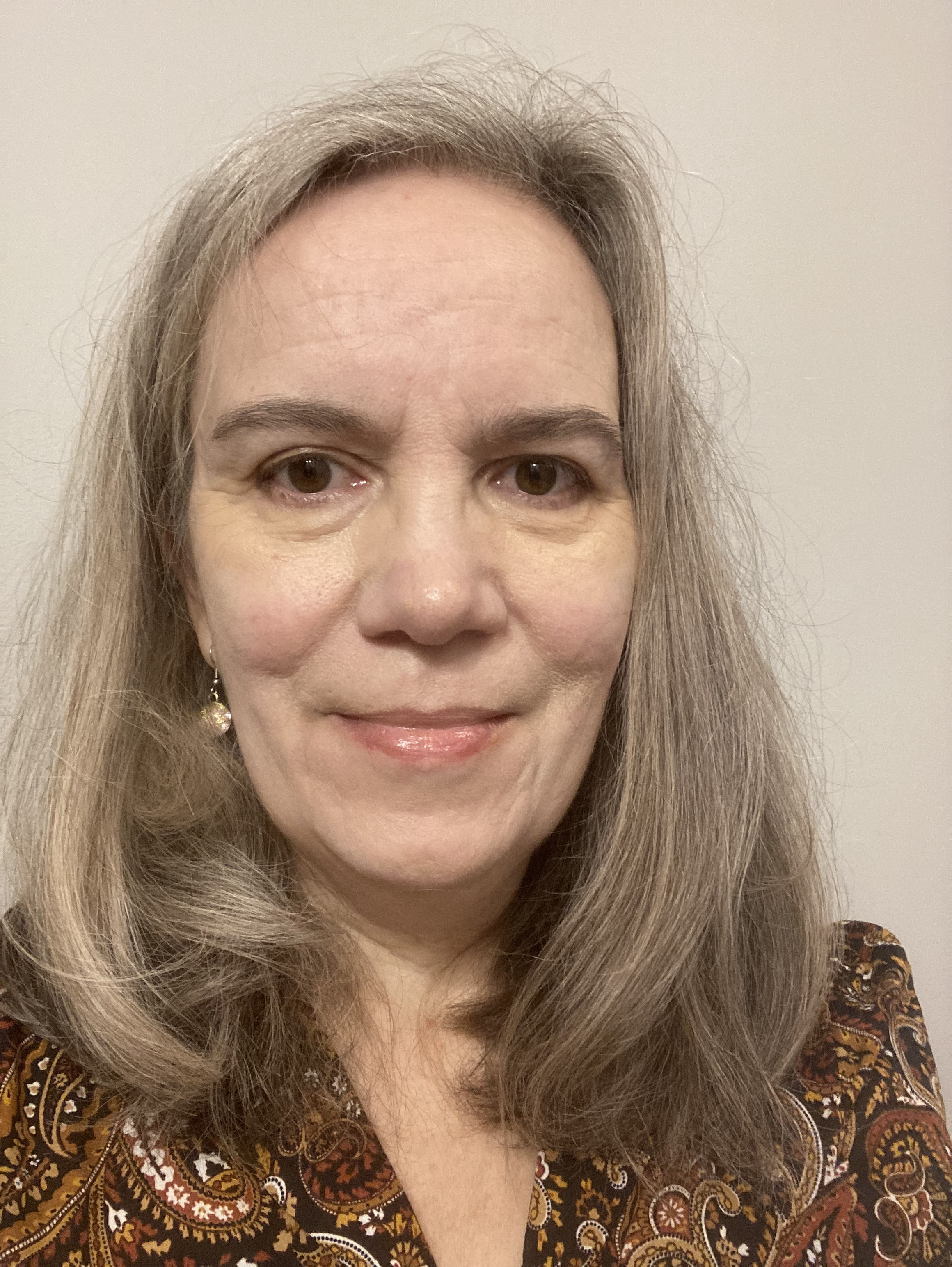
Our final 2025 budget statement, which shows 2024 and 2025 actuals alongside our 2026 budget, is provided here for your review. The news from 2025 is generally positive. Notably, we ended the year with a net surplus of over $8,500—a marked improvement over the $50,000 deficit projected in the 2025 budget process. Expenditures decreased slightly, in part due to lower payment-processing fees incurred in the joint-meeting year (included in line 9), but the more significant contributions to the surplus came from the income side of the ledger. Increases in our 2025 income included a partial… Read More
Our final 2025 budget statement, which shows 2024 and 2025 actuals alongside our 2026 budget, is provided here for your review. The news from 2025 is generally positive. Notably, we ended the year with a net surplus of over $8,500—a marked improvement over the $50,000 deficit projected in the 2025 budget process. Expenditures decreased slightly, in part due to lower payment-processing fees incurred in the joint-meeting year (included in line 9), but the more significant contributions to the surplus came from the income side of the ledger. Increases in our 2025 income included a partial payment of almost $9,000 of proceeds from the joint annual meeting in Minneapolis (line 41) coupled with just over $28,000 in rebates from the 2024 Jacksonville annual meeting (line 43), an unexpected payment of $2,500 in back royalties from EBSCO (line 46), and higher-than-expected income from Music Theory Spectrum (line 47). The Society also benefitted greatly from your ongoing support through generous donations (line 39) and dues payments (line 44), both exceeding our 2025 goals.
Midway through 2026, both expenses and income are aligning with expectations. The membership’s response to the June Incorporation Day campaign was particularly strong. Thank you to all who donated, and thanks to all who have renewed memberships and registered for the upcoming meeting! Dues and registration fees provide the majority of SMT’s income and are vital to ensuring the Society’s continuing health. We look forward to seeing you in Milwaukee!
Our final 2025 budget statement, which shows 2024 and 2025 actuals alongside our 2026 budget, is provided here for your review. The news from 2025 is generally positive. Notably, we ended the year with a net surplus of over $8,500—a marked improvement over the $50,000 deficit projected in the 2025 budget process. Expenditures decreased slightly, in part due to lower payment-processing fees incurred in the joint-meeting year (included in line 9), but the more significant contributions to the surplus came from the income side of the ledger. Increases in our 2025 income included a partial payment of almost $9,000 of proceeds from the joint annual meeting in Minneapolis (line 41) coupled with just over $28,000 in rebates from the 2024 Jacksonville annual meeting (line 43), an unexpected payment of $2,500 in back royalties from EBSCO (line 46), and higher-than-expected income from Music Theory Spectrum (line 47). The Society also benefitted greatly from your ongoing support through generous donations (line 39) and dues payments (line 44), both exceeding our 2025 goals.
Midway through 2026, both expenses and income are aligning with expectations. The membership’s response to the June Incorporation Day campaign was particularly strong. Thank you to all who donated, and thanks to all who have renewed memberships and registered for the upcoming meeting! Dues and registration fees provide the majority of SMT’s income and are vital to ensuring the Society’s continuing health. We look forward to seeing you in Milwaukee!
James Sullivan
The Committee on LGBTQ+ Issues met March 12, 2026 over Zoom to discuss committee goals and to begin planning our session at the 2026 Annual Meeting. There was a consensus that a community needs survey is needed to determine how the committee’s activities and conference programming can best support the needs of SMT’s queer membership moving forward. Our efforts on this survey are ongoing and will tie into our 2026 session (details forthcoming).
The committee also inaugurated a summer Queer Theory Reading Group, which ran June 15 through July 24, with Queer Ear:… Read More
The Committee on LGBTQ+ Issues met March 12, 2026 over Zoom to discuss committee goals and to begin planning our session at the 2026 Annual Meeting. There was a consensus that a community needs survey is needed to determine how the committee’s activities and conference programming can best support the needs of SMT’s queer membership moving forward. Our efforts on this survey are ongoing and will tie into our 2026 session (details forthcoming).
The committee also inaugurated a summer Queer Theory Reading Group, which ran June 15 through July 24, with Queer Ear: Remaking Music Theory (2023, edited by Gavin Lee) as this summer’s selection. The aims of the reading group are to support scholarly engagement with publications in queer music theory and to foster community among SMT’s queer membership. The reading group’s activities will also tie into our 2026 session.
The Committee on LGBTQ+ Issues met March 12, 2026 over Zoom to discuss committee goals and to begin planning our session at the 2026 Annual Meeting. There was a consensus that a community needs survey is needed to determine how the committee’s activities and conference programming can best support the needs of SMT’s queer membership moving forward. Our efforts on this survey are ongoing and will tie into our 2026 session (details forthcoming).
The committee also inaugurated a summer Queer Theory Reading Group, which ran June 15 through July 24, with Queer Ear: Remaking Music Theory (2023, edited by Gavin Lee) as this summer’s selection. The aims of the reading group are to support scholarly engagement with publications in queer music theory and to foster community among SMT’s queer membership. The reading group’s activities will also tie into our 2026 session.
Sam Falotico and Ruixue Hu

The Analysis of World Musics Interest Group (AWMIG) will host its annual meeting at SMT 2026 in Milwaukee, Wisconsin. The meeting will be held jointly with the History of Theory Interest Group and will feature a workshop led by Kristi Hardman (University of North Carolina at Charlotte) and Toru Momii (Harvard University). We invite all interested members to attend, and a full call for papers will be sent out soon.
Members of the AWMIG meet every other month via Zoom with our sister group, the SEM Analysis Interest Group. We generally have one research presentation by one or more… Read More
The Analysis of World Musics Interest Group (AWMIG) will host its annual meeting at SMT 2026 in Milwaukee, Wisconsin. The meeting will be held jointly with the History of Theory Interest Group and will feature a workshop led by Kristi Hardman (University of North Carolina at Charlotte) and Toru Momii (Harvard University). We invite all interested members to attend, and a full call for papers will be sent out soon.
Members of the AWMIG meet every other month via Zoom with our sister group, the SEM Analysis Interest Group. We generally have one research presentation by one or more scholars at various stages in their career(s) during these meetings; recent guests include Lina Tabak, Fernando Benadon, Lindsey Reymore, Daniel Shanahan, and Josh Albrecht. We would love to see you there at the next one! If you would like to join our Google Group, or have any questions, please e-mail our co-chairs Sam Falotico (sfalotic@u.rochester.edu) and Ruixue Hu (rhu14@u.rochester.edu).
—Sam Falotico and Ruixue Hu, co-chairs
The Analysis of World Musics Interest Group (AWMIG) will host its annual meeting at SMT 2026 in Milwaukee, Wisconsin. The meeting will be held jointly with the History of Theory Interest Group and will feature a workshop led by Kristi Hardman (University of North Carolina at Charlotte) and Toru Momii (Harvard University). We invite all interested members to attend, and a full call for papers will be sent out soon.
Members of the AWMIG meet every other month via Zoom with our sister group, the SEM Analysis Interest Group. We generally have one research presentation by one or more scholars at various stages in their career(s) during these meetings; recent guests include Lina Tabak, Fernando Benadon, Lindsey Reymore, Daniel Shanahan, and Josh Albrecht. We would love to see you there at the next one! If you would like to join our Google Group, or have any questions, please e-mail our co-chairs Sam Falotico (sfalotic@u.rochester.edu) and Ruixue Hu (rhu14@u.rochester.edu).
—Sam Falotico and Ruixue Hu, co-chairs
Sean R. Smither

The Jazz Interest Group will host its thirty-second annual meeting at the 2026 SMT Annual Meeting in Milwaukee, Wisconsin. The meeting will be held jointly with the Music and Philosophy Interest Group and will feature a discussion of the analytical ramifications of T. Storm Heter’s The Sonic Gaze: Jazz, Whiteness, and Racialized Listening (Rowman & Littlefield, 2022). We will also be holding our second annual summer meeting via Zoom, which will feature a discussion of Brian Levy and Keith Waters’s Chasin' the Sound: Learning Jazz Improvisation through Historical Models (Oxford University Press, 2025). More details will be announced in the coming weeks and months. We invite all interested members to attend both meetings.
Our Publications Committee is soliciting nominations for the 2026 Award for Excellence in Jazz Scholarship. This award acknowledges outstanding contributions to the field of jazz theory and analysis, understood broadly. Eligibility extends to books, book chapters, articles, delivered conference papers, dissertations, or theses in English (or translated to English) that have been published, presented, or defended since January 1, 2021. The committee will consider the following criteria when evaluating nominations:
Nominations should include: (1) the name of the author and that author’s contact information (if known); (2) a description of the document and complete bibliographic information, if applicable; and (3) a statement to the effect that the work was published, presented, or defended within the previous five calendar years. The committee may ask a nominee to submit copies of the nominated document, if needed. Members of SMT can nominate two submissions, including one self-nomination. Please send nominations to Publications Committee chair Dustin Chau by Thursday, October 1, 2026. The additional committee members are Ben Geyer (Mount Holyoke College) and Collin Felter (University of California, Irvine).
The Jazz Interest Group maintains an online presence on Knowledge Commons (formerly Humanities Commons). Our Jazz Theory Bibliography is managed by James McGowan (Carleton University), to whom new entries, questions, and comments should be sent. We will also elect a new co-chair this fall—please stay tuned for more information on the nomination and election process. Please feel free to contact the current interest group chair, Sean Smither (The Juilliard School & The New School), with any other questions.
–Sean R. Smither, Jazz IG Chair
The Jazz Interest Group will host its thirty-second annual meeting at the 2026 SMT Annual Meeting in Milwaukee, Wisconsin. The meeting will be held jointly with the Music and Philosophy Interest Group and will feature a discussion of the analytical ramifications of T. Storm Heter’s The Sonic Gaze: Jazz, Whiteness, and Racialized Listening (Rowman & Littlefield, 2022). We will also be holding our second annual summer meeting via Zoom, which will feature a discussion of Brian Levy and Keith Waters’s Chasin' the Sound: Learning Jazz Improvisation through Historical Models (Oxford University Press, 2025). More details will be announced in the coming weeks and months. We invite all interested members to attend both meetings.
Our Publications Committee is soliciting nominations for the 2026 Award for Excellence in Jazz Scholarship. This award acknowledges outstanding contributions to the field of jazz theory and analysis, understood broadly. Eligibility extends to books, book chapters, articles, delivered conference papers, dissertations, or theses in English (or translated to English) that have been published, presented, or defended since January 1, 2021. The committee will consider the following criteria when evaluating nominations:
Nominations should include: (1) the name of the author and that author’s contact information (if known); (2) a description of the document and complete bibliographic information, if applicable; and (3) a statement to the effect that the work was published, presented, or defended within the previous five calendar years. The committee may ask a nominee to submit copies of the nominated document, if needed. Members of SMT can nominate two submissions, including one self-nomination. Please send nominations to Publications Committee chair Dustin Chau by Thursday, October 1, 2026. The additional committee members are Ben Geyer (Mount Holyoke College) and Collin Felter (University of California, Irvine).
The Jazz Interest Group maintains an online presence on Knowledge Commons (formerly Humanities Commons). Our Jazz Theory Bibliography is managed by James McGowan (Carleton University), to whom new entries, questions, and comments should be sent. We will also elect a new co-chair this fall—please stay tuned for more information on the nomination and election process. Please feel free to contact the current interest group chair, Sean Smither (The Juilliard School & The New School), with any other questions.
–Sean R. Smither, Jazz IG Chair
Mike Hall

The Mathematics of Music Interest Group promotes scholarship involving mathematical approaches to music theory and analysis. The group maintains an e-discussion list and plans events at Annual Meetings and throughout the year. Please look for announcements about upcoming lightning talks (in-person or by Zoom) and the program for the 2026 annual meeting. All interested individuals are invited to join the Mathematics of Music Interest Group. We currently have a co-chair position open. For more information, visit our page on the SMT website or contact the past chair, Mike Hall, at mh2468@aol.… Read More
The Mathematics of Music Interest Group promotes scholarship involving mathematical approaches to music theory and analysis. The group maintains an e-discussion list and plans events at Annual Meetings and throughout the year. Please look for announcements about upcoming lightning talks (in-person or by Zoom) and the program for the 2026 annual meeting. All interested individuals are invited to join the Mathematics of Music Interest Group. We currently have a co-chair position open. For more information, visit our page on the SMT website or contact the past chair, Mike Hall, at mh2468@aol.com.
The Mathematics of Music Interest Group promotes scholarship involving mathematical approaches to music theory and analysis. The group maintains an e-discussion list and plans events at Annual Meetings and throughout the year. Please look for announcements about upcoming lightning talks (in-person or by Zoom) and the program for the 2026 annual meeting. All interested individuals are invited to join the Mathematics of Music Interest Group. We currently have a co-chair position open. For more information, visit our page on the SMT website or contact the past chair, Mike Hall, at mh2468@aol.com.
Varun Chandrasekhar
The Music and Philosophy Interest Group has three exciting announcements:
Please check the SMT-listserv for updates on all three announcements.
Varun Chandrasekhar, chair of Music and Philosophy Interest Group
The Music and Philosophy Interest Group has three exciting announcements:
Please check the SMT-listserv for updates on all three announcements.
Varun Chandrasekhar, chair of Music and Philosophy Interest Group
Christa Cole
The Performance and Analysis Interest Group (PAIG) recently launched its Knowledge Commons site, which will serve as the hub for PAIG’s announcements, discussions, resources, blog posts, and events going forward. We strongly encourage any current or prospective PAIG member to request membership in the group by visiting our login page.
Once admitted to the group, you will find a handful of forum posts designed to introduce you to the site, as well as set off some conversations. We recommend beginning with the “Welcome” forum post as your first stop. We also invite the exploration of the new landing page for our associated blog (many thanks to all previous PAIG webmasters!). Please keep an eye out for forthcoming information about PAIG's plans for the 2026 SMT Annual Meeting, which we will announce via our listserv and through Knowledge Commons.
Anyone may request to join the PAIG listserv by e-mailing smtpaig@gmail.com, or by writing to one of PAIG’s Co-Chairs, Christa Cole (ccole@oberlin.edu) and John Heilig (john.c.heilig@gmail.com).
The Performance and Analysis Interest Group (PAIG) recently launched its Knowledge Commons site, which will serve as the hub for PAIG’s announcements, discussions, resources, blog posts, and events going forward. We strongly encourage any current or prospective PAIG member to request membership in the group by visiting our login page.
Once admitted to the group, you will find a handful of forum posts designed to introduce you to the site, as well as set off some conversations. We recommend beginning with the “Welcome” forum post as your first stop. We also invite the exploration of the new landing page for our associated blog (many thanks to all previous PAIG webmasters!). Please keep an eye out for forthcoming information about PAIG's plans for the 2026 SMT Annual Meeting, which we will announce via our listserv and through Knowledge Commons.
Anyone may request to join the PAIG listserv by e-mailing smtpaig@gmail.com, or by writing to one of PAIG’s Co-Chairs, Christa Cole (ccole@oberlin.edu) and John Heilig (john.c.heilig@gmail.com).
Matt Chiu
Music Theory Midwest (MTMW) held its 37th annual conference on June 25–28 at Wichita State University. It featured a pre-conference workshop by Melissa Hoag (Oakland University) and a keynote by Nancy Murphy (University of Michigan). Thanks to everyone who contributed towards making the conference a resounding success, with special thanks to: Rebecca Simpson-Litke (University of Manitoba), president; Jacy Pedersen (Wichita State University), local arrangements; and the program committee chair, Cara Stroud (Michigan State University).
For the MTMW 2026 Arthur J. Komar Award for… Read More
Music Theory Midwest (MTMW) held its 37th annual conference on June 25–28 at Wichita State University. It featured a pre-conference workshop by Melissa Hoag (Oakland University) and a keynote by Nancy Murphy (University of Michigan). Thanks to everyone who contributed towards making the conference a resounding success, with special thanks to: Rebecca Simpson-Litke (University of Manitoba), president; Jacy Pedersen (Wichita State University), local arrangements; and the program committee chair, Cara Stroud (Michigan State University).
For the MTMW 2026 Arthur J. Komar Award for Outstanding Student Presentation, there was one winner and two honorable mentions.
Winner:
Anna Peloso (Indiana University): “Backbeat as an Agent of Reinterpretation in the Music of DOMi & JD BECK”
Honorable mentions:
Lilly Korkontzelos (Michigan State University): “Is Everything Romantic?: Sonic Expressions of Gender in Hyperpop Vocal Production”
Karen Electra Christianson (Princeton University): “Music-Evoked Kinesthetic Imagery: a novel framework for studying imagined self-motion during music listening”
Please join us in congratulating these scholars!
Many thanks to the 2026 members of the Arthur J. Komar award committee: Jessica Narum (Baldwin Wallace University), chair; Joon Park (University of Illinois Chicago); Jeremy Smith (The Ohio State University); Carlos Pérez Tabares (Oberlin College and Conservatory); Marie-Ève Piché (University of Michigan); James Sullivan (Michigan State University); and Christopher Segall (University of Cincinnati).
Members of the 2026–2027 Executive Committee are:
Rebecca Simpson-Litke (University of Manitoba), President;
Christa Cole (Oberlin College and Conservatory), Secretary;
Alyssa Barna (University of Minnesota), Treasurer; James Sullivan (Michigan State University), Amy Ming Wai Tai (Indiana University-Bloomington), Joshua Albrecht (University of Iowa), and Vivian Luong (University of Oklahoma), Area Representatives; Kaylene Chan (University of Toronto) and Amy King (Northwestern University), Student Representatives.
Music Theory Midwest (MTMW) held its 37th annual conference on June 25–28 at Wichita State University. It featured a pre-conference workshop by Melissa Hoag (Oakland University) and a keynote by Nancy Murphy (University of Michigan). Thanks to everyone who contributed towards making the conference a resounding success, with special thanks to: Rebecca Simpson-Litke (University of Manitoba), president; Jacy Pedersen (Wichita State University), local arrangements; and the program committee chair, Cara Stroud (Michigan State University).
For the MTMW 2026 Arthur J. Komar Award for Outstanding Student Presentation, there was one winner and two honorable mentions.
Winner:
Anna Peloso (Indiana University): “Backbeat as an Agent of Reinterpretation in the Music of DOMi & JD BECK”
Honorable mentions:
Lilly Korkontzelos (Michigan State University): “Is Everything Romantic?: Sonic Expressions of Gender in Hyperpop Vocal Production”
Karen Electra Christianson (Princeton University): “Music-Evoked Kinesthetic Imagery: a novel framework for studying imagined self-motion during music listening”
Please join us in congratulating these scholars!
Many thanks to the 2026 members of the Arthur J. Komar award committee: Jessica Narum (Baldwin Wallace University), chair; Joon Park (University of Illinois Chicago); Jeremy Smith (The Ohio State University); Carlos Pérez Tabares (Oberlin College and Conservatory); Marie-Ève Piché (University of Michigan); James Sullivan (Michigan State University); and Christopher Segall (University of Cincinnati).
Members of the 2026–2027 Executive Committee are:
Rebecca Simpson-Litke (University of Manitoba), President;
Christa Cole (Oberlin College and Conservatory), Secretary;
Alyssa Barna (University of Minnesota), Treasurer; James Sullivan (Michigan State University), Amy Ming Wai Tai (Indiana University-Bloomington), Joshua Albrecht (University of Iowa), and Vivian Luong (University of Oklahoma), Area Representatives; Kaylene Chan (University of Toronto) and Amy King (Northwestern University), Student Representatives.
Peter Silberman
The Music Theory Society of New York State (MTSNYS) held its annual meeting on April 11–12, 2026 at Vassar College in Poughkeepsie, NY with Táhirih Motazedian (Vassar College) serving as local arrangements chair. Twenty-four scholars presented research on diverse theoretical and analytic topics and repertoire. Derek Myler (East Carolina University) served as chair of the 2026 program committee. Michèle Duguay (Harvard University) delivered the keynote lecture, “The Analyst’s Bodies,” and Catrina Kim (University of Massachusetts Amherst) led the conference workshop, “Pedagogies of Care in an Age of Fascism and Genocide.”
MTSNYS both supports and encourages graduate students in their pursuit of a career in music theory with the Patricia Carpenter Emerging Scholar Award for the best student paper delivered at the annual meeting. This award carries a cash prize and a promise of publication in the society's journal, Theory and Practice. We are pleased to announce that Evan Martschenko (Eastman School of Music) received the 2026 Patricia Carpenter Award for his paper "A History of Pitch-Class Set Labels," which will appear in a future issue of Theory and Practice. Zekai Liu (Eastman School of Music) received an Honorable Mention for his paper "Keyboard Distance: An Analytical Tool for Bridging Transformational Theory and Embodied Performance in Piano Music." Congratulations to Evan and Zekai!
We are pleased to announce the publication of Volume 51 of MTSNYS’s journal, Theory and Practice, which is now available in an open access format. PDFs of individual articles and reviews from this double volume are also available for download on the Theory and Practice website. The editors, Kyle Hutchinson and Christopher Segall, welcome article submissions on a broad range of topics in music theory. You can find more information about the journal on the Theory and Practice page of the MTSNYS website.
The Society’s 2027 annual meeting will take place at Hofstra University in Hempstead, NY on April 3–4. Philip Stoecker (Hofstra University) will coordinate local arrangements. The program committee consists of Ellen Bakulina (McGill University), chair; Hippocrates Cheng (Binghamton University); Alexandrea Jonker (State University of New York at Potsdam); Landon Morrison (Eastman School of Music); Ruka Shironishi (University of Wisconsin-Madison); and Peter Silberman (Ithaca College), ex officio. A call for proposals will be announced in the late summer or early fall; conference updates will be available on the MTSNYS website. Scholars of all career stages are encouraged to submit proposals.
The current MTSNYS officers are: Peter Silberman (Ithaca College), President; Táhirih Motazedian (Vassar College), Vice President; Stephanie Venturino (Yale School of Music), Secretary; and Anna Stephan-Robinson (West Liberty University), Treasurer. The Board’s Members-at-Large are Jacob Eichhorn (University of Texas at San Antonio), Ruixue Hu (Eastman School of Music), Hanisha Kulothparan (University of Rochester), and Rebecca Moranis (CUNY Graduate Center, Hunter College, and Mannes School of Music).
The Music Theory Society of New York State (MTSNYS) held its annual meeting on April 11–12, 2026 at Vassar College in Poughkeepsie, NY with Táhirih Motazedian (Vassar College) serving as local arrangements chair. Twenty-four scholars presented research on diverse theoretical and analytic topics and repertoire. Derek Myler (East Carolina University) served as chair of the 2026 program committee. Michèle Duguay (Harvard University) delivered the keynote lecture, “The Analyst’s Bodies,” and Catrina Kim (University of Massachusetts Amherst) led the conference workshop, “Pedagogies of Care in an Age of Fascism and Genocide.”
MTSNYS both supports and encourages graduate students in their pursuit of a career in music theory with the Patricia Carpenter Emerging Scholar Award for the best student paper delivered at the annual meeting. This award carries a cash prize and a promise of publication in the society's journal, Theory and Practice. We are pleased to announce that Evan Martschenko (Eastman School of Music) received the 2026 Patricia Carpenter Award for his paper "A History of Pitch-Class Set Labels," which will appear in a future issue of Theory and Practice. Zekai Liu (Eastman School of Music) received an Honorable Mention for his paper "Keyboard Distance: An Analytical Tool for Bridging Transformational Theory and Embodied Performance in Piano Music." Congratulations to Evan and Zekai!
We are pleased to announce the publication of Volume 51 of MTSNYS’s journal, Theory and Practice, which is now available in an open access format. PDFs of individual articles and reviews from this double volume are also available for download on the Theory and Practice website. The editors, Kyle Hutchinson and Christopher Segall, welcome article submissions on a broad range of topics in music theory. You can find more information about the journal on the Theory and Practice page of the MTSNYS website.
The Society’s 2027 annual meeting will take place at Hofstra University in Hempstead, NY on April 3–4. Philip Stoecker (Hofstra University) will coordinate local arrangements. The program committee consists of Ellen Bakulina (McGill University), chair; Hippocrates Cheng (Binghamton University); Alexandrea Jonker (State University of New York at Potsdam); Landon Morrison (Eastman School of Music); Ruka Shironishi (University of Wisconsin-Madison); and Peter Silberman (Ithaca College), ex officio. A call for proposals will be announced in the late summer or early fall; conference updates will be available on the MTSNYS website. Scholars of all career stages are encouraged to submit proposals.
The current MTSNYS officers are: Peter Silberman (Ithaca College), President; Táhirih Motazedian (Vassar College), Vice President; Stephanie Venturino (Yale School of Music), Secretary; and Anna Stephan-Robinson (West Liberty University), Treasurer. The Board’s Members-at-Large are Jacob Eichhorn (University of Texas at San Antonio), Ruixue Hu (Eastman School of Music), Hanisha Kulothparan (University of Rochester), and Rebecca Moranis (CUNY Graduate Center, Hunter College, and Mannes School of Music).
Megan Lavengood

The Music Theory Society of the Mid-Atlantic (MTSMA) held its twenty-fourth annual meeting online in February 2026. I am grateful to Jia Yi Lee, our web editor, for the extra effort required for the online conference, and to Toby Rush for creating excellent documentation for regional societies hosting online conferences. Thank you also to Eugene Montague, program committee chair, and the rest of the program committee for organizing a wonderful program (Jennifer Campbell, Mark Micchelli, Judith Ofcarcik, Michael Puri, and Kristen Wallentinsen). The Dorothy Payne Award for best student paper went to two different awardees: Karen Christianson (Princeton University) for her paper “Music-Evoked Kinesthetic Imagery: a Novel Framework for Studying Imagined Self-motion During Music Listening” and Zekai Liu (Eastman School of Music) for “Keyboard Distance: An Analytical Tool for Bridging Transformational Theory and Embodied Performance in Piano Music.” A special thank you goes to Kim Loeffert and John Peterson for delivering the keynote address.
We elected three new executive committee members: Bruno Alcade will be our new secretary; Mark Micchelli and Kristen Wallentinsen are our new members-at-large. In addition, Kim Loeffert and I have been elected to second terms as member-at-large and president, respectively. Anqi Wang agreed to serve as interim student representative. I thank our outgoing committee members, Chelsey Hamm, John Peterson, and Paula Maust, for their service to MTSMA.
A number of changes were implemented in our executive committee meeting and our business meeting. Inspired by the Texas Society for Music Theory, we decided to add a lifetime membership option of $450, intended for senior scholars and others who have the means to offer the society this kind of support. We also made some minor changes to our bylaws to better reflect the current practice of our society.
Our 2027 conference, which will be held at Virginia Tech (Blacksburg, VA), is tentatively planned for February 26–27, 2027. Our keynote speakers and workshop leader will be Richard Desinord (Georgetown University). More details and a call for papers will be forthcoming.
The Music Theory Society of the Mid-Atlantic (MTSMA) held its twenty-fourth annual meeting online in February 2026. I am grateful to Jia Yi Lee, our web editor, for the extra effort required for the online conference, and to Toby Rush for creating excellent documentation for regional societies hosting online conferences. Thank you also to Eugene Montague, program committee chair, and the rest of the program committee for organizing a wonderful program (Jennifer Campbell, Mark Micchelli, Judith Ofcarcik, Michael Puri, and Kristen Wallentinsen). The Dorothy Payne Award for best student paper went to two different awardees: Karen Christianson (Princeton University) for her paper “Music-Evoked Kinesthetic Imagery: a Novel Framework for Studying Imagined Self-motion During Music Listening” and Zekai Liu (Eastman School of Music) for “Keyboard Distance: An Analytical Tool for Bridging Transformational Theory and Embodied Performance in Piano Music.” A special thank you goes to Kim Loeffert and John Peterson for delivering the keynote address.
We elected three new executive committee members: Bruno Alcade will be our new secretary; Mark Micchelli and Kristen Wallentinsen are our new members-at-large. In addition, Kim Loeffert and I have been elected to second terms as member-at-large and president, respectively. Anqi Wang agreed to serve as interim student representative. I thank our outgoing committee members, Chelsey Hamm, John Peterson, and Paula Maust, for their service to MTSMA.
A number of changes were implemented in our executive committee meeting and our business meeting. Inspired by the Texas Society for Music Theory, we decided to add a lifetime membership option of $450, intended for senior scholars and others who have the means to offer the society this kind of support. We also made some minor changes to our bylaws to better reflect the current practice of our society.
Our 2027 conference, which will be held at Virginia Tech (Blacksburg, VA), is tentatively planned for February 26–27, 2027. Our keynote speakers and workshop leader will be Richard Desinord (Georgetown University). More details and a call for papers will be forthcoming.
Evan Jones

Music Theory Southeast (MTSE) held its 2026 Annual Meeting at Morehouse College (Atlanta, GA) on February 27–28, 2026. Benjamin Dawson served as local arrangements chair. The conference included scholarly presentations, a concert by Morehouse College students, and a graduate student workshop led by Horace Maxile, Jr. (Baylor University) titled “Spirituals and Spirituality in Music by Black Composers.” Attendees were treated to sixteen full-length presentations and ten lightning talks. The Irna Priore Prize for Student Research was awarded to Brian Junttila (Florida State University) for… Read More
Music Theory Southeast (MTSE) held its 2026 Annual Meeting at Morehouse College (Atlanta, GA) on February 27–28, 2026. Benjamin Dawson served as local arrangements chair. The conference included scholarly presentations, a concert by Morehouse College students, and a graduate student workshop led by Horace Maxile, Jr. (Baylor University) titled “Spirituals and Spirituality in Music by Black Composers.” Attendees were treated to sixteen full-length presentations and ten lightning talks. The Irna Priore Prize for Student Research was awarded to Brian Junttila (Florida State University) for his paper “What’s the Point (of Alignment)? Embellished and Disguised Rhythmic Displacement in the Early Discography of Michelle Branch.”
In addition, MTSE hosted an Undergraduate Research Fair for the first time, featuring digital posters presented by nine undergraduate students representing six universities. Three undergraduate presenters were awarded Citations of Excellence: Mikkel Cullen (Kennesaw State University) for a poster titled “The Reversed Recapitulation in Schubert’s Piano Sonata in A Minor, D. 845,” Jayden Taylor (University of South Carolina) for a poster titled “An Analysis of Marimba Dances,” and De’Nasia Thomas (University of Georgia) for a poster titled “An Application of W.E.B. Dubois’s Concept of ‘Double Consciousness’ to Beyonce’s Cowboy Carter.”
The following individuals were elected to the executive board: Evan Jones, President; Dickie Lee, Treasurer; and Tamika Howard, Member-at-Large. The 2027 MTSE meeting will be held jointly with the South Central Society for Music Theory (SCSMT) at Georgia State University on March 19–20, 2027. A call for proposals will be announced in Fall 2026, with updates available on the MTSE website. If you would like to be added to the MTSE mailing list, fill out this online form.
Music Theory Southeast (MTSE) held its 2026 Annual Meeting at Morehouse College (Atlanta, GA) on February 27–28, 2026. Benjamin Dawson served as local arrangements chair. The conference included scholarly presentations, a concert by Morehouse College students, and a graduate student workshop led by Horace Maxile, Jr. (Baylor University) titled “Spirituals and Spirituality in Music by Black Composers.” Attendees were treated to sixteen full-length presentations and ten lightning talks. The Irna Priore Prize for Student Research was awarded to Brian Junttila (Florida State University) for his paper “What’s the Point (of Alignment)? Embellished and Disguised Rhythmic Displacement in the Early Discography of Michelle Branch.”
In addition, MTSE hosted an Undergraduate Research Fair for the first time, featuring digital posters presented by nine undergraduate students representing six universities. Three undergraduate presenters were awarded Citations of Excellence: Mikkel Cullen (Kennesaw State University) for a poster titled “The Reversed Recapitulation in Schubert’s Piano Sonata in A Minor, D. 845,” Jayden Taylor (University of South Carolina) for a poster titled “An Analysis of Marimba Dances,” and De’Nasia Thomas (University of Georgia) for a poster titled “An Application of W.E.B. Dubois’s Concept of ‘Double Consciousness’ to Beyonce’s Cowboy Carter.”
The following individuals were elected to the executive board: Evan Jones, President; Dickie Lee, Treasurer; and Tamika Howard, Member-at-Large. The 2027 MTSE meeting will be held jointly with the South Central Society for Music Theory (SCSMT) at Georgia State University on March 19–20, 2027. A call for proposals will be announced in Fall 2026, with updates available on the MTSE website. If you would like to be added to the MTSE mailing list, fill out this online form.
Jason Yust
The Northeast Conference of Music Theorists celebrated our 40th Anniversary conference at Brown University in Providence, Rhode Island on April 3–4, 2026. A keynote on the theory of musical meter from Richard Cohn capped a stimulating two days of research presentations. Thanks to the members of the Program Committee—Catrina Kim (Chair), Daniel Goldberg, Maeve Sterbenz, and Jason Yust (Ex Officio)—for their work putting the program together. At the reception, members viewed programs from early conferences and other memorabilia, such as registration cards for Allen Forte and David Lewin and… Read More
The Northeast Conference of Music Theorists celebrated our 40th Anniversary conference at Brown University in Providence, Rhode Island on April 3–4, 2026. A keynote on the theory of musical meter from Richard Cohn capped a stimulating two days of research presentations. Thanks to the members of the Program Committee—Catrina Kim (Chair), Daniel Goldberg, Maeve Sterbenz, and Jason Yust (Ex Officio)—for their work putting the program together. At the reception, members viewed programs from early conferences and other memorabilia, such as registration cards for Allen Forte and David Lewin and evidence from the first business meeting that the proper abbreviation for the society is NECoMT (please be advised). Photos from past presidents in 1986 confounded attendees, none of whom succeeded in identifying all of them. At the business meeting, attendees unanimously endorsed the idea of initiating a student paper award for the conference. Keep posted for plans for our next conference to be held in spring 2027.
The Northeast Conference of Music Theorists celebrated our 40th Anniversary conference at Brown University in Providence, Rhode Island on April 3–4, 2026. A keynote on the theory of musical meter from Richard Cohn capped a stimulating two days of research presentations. Thanks to the members of the Program Committee—Catrina Kim (Chair), Daniel Goldberg, Maeve Sterbenz, and Jason Yust (Ex Officio)—for their work putting the program together. At the reception, members viewed programs from early conferences and other memorabilia, such as registration cards for Allen Forte and David Lewin and evidence from the first business meeting that the proper abbreviation for the society is NECoMT (please be advised). Photos from past presidents in 1986 confounded attendees, none of whom succeeded in identifying all of them. At the business meeting, attendees unanimously endorsed the idea of initiating a student paper award for the conference. Keep posted for plans for our next conference to be held in spring 2027.
Jennifer Shafer England
The Rocky Mountain Society for Music Theory (RMSMT) held its 2026 annual conference jointly with the American Musicological Society Rocky Mountain Chapter (RMAMS) at the University of Arizona in Tucson, AZ on March 27–28, 2026. A special thanks goes to John Muniz (RMSMT) and Jay Rosenblatt (RMAMS) for handling the local arrangements.
Daphne Leong (University of Colorado-Boulder) gave the thought-provoking keynote address “What Counts as Meter?” and the Best Student Paper Award recipient was Kellin Tasber (Indiana University) for “Analyzing Genre in the… Read More
The Rocky Mountain Society for Music Theory (RMSMT) held its 2026 annual conference jointly with the American Musicological Society Rocky Mountain Chapter (RMAMS) at the University of Arizona in Tucson, AZ on March 27–28, 2026. A special thanks goes to John Muniz (RMSMT) and Jay Rosenblatt (RMAMS) for handling the local arrangements.
Daphne Leong (University of Colorado-Boulder) gave the thought-provoking keynote address “What Counts as Meter?” and the Best Student Paper Award recipient was Kellin Tasber (Indiana University) for “Analyzing Genre in the Post-Genre Streaming Era Featuring Sleep Token’s ‘Caramel.’” The 2026 program committee was comprised of Sara Bakker (Utah State University), Michael Chikinda (University of Utah), John Muniz (University of Arizona), Mitch Ohriner (University of Denver), Thomas Posen (College of Idaho), Jessica Rudman (University of Utah), and Nicholas Shea (Arizona State University). John Muniz (2025 President-elect) assumed the role of president and Reiner Krämer (University of Northern Colorado) was voted in as our new president-elect.
We wish to extend our sincere thanks to all who participated at this year’s conference. We invite scholars to submit a proposal for our next conference at the University of Northern Colorado in Greeley, CO in spring 2027. More information will be available at the RMSMT website in fall 2026.
The Rocky Mountain Society for Music Theory (RMSMT) held its 2026 annual conference jointly with the American Musicological Society Rocky Mountain Chapter (RMAMS) at the University of Arizona in Tucson, AZ on March 27–28, 2026. A special thanks goes to John Muniz (RMSMT) and Jay Rosenblatt (RMAMS) for handling the local arrangements.
Daphne Leong (University of Colorado-Boulder) gave the thought-provoking keynote address “What Counts as Meter?” and the Best Student Paper Award recipient was Kellin Tasber (Indiana University) for “Analyzing Genre in the Post-Genre Streaming Era Featuring Sleep Token’s ‘Caramel.’” The 2026 program committee was comprised of Sara Bakker (Utah State University), Michael Chikinda (University of Utah), John Muniz (University of Arizona), Mitch Ohriner (University of Denver), Thomas Posen (College of Idaho), Jessica Rudman (University of Utah), and Nicholas Shea (Arizona State University). John Muniz (2025 President-elect) assumed the role of president and Reiner Krämer (University of Northern Colorado) was voted in as our new president-elect.
We wish to extend our sincere thanks to all who participated at this year’s conference. We invite scholars to submit a proposal for our next conference at the University of Northern Colorado in Greeley, CO in spring 2027. More information will be available at the RMSMT website in fall 2026.
Clare Eng

The Annual Meeting of the South-Central Society for Music Theory (SCSMT) was held from March 20–21 in Louisville, Kentucky, on the campus of University of Louisville. Attendance was better than last year, and twenty-five papers and lightning talks were presented. Many thanks to the members of the Program Committee for their work (John Latartara, Hu Ruixue, Zachary Lookenbill, Jacob Gran, and Anne Delfin), as well as Rebecca Long for local arrangements.
This year, we had one workshop and a keynote lecture, both of which were led by Nancy Yunhwa Rao. In the workshop, “How We Get… Read More
The Annual Meeting of the South-Central Society for Music Theory (SCSMT) was held from March 20–21 in Louisville, Kentucky, on the campus of University of Louisville. Attendance was better than last year, and twenty-five papers and lightning talks were presented. Many thanks to the members of the Program Committee for their work (John Latartara, Hu Ruixue, Zachary Lookenbill, Jacob Gran, and Anne Delfin), as well as Rebecca Long for local arrangements.
This year, we had one workshop and a keynote lecture, both of which were led by Nancy Yunhwa Rao. In the workshop, “How We Get Into Intercultural Analysis and How to Get Out From Under,” Rao argued that part of getting into intercultural analysis was not being afraid to use Western or Western-derived analytical or notational apparatus on non-Western music. In her keynote lecture, “Materiality, Thingness, and Opera Analysis—Tan Dun’s Tea: A Mirror of Soul,” Rao talked about the importance of materiality in Chinese repertoires like traditional opera music, and what it means when composers like Tan (who studied in both China and in the US) and who move between two cultures try to reference material aspects in their music, as Tan does in his opera, Tea.
We congratulate Lilly Korkontzelos, a graduate student at Michigan State University, for winning the Student Paper Award for her paper “From Beyond the Grave of Tonality: A Music Cognition Oriented Analysis of Alfred Schnittke’s Requiem (1975).” Honorable mention was also given to Samantha Carlock (Indiana University) for her talk “Tight-Verse/Loose-Chorus: Country’s Crooked Chorus.”
At the Business Meeting on March 21, we approved last year’s meeting minutes. Douglas Rust (University of Southern Mississippi) was announced as Treasurer, with his term backdated to 2025–2028 due to an oversight at last year’s meeting that was rectified through a member poll a few weeks ago. Clare Eng (Belmont University) was re-elected as president for her second and final term, 2026–2028. (Many thanks to the election officer, Jason Jedlička!) In Spring 2026, the Executive Board also approved an investment policy statement that allowed the society to invest surplus funds in low-risk instruments, like certificates of deposit. Hopefully, this will be a step towards securing SCSMT’s financial future by giving the society a secondary income stream to supplement conference registration income and ad hoc donations.
In 2027, SCSMT will meet jointly with Music Theory Southeast at Georgia State University (Atlanta, GA) on March 19–20, 2027. The 2027 Program Committee will be chaired by Jacob Gran (Louisiana Tech University) and will include Lauren Crosby (Stetson University), Andrew Powell (Auburn University), Brian Junttila (MTSE Student Paper Award Winner-Florida State University), and Lilly Korkontzelos (SCSMT Student Paper Award Winner-Michigan State University).
It takes a village to keep a society operating smoothly. The president would like to thank: the Executive Board for being so easy to work with—Secretary Wesley Bradford (UL-Lafayette) and Treasurer Douglas Rust (University of Southern Mississippi); Technology Chair Madison Stepherson; Webmaster Trevor de Clercq (Middle Tennessee State University) for his expertise and responsiveness; and social media coordinators, Camila Canaviri Pacheco (University of Central Arkansas) and Zachary Lookenbill (University of Arkansas) for maintaining our social media presence.
For questions about SCSMT, please e-mail us at scsmt@yahoo.com.
The Annual Meeting of the South-Central Society for Music Theory (SCSMT) was held from March 20–21 in Louisville, Kentucky, on the campus of University of Louisville. Attendance was better than last year, and twenty-five papers and lightning talks were presented. Many thanks to the members of the Program Committee for their work (John Latartara, Hu Ruixue, Zachary Lookenbill, Jacob Gran, and Anne Delfin), as well as Rebecca Long for local arrangements.
This year, we had one workshop and a keynote lecture, both of which were led by Nancy Yunhwa Rao. In the workshop, “How We Get Into Intercultural Analysis and How to Get Out From Under,” Rao argued that part of getting into intercultural analysis was not being afraid to use Western or Western-derived analytical or notational apparatus on non-Western music. In her keynote lecture, “Materiality, Thingness, and Opera Analysis—Tan Dun’s Tea: A Mirror of Soul,” Rao talked about the importance of materiality in Chinese repertoires like traditional opera music, and what it means when composers like Tan (who studied in both China and in the US) and who move between two cultures try to reference material aspects in their music, as Tan does in his opera, Tea.
We congratulate Lilly Korkontzelos, a graduate student at Michigan State University, for winning the Student Paper Award for her paper “From Beyond the Grave of Tonality: A Music Cognition Oriented Analysis of Alfred Schnittke’s Requiem (1975).” Honorable mention was also given to Samantha Carlock (Indiana University) for her talk “Tight-Verse/Loose-Chorus: Country’s Crooked Chorus.”
At the Business Meeting on March 21, we approved last year’s meeting minutes. Douglas Rust (University of Southern Mississippi) was announced as Treasurer, with his term backdated to 2025–2028 due to an oversight at last year’s meeting that was rectified through a member poll a few weeks ago. Clare Eng (Belmont University) was re-elected as president for her second and final term, 2026–2028. (Many thanks to the election officer, Jason Jedlička!) In Spring 2026, the Executive Board also approved an investment policy statement that allowed the society to invest surplus funds in low-risk instruments, like certificates of deposit. Hopefully, this will be a step towards securing SCSMT’s financial future by giving the society a secondary income stream to supplement conference registration income and ad hoc donations.
In 2027, SCSMT will meet jointly with Music Theory Southeast at Georgia State University (Atlanta, GA) on March 19–20, 2027. The 2027 Program Committee will be chaired by Jacob Gran (Louisiana Tech University) and will include Lauren Crosby (Stetson University), Andrew Powell (Auburn University), Brian Junttila (MTSE Student Paper Award Winner-Florida State University), and Lilly Korkontzelos (SCSMT Student Paper Award Winner-Michigan State University).
It takes a village to keep a society operating smoothly. The president would like to thank: the Executive Board for being so easy to work with—Secretary Wesley Bradford (UL-Lafayette) and Treasurer Douglas Rust (University of Southern Mississippi); Technology Chair Madison Stepherson; Webmaster Trevor de Clercq (Middle Tennessee State University) for his expertise and responsiveness; and social media coordinators, Camila Canaviri Pacheco (University of Central Arkansas) and Zachary Lookenbill (University of Arkansas) for maintaining our social media presence.
For questions about SCSMT, please e-mail us at scsmt@yahoo.com.
Russ Knight
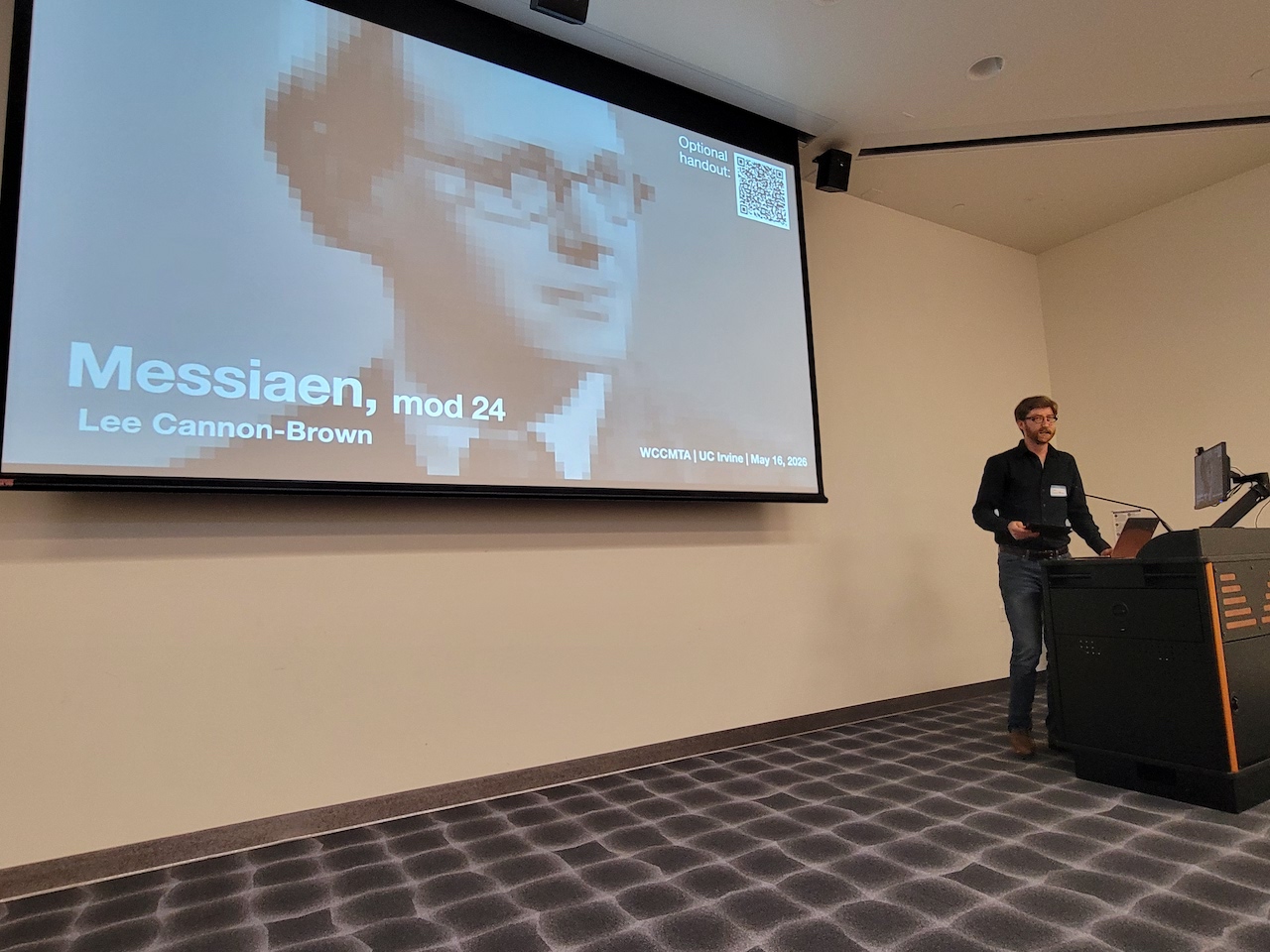
The West Coast Conference of Music Theory and Analysis (WCCMTA) met on May 16 in sunny southern California. The conference was hosted by WCCMTA President, Amy Bauer, and the faculty and students of the University of California, Irvine.
This year’s program committee was comprised of Antares Boyle (Portland State University), Jack Boss (University of Oregon), Stephen Hudson (Occidental College) and Stephen Rogers (University of Oregon). The meeting included eleven presentations in four sessions: Theorizing Phrasing and Hypermeter, Gesture as a Tool for Analysis of New Music, Meaning… Read More
The West Coast Conference of Music Theory and Analysis (WCCMTA) met on May 16 in sunny southern California. The conference was hosted by WCCMTA President, Amy Bauer, and the faculty and students of the University of California, Irvine.
This year’s program committee was comprised of Antares Boyle (Portland State University), Jack Boss (University of Oregon), Stephen Hudson (Occidental College) and Stephen Rogers (University of Oregon). The meeting included eleven presentations in four sessions: Theorizing Phrasing and Hypermeter, Gesture as a Tool for Analysis of New Music, Meaning and Narrative, and Beyond the Twelve-Tone Equal-Tempered Scale.
The conference was punctuated by an evening of impressive performances, including the ICIT Showcase—a performance of original works by Ph.D. students in the Integrated Composition, Improvisation and Technology (ICIT) program, which features innovative approaches to contemporary music-making. Please contact WCCMTA President Amy Bauer or Secretary Russ Knight if you would like to be included on our mailing list or are interested in running for a WCCMTA office.
The West Coast Conference of Music Theory and Analysis (WCCMTA) met on May 16 in sunny southern California. The conference was hosted by WCCMTA President, Amy Bauer, and the faculty and students of the University of California, Irvine.
This year’s program committee was comprised of Antares Boyle (Portland State University), Jack Boss (University of Oregon), Stephen Hudson (Occidental College) and Stephen Rogers (University of Oregon). The meeting included eleven presentations in four sessions: Theorizing Phrasing and Hypermeter, Gesture as a Tool for Analysis of New Music, Meaning and Narrative, and Beyond the Twelve-Tone Equal-Tempered Scale.
The conference was punctuated by an evening of impressive performances, including the ICIT Showcase—a performance of original works by Ph.D. students in the Integrated Composition, Improvisation and Technology (ICIT) program, which features innovative approaches to contemporary music-making. Please contact WCCMTA President Amy Bauer or Secretary Russ Knight if you would like to be included on our mailing list or are interested in running for a WCCMTA office.
Richard Cohn
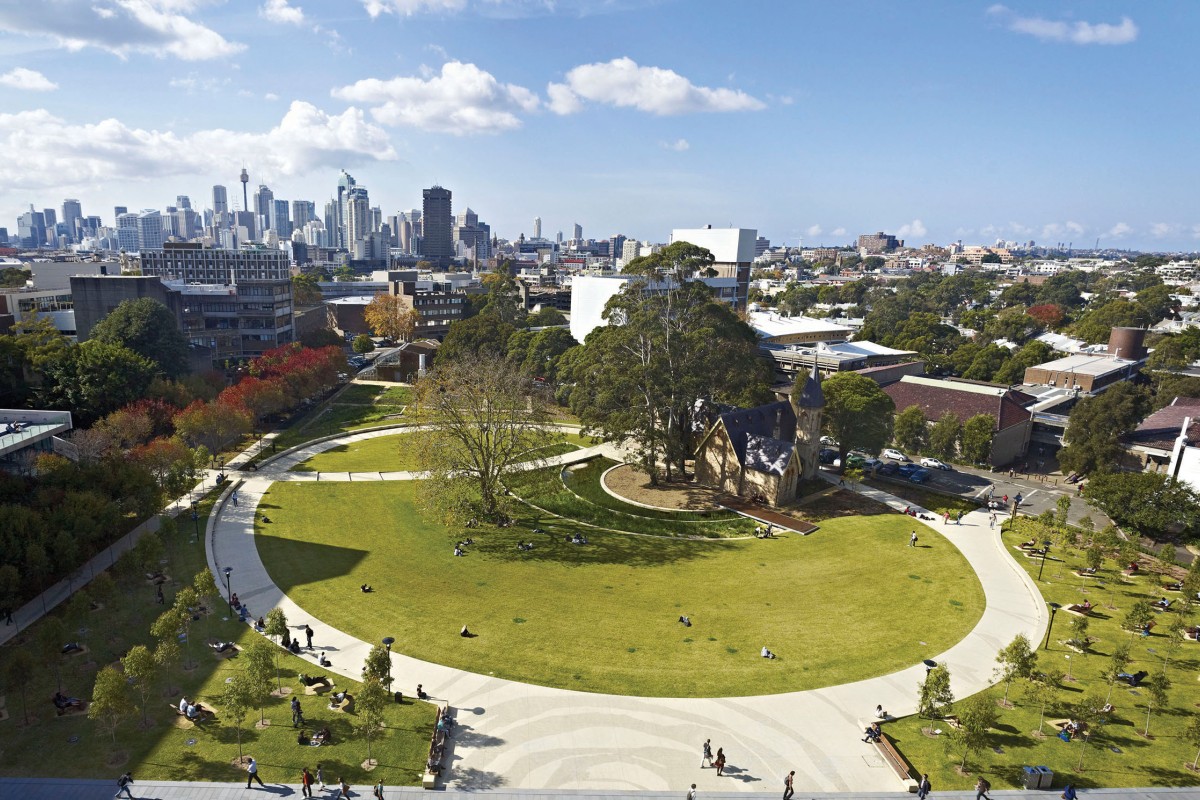
The inaugural session of the Australian Music Analysis School (AusMAS) will take place at the University of Sydney from July 16–19. Three-day courses will be offered by Denis Collins (Canon Across the Centuries), Eric Isaacson (Minimalism), Nathan Lam (Mode in 19th and 20th Centuries), and Jeremy Tatar (Analysis of Popular Music). Nathan Lam will present a keynote lecture and there will be a session of student papers adjudicated by competition. The school is co-sponsored by the Sydney and Melbourne Conservatoriums of Music with support from the University of Queensland School of Music, and… Read More
The inaugural session of the Australian Music Analysis School (AusMAS) will take place at the University of Sydney from July 16–19. Three-day courses will be offered by Denis Collins (Canon Across the Centuries), Eric Isaacson (Minimalism), Nathan Lam (Mode in 19th and 20th Centuries), and Jeremy Tatar (Analysis of Popular Music). Nathan Lam will present a keynote lecture and there will be a session of student papers adjudicated by competition. The school is co-sponsored by the Sydney and Melbourne Conservatoriums of Music with support from the University of Queensland School of Music, and is co-directed by David Larkin and Richard Cohn.
Further information is available at the AusMAS website.
The inaugural session of the Australian Music Analysis School (AusMAS) will take place at the University of Sydney from July 16–19. Three-day courses will be offered by Denis Collins (Canon Across the Centuries), Eric Isaacson (Minimalism), Nathan Lam (Mode in 19th and 20th Centuries), and Jeremy Tatar (Analysis of Popular Music). Nathan Lam will present a keynote lecture and there will be a session of student papers adjudicated by competition. The school is co-sponsored by the Sydney and Melbourne Conservatoriums of Music with support from the University of Queensland School of Music, and is co-directed by David Larkin and Richard Cohn.
Further information is available at the AusMAS website.
Daphne Leong
March 5–7, 2027
University of Colorado Boulder
Submission deadline: September 1, 2026
Ian Pace (piano and musicology): recital and keynote
Edward Klorman (music theory and viola)
Barbara Lüneburg (violin and artistic research)
Caroline Traube (musical acoustics and performance studies)
Pedagogy workshop:
Jonathan Leathwood (guitar and music theory)
The interactions of performance, analysis, and artistic research have provoked debate at least since the start of the 21st century. Differing schools of thought have in turn interacted with, castigated, and ignored one another. The time is ripe for a reappraisal of work implicating these three areas.
In this spirit, we invite proposals on any topic at the intersection of performance, analysis, and artistic research. We seek wide-ranging perspectives, diverse practices and repertoires, and approaches ranging from empirical studies and pedagogy to theory, improvisation, ethnography, and more. We will consider proposals for twenty-minute papers, thirty-minute lecture-recitals, and special sessions of any format (panels, workshops, lightning talks, etc.). Presentations will be in-person.
For submission details, see the conference website.
Daphne Leong, chair (University of Colorado Boulder, United States)
Jonathan De Souza (Western University, Canada)
Cecilia Oinas (Sibelius Academy, Finland)
John Rink (University of Cambridge, United Kingdom)
The main locale is a 150-seat hall with a nine-foot Steinway, projection and sound capabilities, and telescoping seating. It will be supplemented by smaller rooms for workshops and sessions of alternate format.
Boulder, located in the foothills of the Rocky Mountains, offers abundant opportunities for outdoor recreation, as well as the cafés and shops of the outdoor Pearl Street mall—all within easy access of the University.
March 5–7, 2027
University of Colorado Boulder
Submission deadline: September 1, 2026
Ian Pace (piano and musicology): recital and keynote
Edward Klorman (music theory and viola)
Barbara Lüneburg (violin and artistic research)
Caroline Traube (musical acoustics and performance studies)
Pedagogy workshop:
Jonathan Leathwood (guitar and music theory)
The interactions of performance, analysis, and artistic research have provoked debate at least since the start of the 21st century. Differing schools of thought have in turn interacted with, castigated, and ignored one another. The time is ripe for a reappraisal of work implicating these three areas.
In this spirit, we invite proposals on any topic at the intersection of performance, analysis, and artistic research. We seek wide-ranging perspectives, diverse practices and repertoires, and approaches ranging from empirical studies and pedagogy to theory, improvisation, ethnography, and more. We will consider proposals for twenty-minute papers, thirty-minute lecture-recitals, and special sessions of any format (panels, workshops, lightning talks, etc.). Presentations will be in-person.
For submission details, see the conference website.
Daphne Leong, chair (University of Colorado Boulder, United States)
Jonathan De Souza (Western University, Canada)
Cecilia Oinas (Sibelius Academy, Finland)
John Rink (University of Cambridge, United Kingdom)
The main locale is a 150-seat hall with a nine-foot Steinway, projection and sound capabilities, and telescoping seating. It will be supplemented by smaller rooms for workshops and sessions of alternate format.
Boulder, located in the foothills of the Rocky Mountains, offers abundant opportunities for outdoor recreation, as well as the cafés and shops of the outdoor Pearl Street mall—all within easy access of the University.
Kaylee Therieau
The Music Theory Society at Florida State University successfully conducted its 43rd Music Theory Forum on March 6–7, 2026. Professors Yayoi Uno Everett (Hunter College and the Graduate Center, CUNY) and Jane Piper Clendinning (Florida State University) gave their keynote addresses entitled “Narrative Strategies in Films by Akira Kurosawa, Sergio Leone, and Spike Lee” and “Fifty Years of Music Theory Pedagogy: A Retrospective and Vision of the Future,” respectively. We were delighted to honor Professor Jane Piper Clendinning for her years of service to Florida State University’s College of… Read More
The Music Theory Society at Florida State University successfully conducted its 43rd Music Theory Forum on March 6–7, 2026. Professors Yayoi Uno Everett (Hunter College and the Graduate Center, CUNY) and Jane Piper Clendinning (Florida State University) gave their keynote addresses entitled “Narrative Strategies in Films by Akira Kurosawa, Sergio Leone, and Spike Lee” and “Fifty Years of Music Theory Pedagogy: A Retrospective and Vision of the Future,” respectively. We were delighted to honor Professor Jane Piper Clendinning for her years of service to Florida State University’s College of Music and FSU-MTS.
Many thanks to all the officers for the 2025–2026 academic year who helped to make this event possible:
Our officers for the upcoming 2026–2027 academic year are:
The 44th annual Music Theory Forum will be held on Saturday, March 6, 2027. This conference will be fully online and led over Zoom. Our keynote speaker will be Dr. Chelsea Burns (The University of Texas at Austin). MTS Forum submission instructions and other conference details will be released in the coming months. Additional questions about MTS Forum should be directed to the Forum Co-Chairs, Austin Wilson and Kaylee Therieau, at fsumts.forum@gmail.com.
The Music Theory Society at Florida State University successfully conducted its 43rd Music Theory Forum on March 6–7, 2026. Professors Yayoi Uno Everett (Hunter College and the Graduate Center, CUNY) and Jane Piper Clendinning (Florida State University) gave their keynote addresses entitled “Narrative Strategies in Films by Akira Kurosawa, Sergio Leone, and Spike Lee” and “Fifty Years of Music Theory Pedagogy: A Retrospective and Vision of the Future,” respectively. We were delighted to honor Professor Jane Piper Clendinning for her years of service to Florida State University’s College of Music and FSU-MTS.
Many thanks to all the officers for the 2025–2026 academic year who helped to make this event possible:
Our officers for the upcoming 2026–2027 academic year are:
The 44th annual Music Theory Forum will be held on Saturday, March 6, 2027. This conference will be fully online and led over Zoom. Our keynote speaker will be Dr. Chelsea Burns (The University of Texas at Austin). MTS Forum submission instructions and other conference details will be released in the coming months. Additional questions about MTS Forum should be directed to the Forum Co-Chairs, Austin Wilson and Kaylee Therieau, at fsumts.forum@gmail.com.
Edward Klorman and Loretta Terrigno
Edward Klorman and Loretta Terrigno
Carl Schachter made extraordinary contributions to the theory and analysis of tonal repertoire through his scholarship, pedagogical writings, and teaching in universities, conservatories, and private lessons. Born in Chicago, where he studied piano (and, secondarily, violin and viola), he came to New York in 1948 to study piano principally with Isabelle Vengerova and conducting with Carl Bamberger at the David Mannes Music School. There, his studies in analysis with Felix Salzer proved transformative, setting him on the path that would shape his career. After receiving a B.S. from Mannes and an M.A. in musicology from New York University, he began a half-century period as a faculty member at Mannes, where he served at times as Dean and as chair of the Techniques of Music Department. From 1972 to 1996, he also held a professorship at the City University of New York (CUNY), teaching both at Queens College and at The Graduate Center, where he was an influential doctoral advisor. After retiring from CUNY as a Distinguished Professor, he continued to teach classes on Schenkerian analysis and performance at Mannes and The Juilliard School. He received many special honors, including a Lifetime Membership from the Society for Music Theory, the William Schuman Scholar Award from Juilliard, and honorary doctorates from both Mannes and the Sibelius Academy.
In addition to his role as a leading practitioner of Schenkerian theory and analysis, Schachter co-authored the textbooks Counterpoint in Composition (1969, written with his teacher Salzer) and Harmony and Voice Leading (1978, written with his colleague and friend Edward Aldwell). Both textbooks strove to incorporate contrapuntal and linear perspectives in the analysis of tonal repertoire. Conceived at a time when only limited material incorporating Schenkerian perspectives was available in English, the pedagogical approaches developed in these texts became widely influential in North American pedagogy over the following decades.
Schachter is also known for his essays on rhythm and texted music, which demonstrate his characteristic and beautiful elucidations of ways in which voice leading, motives, and harmony express poetic and dramatic meaning in music by Mozart, Schubert, and Brahms, among other composers. Many of his articles on these and other topics are reprinted in Unfoldings: Essays in Schenkerian Theory and Analysis (1999), edited by Joseph N. Straus. The Art of Tonal Analysis: Twelve Lessons in Schenkerian Theory (2016; also edited by Straus) similarly preserves in written form classes from the seminar that Schachter delivered at The Graduate Center when he briefly came out of retirement to share selections of work from across his career, not only with a cohort of doctoral students in both performance and music theory, but also with devoted colleagues and alumni who audited the course.
This brief outline of landmarks in his distinguished career does not capture the excitement and joy of being in Carl’s classroom, where we felt as if we were part of a musical family. Seated at the piano and through his uniquely sensitive playing, he invited us to hear music more deeply. Performance considerations inflected analytical ones, and lessons were sometimes illuminated by listening to historical recordings, especially by singers he admired, such as Rosa Ponselle and Elisabeth Schumann. He would light up in response to our classmates’ ideas, questions, and in-class performances, taking great pride in watching our musical sophistication blossom over the course of our studies. Possessing an encyclopedic knowledge of his favorite repertoire, he enhanced his discussions with the wide range of music he could play from memory. The aim of his lessons was rarely to produce a graph as a finished product; instead, whatever graph had been notated on the board over the course of a session was a summary of the insights and observations about a composition that had been developed through probing analytical questioning, consideration of alternative interpretations, and careful listening. Carl described his preferred analytical readings as “convincing,” “satisfying,” or “beautiful” rather than “correct.” In the interview that begins Unfoldings, Carl is quoted as saying: “though I'm deeply interested in Schenker, I'm still more interested in Mozart and Beethoven." Elsewhere (in the Journal of Music Theory Pedagogy), he compares getting acquainted with a piece with getting to know an interesting person’s quirks and idiosyncrasies: “We may have to work rather hard at our questioning before the piece deigns to give us an answer (most people wouldn’t answer such a [personal] question right away either).” Carl’s teaching modeled the lifelong process of learning to ask the questions.
Many of our classmates routinely cite his profound musicianship and artistry, his generosity, and his sense of humanity as core tenets of the education he instilled in us. He demonstrated these qualities over many years by organizing annual concerts benefiting Amnesty International in collaboration with members of the Mannes community. He similarly found time to share in the daily lives and musical accomplishments of his students by attending countless concerts and lending his sought-after, wise counsel about many aspects of our developing musical lives. Even with his departure, we hope that his distinctive musical voice will continue to resonate.
In the spirit of offering a fuller picture of Carl Schachter’s impact on the musicians and scholars whose lives he touched, we invite you to visit this memorial website, which collects memories, tributes, and other material from his colleagues, friends, and students.
Edward Klorman and Loretta Terrigno
Carl Schachter made extraordinary contributions to the theory and analysis of tonal repertoire through his scholarship, pedagogical writings, and teaching in universities, conservatories, and private lessons. Born in Chicago, where he studied piano (and, secondarily, violin and viola), he came to New York in 1948 to study piano principally with Isabelle Vengerova and conducting with Carl Bamberger at the David Mannes Music School. There, his studies in analysis with Felix Salzer proved transformative, setting him on the path that would shape his career. After receiving a B.S. from Mannes and an M.A. in musicology from New York University, he began a half-century period as a faculty member at Mannes, where he served at times as Dean and as chair of the Techniques of Music Department. From 1972 to 1996, he also held a professorship at the City University of New York (CUNY), teaching both at Queens College and at The Graduate Center, where he was an influential doctoral advisor. After retiring from CUNY as a Distinguished Professor, he continued to teach classes on Schenkerian analysis and performance at Mannes and The Juilliard School. He received many special honors, including a Lifetime Membership from the Society for Music Theory, the William Schuman Scholar Award from Juilliard, and honorary doctorates from both Mannes and the Sibelius Academy.
In addition to his role as a leading practitioner of Schenkerian theory and analysis, Schachter co-authored the textbooks Counterpoint in Composition (1969, written with his teacher Salzer) and Harmony and Voice Leading (1978, written with his colleague and friend Edward Aldwell). Both textbooks strove to incorporate contrapuntal and linear perspectives in the analysis of tonal repertoire. Conceived at a time when only limited material incorporating Schenkerian perspectives was available in English, the pedagogical approaches developed in these texts became widely influential in North American pedagogy over the following decades.
Schachter is also known for his essays on rhythm and texted music, which demonstrate his characteristic and beautiful elucidations of ways in which voice leading, motives, and harmony express poetic and dramatic meaning in music by Mozart, Schubert, and Brahms, among other composers. Many of his articles on these and other topics are reprinted in Unfoldings: Essays in Schenkerian Theory and Analysis (1999), edited by Joseph N. Straus. The Art of Tonal Analysis: Twelve Lessons in Schenkerian Theory (2016; also edited by Straus) similarly preserves in written form classes from the seminar that Schachter delivered at The Graduate Center when he briefly came out of retirement to share selections of work from across his career, not only with a cohort of doctoral students in both performance and music theory, but also with devoted colleagues and alumni who audited the course.
This brief outline of landmarks in his distinguished career does not capture the excitement and joy of being in Carl’s classroom, where we felt as if we were part of a musical family. Seated at the piano and through his uniquely sensitive playing, he invited us to hear music more deeply. Performance considerations inflected analytical ones, and lessons were sometimes illuminated by listening to historical recordings, especially by singers he admired, such as Rosa Ponselle and Elisabeth Schumann. He would light up in response to our classmates’ ideas, questions, and in-class performances, taking great pride in watching our musical sophistication blossom over the course of our studies. Possessing an encyclopedic knowledge of his favorite repertoire, he enhanced his discussions with the wide range of music he could play from memory. The aim of his lessons was rarely to produce a graph as a finished product; instead, whatever graph had been notated on the board over the course of a session was a summary of the insights and observations about a composition that had been developed through probing analytical questioning, consideration of alternative interpretations, and careful listening. Carl described his preferred analytical readings as “convincing,” “satisfying,” or “beautiful” rather than “correct.” In the interview that begins Unfoldings, Carl is quoted as saying: “though I'm deeply interested in Schenker, I'm still more interested in Mozart and Beethoven." Elsewhere (in the Journal of Music Theory Pedagogy), he compares getting acquainted with a piece with getting to know an interesting person’s quirks and idiosyncrasies: “We may have to work rather hard at our questioning before the piece deigns to give us an answer (most people wouldn’t answer such a [personal] question right away either).” Carl’s teaching modeled the lifelong process of learning to ask the questions.
Many of our classmates routinely cite his profound musicianship and artistry, his generosity, and his sense of humanity as core tenets of the education he instilled in us. He demonstrated these qualities over many years by organizing annual concerts benefiting Amnesty International in collaboration with members of the Mannes community. He similarly found time to share in the daily lives and musical accomplishments of his students by attending countless concerts and lending his sought-after, wise counsel about many aspects of our developing musical lives. Even with his departure, we hope that his distinctive musical voice will continue to resonate.
In the spirit of offering a fuller picture of Carl Schachter’s impact on the musicians and scholars whose lives he touched, we invite you to visit this memorial website, which collects memories, tributes, and other material from his colleagues, friends, and students.
Allen Cadwallader
We mourn the passing of David Gagné, a talented performer, theorist, pedagogue, and scholar. David received his undergraduate degree at Columbia University and his Ph.D. at the CUNY Graduate Center, where he later taught courses. He joined the faculties at Queens College and the Mannes College, where he taught in Mannes’ rigorous ear-training and sight-singing program.
David’s dissertation on the music of Mozart marks his influence on the field of music theory. He had a great organizational mind and served as the president of the Music Theory Society of New York State from 1999–2003. His performing skills also served the Dance Theater of the Music of Harlem. His talents—in teaching and in theory—were truly remarkable and multifaceted.
I met David when I was planning the volume Trends in Schenkerian Research (1990). It was Charles Burkhart’s suggestion to consider David’s work for the project. David and I became close friends and later undertook the project with Oxford University Press of writing a textbook on Schenkerian analysis (Analysis of Tonal Music). The project went through four editions, and our relationship deepened exponentially. His gentle and kind demeanor characterized all aspects of his teaching; he will be missed by all.
—Allen Cadwallader
We mourn the passing of David Gagné, a talented performer, theorist, pedagogue, and scholar. David received his undergraduate degree at Columbia University and his Ph.D. at the CUNY Graduate Center, where he later taught courses. He joined the faculties at Queens College and the Mannes College, where he taught in Mannes’ rigorous ear-training and sight-singing program.
David’s dissertation on the music of Mozart marks his influence on the field of music theory. He had a great organizational mind and served as the president of the Music Theory Society of New York State from 1999–2003. His performing skills also served the Dance Theater of the Music of Harlem. His talents—in teaching and in theory—were truly remarkable and multifaceted.
I met David when I was planning the volume Trends in Schenkerian Research (1990). It was Charles Burkhart’s suggestion to consider David’s work for the project. David and I became close friends and later undertook the project with Oxford University Press of writing a textbook on Schenkerian analysis (Analysis of Tonal Music). The project went through four editions, and our relationship deepened exponentially. His gentle and kind demeanor characterized all aspects of his teaching; he will be missed by all.
—Allen Cadwallader
University of Chicago Faculty
February 22, 2026 (last updated on July 28, 2026)
With profound grief and sorrow, the Department of Music remembers the life of Calum Jensen, a beloved member of the Department of Music and PhD student in Music History, who passed away from a sudden illness on February 13, 2026.
The Department of Music is honored to partner with the Jensen family to receive gifts in Calum’s memory. You can make a gift to the Music Department in memory of Calum, where funds will be directed to programs that honor Calum’s legacy.
Make a gift in Calum's memory
Calum was a promising… Read More
February 22, 2026 (last updated on July 28, 2026)
With profound grief and sorrow, the Department of Music remembers the life of Calum Jensen, a beloved member of the Department of Music and PhD student in Music History, who passed away from a sudden illness on February 13, 2026.
The Department of Music is honored to partner with the Jensen family to receive gifts in Calum’s memory. You can make a gift to the Music Department in memory of Calum, where funds will be directed to programs that honor Calum’s legacy.
Make a gift in Calum's memory
Calum was a promising scholar and composer, particularly interested in work at the intersection of philosophy, politics, and music since the nineteenth century. He was a true intellectual and a beautiful human being. Calum loved long days at the Regenstein, reading and rereading Adorno, puzzling out the mysteries of timbre, speculating about unwritten histories, and spending time with his partner, family, and friends.
Calum was raised in Brandon, Thunder Bay and Winnipeg, and graduated from McGill University (B.Mus. and M.Mus. - Composition) and SUNY at Stony Brook (Masters in Critical Music Studies). Calum was undertaking his PhD in Music History (Musicology) at the University of Chicago at the time of his passing, living with his beloved Christina, a fellow PhD student in Music History. Although new to Musicology, Calum had quickly made his mark with podium presentations at The American Musicological Society, co-chairing AMS working groups and his scholarship on spectral music and aesthetics. An eminent American Musicologist with whom Calum co-chaired a working-group wrote, "In all my years in this profession, I have not encountered a more promising scholar, a more thoughtful interlocuter, a more generous collaborator." Calum's loss to the Musicology world, and that of his family and friends, will be immense. A fine, principled man, filled with love, ever in search of meaning and truth, empathic and self-aware, he elevated many, through giving so generously of himself, while rigorously undertaking his scholarship. Calum elevated us, and our memories of him will elevate us.
February 22, 2026 (last updated on July 28, 2026)
With profound grief and sorrow, the Department of Music remembers the life of Calum Jensen, a beloved member of the Department of Music and PhD student in Music History, who passed away from a sudden illness on February 13, 2026.
The Department of Music is honored to partner with the Jensen family to receive gifts in Calum’s memory. You can make a gift to the Music Department in memory of Calum, where funds will be directed to programs that honor Calum’s legacy.
Make a gift in Calum's memory
Calum was a promising scholar and composer, particularly interested in work at the intersection of philosophy, politics, and music since the nineteenth century. He was a true intellectual and a beautiful human being. Calum loved long days at the Regenstein, reading and rereading Adorno, puzzling out the mysteries of timbre, speculating about unwritten histories, and spending time with his partner, family, and friends.
Calum was raised in Brandon, Thunder Bay and Winnipeg, and graduated from McGill University (B.Mus. and M.Mus. - Composition) and SUNY at Stony Brook (Masters in Critical Music Studies). Calum was undertaking his PhD in Music History (Musicology) at the University of Chicago at the time of his passing, living with his beloved Christina, a fellow PhD student in Music History. Although new to Musicology, Calum had quickly made his mark with podium presentations at The American Musicological Society, co-chairing AMS working groups and his scholarship on spectral music and aesthetics. An eminent American Musicologist with whom Calum co-chaired a working-group wrote, "In all my years in this profession, I have not encountered a more promising scholar, a more thoughtful interlocuter, a more generous collaborator." Calum's loss to the Musicology world, and that of his family and friends, will be immense. A fine, principled man, filled with love, ever in search of meaning and truth, empathic and self-aware, he elevated many, through giving so generously of himself, while rigorously undertaking his scholarship. Calum elevated us, and our memories of him will elevate us.
The Society for Music Theory publishes its Newsletter in February and August, with deadlines for submission December 1 and June 1, respectively.
It is customary for all SMT officers, committee chairs, and Interest Group chairs to submit a report for each issue of the Newsletter. The Society also welcomes news from affiliate and related organizations as well as items of interest to its members.
Please complete the Newsletter submission form to share your announcements in the next issue of the Newsletter. If you include hyperlinks, please test their accuracy before submission. If a photograph or graphic image would enhance your article, please obtain and provide any necessary copyright permission or attribution and contact the editor prior to submitting it. Inclusion of any article is subject to the approval of the Executive Board.
Alex Martin, editor, SMT Newsletter
Paul Miller, associate editor, SMT Newsletter