Image


Volume 49, Issue 1
The SMT Newsletter is posted online in February and August. The Newsletter features information on national and regional theory conferences, awards, calls for papers and articles, grant and fellowship information, and general news about people in the field.
Judith Lochhead
Dear Colleagues in the Music Theory Community,
I am honored to take on the role of President of the Society for Music Theory and thank you all for the opportunity. First, I offer thanks to Jan Miyake, who has done such an excellent job of leading the Society. It has been inspiring to witness Jan’s leadership prowess over the preceding year, and it is my intention to continue her twin goals of encouraging fundraising and increasing a sense of belonging within the Society. These two goals are inextricably linked since a strong sense of community is a necessary… Read More
Dear Colleagues in the Music Theory Community,
I am honored to take on the role of President of the Society for Music Theory and thank you all for the opportunity. First, I offer thanks to Jan Miyake, who has done such an excellent job of leading the Society. It has been inspiring to witness Jan’s leadership prowess over the preceding year, and it is my intention to continue her twin goals of encouraging fundraising and increasing a sense of belonging within the Society. These two goals are inextricably linked since a strong sense of community is a necessary foundation for building a structure to support the work of the Society through contributions. With the help of the Society’s membership, I hope we can continue to strengthen existing bonds of connection and to build new ones that expand the horizons of our field in new and exciting ways. Yet it is important to recognize that with expanding horizons, we must take care not to construct walls of difference between sub-disciplines but rather to develop the inherent connections between them.
Over the last several years, the Society has launched studies to understand how membership in the Society may or may not be appealing to people with interests in music theory. These studies provide insight into how a sense of community might be enhanced, but they also reveal that more can be done. As Past-President, Jan Miyake has generously offered to spearhead a qualitative study/investigation on why people leave the Society or the field. In November, the Executive Board approved a one-time expense to support the work of this study.
Another new initiative discussed by the Executive Board last November focuses on creating a more robust role for graduate students in the workings of the Society. This initiative aims to foster a greater sense of belonging for our graduate student members and to create better avenues for connection and communication. Further information about the outlines of this initiative will be available in coming months.
The Board has been approached by members of the Society with a request to communicate the value of graduate level music theory training. These requests are in response to cut-backs in graduate programs in music theory. The Board is in the process of drafting a statement about the values of music theory training in the 21st century.
Over the next year, the Board and I will be working on plans for marking the 50th Anniversary of the Society for Music Theory at the 2027 meeting in Baltimore, MD. Ideas have already been percolating about how both to recognize the achievements of the Society over the last half-century and to explore the multiple ways that music theory manifests in 2027.
Finally, I extend hearty thanks to all the members of the Society for your involvement in our community. All our committees and editorial boards are staffed by volunteers, by members who devote time, effort, and expertise in making the Society “run.” Please do continue to indicate your service interests when you renew your membership. We want to be as inclusive as possible.
As always, feel free to reach out to me with any ideas, suggestions, and concerns.
Dear Colleagues in the Music Theory Community,
I am honored to take on the role of President of the Society for Music Theory and thank you all for the opportunity. First, I offer thanks to Jan Miyake, who has done such an excellent job of leading the Society. It has been inspiring to witness Jan’s leadership prowess over the preceding year, and it is my intention to continue her twin goals of encouraging fundraising and increasing a sense of belonging within the Society. These two goals are inextricably linked since a strong sense of community is a necessary foundation for building a structure to support the work of the Society through contributions. With the help of the Society’s membership, I hope we can continue to strengthen existing bonds of connection and to build new ones that expand the horizons of our field in new and exciting ways. Yet it is important to recognize that with expanding horizons, we must take care not to construct walls of difference between sub-disciplines but rather to develop the inherent connections between them.
Over the last several years, the Society has launched studies to understand how membership in the Society may or may not be appealing to people with interests in music theory. These studies provide insight into how a sense of community might be enhanced, but they also reveal that more can be done. As Past-President, Jan Miyake has generously offered to spearhead a qualitative study/investigation on why people leave the Society or the field. In November, the Executive Board approved a one-time expense to support the work of this study.
Another new initiative discussed by the Executive Board last November focuses on creating a more robust role for graduate students in the workings of the Society. This initiative aims to foster a greater sense of belonging for our graduate student members and to create better avenues for connection and communication. Further information about the outlines of this initiative will be available in coming months.
The Board has been approached by members of the Society with a request to communicate the value of graduate level music theory training. These requests are in response to cut-backs in graduate programs in music theory. The Board is in the process of drafting a statement about the values of music theory training in the 21st century.
Over the next year, the Board and I will be working on plans for marking the 50th Anniversary of the Society for Music Theory at the 2027 meeting in Baltimore, MD. Ideas have already been percolating about how both to recognize the achievements of the Society over the last half-century and to explore the multiple ways that music theory manifests in 2027.
Finally, I extend hearty thanks to all the members of the Society for your involvement in our community. All our committees and editorial boards are staffed by volunteers, by members who devote time, effort, and expertise in making the Society “run.” Please do continue to indicate your service interests when you renew your membership. We want to be as inclusive as possible.
As always, feel free to reach out to me with any ideas, suggestions, and concerns.
Stephen Rodgers
I’m delighted to have been elected Vice President of SMT. Huge thanks to my predecessor, Leigh Van Handel, for serving the Society in that role over the past two years, and also for showing me the ropes as I step into this new position.
One of the main tasks of the Vice President is to serve as a liaison with the various interest groups. These groups play a vital role in the Society: they allow scholars to come together around shared concerns, and they provide an easy entry point into the discipline for students who are hoping to find a community of fellow scholars with similar… Read More
I’m delighted to have been elected Vice President of SMT. Huge thanks to my predecessor, Leigh Van Handel, for serving the Society in that role over the past two years, and also for showing me the ropes as I step into this new position.
One of the main tasks of the Vice President is to serve as a liaison with the various interest groups. These groups play a vital role in the Society: they allow scholars to come together around shared concerns, and they provide an easy entry point into the discipline for students who are hoping to find a community of fellow scholars with similar interests. SMT is fortunate to have many diverse and thriving groups (twenty-eight in all). Still, the sheer number of groups has posed some scheduling challenges during annual meetings. To address these challenges, we have just instituted a new “rotation” system, in which each interest group is allotted space on the SMT program for two years and then takes one year off. During “off” years, interest groups may choose to team up with another group that does appear on the program, which we hope will foster even more collaboration among groups; they may also choose to hold an off-site event. I’m grateful to the interest group chairs for their flexibility and generosity in adopting this new plan.
The regional music theory societies are also thriving. One of my goals is to continue to foster collaboration among regional societies so that they can all benefit from their collective experience and wisdom. To that end, I met with the presidents of the regional societies, where we discussed (among other things) how best to coordinate regional meetings to avoid unnecessary conflicts; how to ensure that at least one regional meeting each year is held virtually, so that scholars with limited resources can take part without incurring expensive travel and lodging costs; and how to provide tech support to those organizing online conferences. I’m eager to meet with the Society presidents again in the spring and continue the conversation. Many thanks to all of them for their important work.
For the second year in a row, I have helped to organize an online workshop on the process of writing and submitting a proposal for the Society for Music Theory’s Annual Meeting, with a particular focus on cross-cultural and disciplinary expectations surrounding music theory. The event—jointly organized by the Society for Music Theory and the Society for Musical Analysis in the UK—took place on Thursday, January 22, and reflects increased collaboration between the SMA and SMT, further cultivating music theory’s international landscape. Janet Bourne (from the University of California, Santa Barbara) and I shared some tips about proposal writing and then offered feedback to those who submitted proposals in advance of a January 1 deadline. Huge thanks to Janet for agreeing to review proposals for a second year, and also to Peter Smith, Aidan McGartland, and Rebekah Donn for helping to organize this year’s event.
On behalf of the outgoing Vice President, I’m pleased to report on the 2025 Subvention Grants. These grants are awarded to reimburse scholars for costs incurred in the preparation and publication of scholarly projects. The committee awarded five grants for publication projects, with awards going to Hunter Hoyle, Noel Rivera, Scott Gleason, Jeff Perry, and Marc Hannaford. Thank you to the Subvention Grant committee, consisting of David Byrne, Amy Fleming, David Forrest, and Olga Sanchez, for reviewing the applications, and to donors to the SMT-Forward campaign for making these awards possible. The next deadline for submitting a Subvention Grant application will be in early August. Please feel free to reach out to me at vicepresident@societymusictheory.org if you have any questions or comments regarding the interest groups, regional societies, international societies, or subvention grants.
It’s an honor to serve the Society, and I look forward to the coming year!
Stephen Rodgers
I’m delighted to have been elected Vice President of SMT. Huge thanks to my predecessor, Leigh Van Handel, for serving the Society in that role over the past two years, and also for showing me the ropes as I step into this new position.
One of the main tasks of the Vice President is to serve as a liaison with the various interest groups. These groups play a vital role in the Society: they allow scholars to come together around shared concerns, and they provide an easy entry point into the discipline for students who are hoping to find a community of fellow scholars with similar interests. SMT is fortunate to have many diverse and thriving groups (twenty-eight in all). Still, the sheer number of groups has posed some scheduling challenges during annual meetings. To address these challenges, we have just instituted a new “rotation” system, in which each interest group is allotted space on the SMT program for two years and then takes one year off. During “off” years, interest groups may choose to team up with another group that does appear on the program, which we hope will foster even more collaboration among groups; they may also choose to hold an off-site event. I’m grateful to the interest group chairs for their flexibility and generosity in adopting this new plan.
The regional music theory societies are also thriving. One of my goals is to continue to foster collaboration among regional societies so that they can all benefit from their collective experience and wisdom. To that end, I met with the presidents of the regional societies, where we discussed (among other things) how best to coordinate regional meetings to avoid unnecessary conflicts; how to ensure that at least one regional meeting each year is held virtually, so that scholars with limited resources can take part without incurring expensive travel and lodging costs; and how to provide tech support to those organizing online conferences. I’m eager to meet with the Society presidents again in the spring and continue the conversation. Many thanks to all of them for their important work.
For the second year in a row, I have helped to organize an online workshop on the process of writing and submitting a proposal for the Society for Music Theory’s Annual Meeting, with a particular focus on cross-cultural and disciplinary expectations surrounding music theory. The event—jointly organized by the Society for Music Theory and the Society for Musical Analysis in the UK—took place on Thursday, January 22, and reflects increased collaboration between the SMA and SMT, further cultivating music theory’s international landscape. Janet Bourne (from the University of California, Santa Barbara) and I shared some tips about proposal writing and then offered feedback to those who submitted proposals in advance of a January 1 deadline. Huge thanks to Janet for agreeing to review proposals for a second year, and also to Peter Smith, Aidan McGartland, and Rebekah Donn for helping to organize this year’s event.
On behalf of the outgoing Vice President, I’m pleased to report on the 2025 Subvention Grants. These grants are awarded to reimburse scholars for costs incurred in the preparation and publication of scholarly projects. The committee awarded five grants for publication projects, with awards going to Hunter Hoyle, Noel Rivera, Scott Gleason, Jeff Perry, and Marc Hannaford. Thank you to the Subvention Grant committee, consisting of David Byrne, Amy Fleming, David Forrest, and Olga Sanchez, for reviewing the applications, and to donors to the SMT-Forward campaign for making these awards possible. The next deadline for submitting a Subvention Grant application will be in early August. Please feel free to reach out to me at vicepresident@societymusictheory.org if you have any questions or comments regarding the interest groups, regional societies, international societies, or subvention grants.
It’s an honor to serve the Society, and I look forward to the coming year!
Stephen Rodgers
Mitchell Ohriner
Since the previous Secretary’s report for the August 2025 SMT Newsletter, the Executive Board has passed the following motions. Specific language of the various motions can be found in the minutes.
To approve the consent agenda (consisting of the minutes and reports from the Treasurer, President, and Executive Director) for the May, October, and November meetings of the Executive Board. To change the title and description of the Minority Travel Grant to the Many Voices Grant. To approve the Archives Policy. To increase the number of people on the Investment Committee to five,… Read MoreSince the previous Secretary’s report for the August 2025 SMT Newsletter, the Executive Board has passed the following motions. Specific language of the various motions can be found in the minutes.
Respectfully submitted,
Mitchell Ohriner
Secretary
University of Denver
Since the previous Secretary’s report for the August 2025 SMT Newsletter, the Executive Board has passed the following motions. Specific language of the various motions can be found in the minutes.
Respectfully submitted,
Mitchell Ohriner
Secretary
University of Denver
Nora Engebretsen
At the close of 2025, the Society remains in good financial health. Our investment accounts continued to perform well into the fourth quarter, and we ended the year with a cash-on-hand balance of over $82,000, which is roughly $14,000 higher than at the close of 2024.
Income from our joint meeting in Minneapolis is projected to be around $18,000, so slightly below the projected $20,000. We have received an initial payment of $8,991 from AMS, and the remainder will be paid this quarter. Other significant income received since the… Read More
At the close of 2025, the Society remains in good financial health. Our investment accounts continued to perform well into the fourth quarter, and we ended the year with a cash-on-hand balance of over $82,000, which is roughly $14,000 higher than at the close of 2024.
Income from our joint meeting in Minneapolis is projected to be around $18,000, so slightly below the projected $20,000. We have received an initial payment of $8,991 from AMS, and the remainder will be paid this quarter. Other significant income received since the conference includes an unexpected payment of back royalties from EBSCO in the amount of $2,591. I’m pleased to report that income from both fundraising and dues exceeded expectations, reflecting your ongoing support of SMT. Notably, donations and proceeds from the book auction brought in over $31,000, surpassing our budgeted goal by more than $6,000.
In 2025, your investments in the Society directly supported $10,000 in dissertation fellowships, over $10,000 in travel grants, and almost $7,000 in publication subventions paid, as well as supporting our publications and our community-building initiatives like the student breakfast.
A complete budget document, including 2025 actuals and the 2026 budget, will be shared in the August newsletter. Please feel free to reach out with questions or concerns (treasurer@societymusictheory.org).
At the close of 2025, the Society remains in good financial health. Our investment accounts continued to perform well into the fourth quarter, and we ended the year with a cash-on-hand balance of over $82,000, which is roughly $14,000 higher than at the close of 2024.
Income from our joint meeting in Minneapolis is projected to be around $18,000, so slightly below the projected $20,000. We have received an initial payment of $8,991 from AMS, and the remainder will be paid this quarter. Other significant income received since the conference includes an unexpected payment of back royalties from EBSCO in the amount of $2,591. I’m pleased to report that income from both fundraising and dues exceeded expectations, reflecting your ongoing support of SMT. Notably, donations and proceeds from the book auction brought in over $31,000, surpassing our budgeted goal by more than $6,000.
In 2025, your investments in the Society directly supported $10,000 in dissertation fellowships, over $10,000 in travel grants, and almost $7,000 in publication subventions paid, as well as supporting our publications and our community-building initiatives like the student breakfast.
A complete budget document, including 2025 actuals and the 2026 budget, will be shared in the August newsletter. Please feel free to reach out with questions or concerns (treasurer@societymusictheory.org).
Vivian Luong
The SMT Committee on LGBTQ+ Issues exists to promote diversity and inclusion regarding gender expression and sexual identity. At the 2025 AMS-SMT Joint Annual Meeting in Minneapolis, our committee collaborated with the Feminist Issues and Gender Equity Committee in a session titled “Hearing Marginalization, Demanding Equity” and chaired by Cora Palfy. Twenty-minute papers were given by Yiqing Ma (University of Michigan), Maeve Gillen (Eastman School of Music), Jacy Pedersen (Wichita State University), Sarah Louden (New York University), and Abigail Webster (Indiana University).… Read More
The SMT Committee on LGBTQ+ Issues exists to promote diversity and inclusion regarding gender expression and sexual identity. At the 2025 AMS-SMT Joint Annual Meeting in Minneapolis, our committee collaborated with the Feminist Issues and Gender Equity Committee in a session titled “Hearing Marginalization, Demanding Equity” and chaired by Cora Palfy. Twenty-minute papers were given by Yiqing Ma (University of Michigan), Maeve Gillen (Eastman School of Music), Jacy Pedersen (Wichita State University), Sarah Louden (New York University), and Abigail Webster (Indiana University). Presentations were then followed by a general discussion.
For more information about our committee’s mission and activities (past and future), please visit our website.
The SMT Committee on LGBTQ+ Issues exists to promote diversity and inclusion regarding gender expression and sexual identity. At the 2025 AMS-SMT Joint Annual Meeting in Minneapolis, our committee collaborated with the Feminist Issues and Gender Equity Committee in a session titled “Hearing Marginalization, Demanding Equity” and chaired by Cora Palfy. Twenty-minute papers were given by Yiqing Ma (University of Michigan), Maeve Gillen (Eastman School of Music), Jacy Pedersen (Wichita State University), Sarah Louden (New York University), and Abigail Webster (Indiana University). Presentations were then followed by a general discussion.
For more information about our committee’s mission and activities (past and future), please visit our website.
Aaron Carter-Ényì
The “Many Voices Travel Grant” was introduced in 2025 to broaden participation in the Annual Meeting in Minneapolis and the committee selected ten awardees from a competitive pool of applicants. The International Travel Grant was also offered for the 2025 Annual Meeting, and five awardees were selected by the committee. Please consider applying for these opportunities for the 2026 Annual Meeting in Milwaukee. Anyone may apply for the Many Voices Travel Grant! Students and first-time recipients are given preference. Applicants must reside outside of North America (US or Canada) to be… Read More
The “Many Voices Travel Grant” was introduced in 2025 to broaden participation in the Annual Meeting in Minneapolis and the committee selected ten awardees from a competitive pool of applicants. The International Travel Grant was also offered for the 2025 Annual Meeting, and five awardees were selected by the committee. Please consider applying for these opportunities for the 2026 Annual Meeting in Milwaukee. Anyone may apply for the Many Voices Travel Grant! Students and first-time recipients are given preference. Applicants must reside outside of North America (US or Canada) to be eligible for the International Travel Grant.
Information on these and other SMT Travel Grants is available here: https://societymusictheory.org/grants/meetings.
On November 7, the committee hosted an impressive group of panelists for our sponsored session, “Emerging Directions in Music Theory Publication.” The session included presentations from three editorial teams and a discussion with the audience. We thank Anna Yu Wang (Music Theory in the Plural Special Issue), Táhirih Motazedian (SMT-V), Kimberly Goddard Loeffert, and John Peterson (Modeling Musical Analysis) for their inspiring insights on their publication aims and best practices that all of us involved in authoring or editing could learn from. We also thank engaged audience members who actively participated in the discussion portion of the session.
During the Student Breakfast Reception, we announced our plans for the reinvigorated Mentoring Program. We especially encourage students and junior scholars to apply. Please visit our webpage on the SMT site for more details.
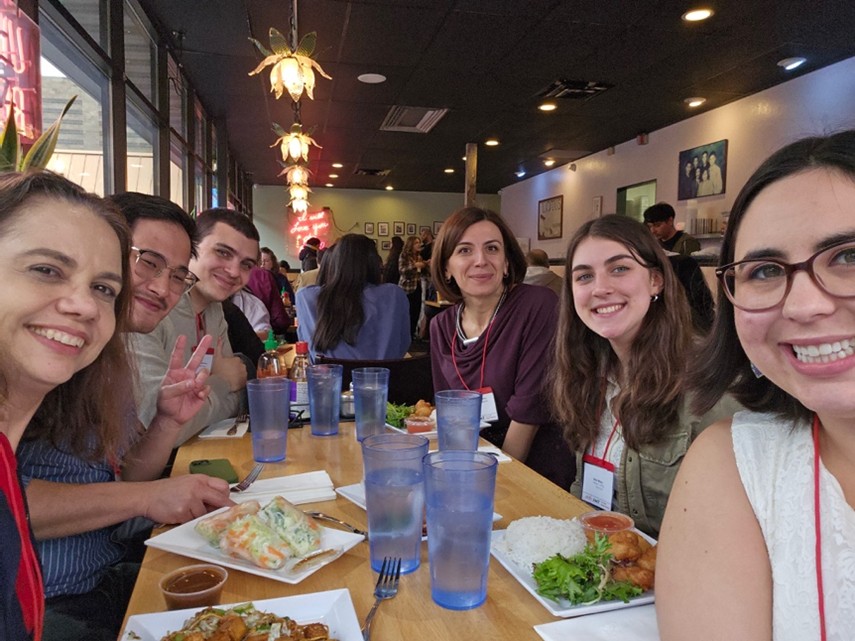
On November 8, travel grant recipients and committee members attended a luncheon at Lotus Vietnamese Restaurant, just one block from the conference hotel (pictured). It was busy (partially because of AMS-SMT attendees) but we managed to find seating for seventeen people in our group. We broke into tables of four or five, each with a committee member and a few grantees and we got to know each other and each of our unique contributions to the Society. Please apply for a travel grant and, if you receive an award, join us for the luncheon in Milwaukee!
In 2026, the committee is welcoming two new members in 2026:
Finally, we thank Lydia Bangura and Hanisha Kulothparan for their service to the committee.
The “Many Voices Travel Grant” was introduced in 2025 to broaden participation in the Annual Meeting in Minneapolis and the committee selected ten awardees from a competitive pool of applicants. The International Travel Grant was also offered for the 2025 Annual Meeting, and five awardees were selected by the committee. Please consider applying for these opportunities for the 2026 Annual Meeting in Milwaukee. Anyone may apply for the Many Voices Travel Grant! Students and first-time recipients are given preference. Applicants must reside outside of North America (US or Canada) to be eligible for the International Travel Grant.
Information on these and other SMT Travel Grants is available here: https://societymusictheory.org/grants/meetings.
On November 7, the committee hosted an impressive group of panelists for our sponsored session, “Emerging Directions in Music Theory Publication.” The session included presentations from three editorial teams and a discussion with the audience. We thank Anna Yu Wang (Music Theory in the Plural Special Issue), Táhirih Motazedian (SMT-V), Kimberly Goddard Loeffert, and John Peterson (Modeling Musical Analysis) for their inspiring insights on their publication aims and best practices that all of us involved in authoring or editing could learn from. We also thank engaged audience members who actively participated in the discussion portion of the session.
During the Student Breakfast Reception, we announced our plans for the reinvigorated Mentoring Program. We especially encourage students and junior scholars to apply. Please visit our webpage on the SMT site for more details.
On November 8, travel grant recipients and committee members attended a luncheon at Lotus Vietnamese Restaurant, just one block from the conference hotel (pictured). It was busy (partially because of AMS-SMT attendees) but we managed to find seating for seventeen people in our group. We broke into tables of four or five, each with a committee member and a few grantees and we got to know each other and each of our unique contributions to the Society. Please apply for a travel grant and, if you receive an award, join us for the luncheon in Milwaukee!
In 2026, the committee is welcoming two new members in 2026:
Finally, we thank Lydia Bangura and Hanisha Kulothparan for their service to the committee.
Christopher Segall
The Development Committee surpassed its goal of raising $25,000 this year. Thank you! The generosity of our membership has been outstanding. A full list of donors is published on the SMT website.
During the month of June, we ran a successful campaign that—for the second year in a row—was underwritten by Mary Wennerstrom, Professor Emerita at Indiana University and SMT Lifetime Member. Mary Wennerstrom added $25 to every donation of any amount. In total, we had more than one hundred donors and raised $13,000.
In November, our committee raised $2,616 through a book auction. We… Read More
The Development Committee surpassed its goal of raising $25,000 this year. Thank you! The generosity of our membership has been outstanding. A full list of donors is published on the SMT website.
During the month of June, we ran a successful campaign that—for the second year in a row—was underwritten by Mary Wennerstrom, Professor Emerita at Indiana University and SMT Lifetime Member. Mary Wennerstrom added $25 to every donation of any amount. In total, we had more than one hundred donors and raised $13,000.
In November, our committee raised $2,616 through a book auction. We received donations of rare, antiquarian treatises from three distinguished SMT members: Richard Cohn (who proposed the auction idea), Thomas Christensen, and Elizabeth Marvin. We added a few items from the SMT office, including out-of-print books and early volumes of Music Theory Spectrum. We received significant interest not only from those who placed bids on the items, but also from potential future donors who have books they would like to contribute. Thus, the SMT book auction may become an annual event.
Upcoming plans include efforts to increase both large and small donations. For large donations, we’re looking ahead to 2027 as the 50th anniversary of SMT’s founding to develop an SMT-50 campaign. For small donations, we’ve added a student member to the Development Committee who can help craft appeals to junior members of the Society.
Many of the services and grants that help SMT members are funded through donations. We recognize that everyone’s financial situation and feelings of belonging and support in SMT are different. Our messaging therefore has tried to appeal to those who can afford more than the minimum and who feel comfortable supporting the SMT community. This is how we fund travel and family care grants, student fellowships, publication subventions, conference livestreaming, and membership subsidies, among other initiatives.
The Development Committee welcomes your fundraising ideas; please e-mail the chair any time. I extend my deep gratitude to the full committee membership: Andrew Davis, Jennifer Diaz, Nora Engebretsen, Leah Frederick, Sarah Iker, Jan Miyake, and Evan Tanovich. It is our pleasure to help the Society fund resources that support scholarship and provide assistance to scholars in need.
The Development Committee surpassed its goal of raising $25,000 this year. Thank you! The generosity of our membership has been outstanding. A full list of donors is published on the SMT website.
During the month of June, we ran a successful campaign that—for the second year in a row—was underwritten by Mary Wennerstrom, Professor Emerita at Indiana University and SMT Lifetime Member. Mary Wennerstrom added $25 to every donation of any amount. In total, we had more than one hundred donors and raised $13,000.
In November, our committee raised $2,616 through a book auction. We received donations of rare, antiquarian treatises from three distinguished SMT members: Richard Cohn (who proposed the auction idea), Thomas Christensen, and Elizabeth Marvin. We added a few items from the SMT office, including out-of-print books and early volumes of Music Theory Spectrum. We received significant interest not only from those who placed bids on the items, but also from potential future donors who have books they would like to contribute. Thus, the SMT book auction may become an annual event.
Upcoming plans include efforts to increase both large and small donations. For large donations, we’re looking ahead to 2027 as the 50th anniversary of SMT’s founding to develop an SMT-50 campaign. For small donations, we’ve added a student member to the Development Committee who can help craft appeals to junior members of the Society.
Many of the services and grants that help SMT members are funded through donations. We recognize that everyone’s financial situation and feelings of belonging and support in SMT are different. Our messaging therefore has tried to appeal to those who can afford more than the minimum and who feel comfortable supporting the SMT community. This is how we fund travel and family care grants, student fellowships, publication subventions, conference livestreaming, and membership subsidies, among other initiatives.
The Development Committee welcomes your fundraising ideas; please e-mail the chair any time. I extend my deep gratitude to the full committee membership: Andrew Davis, Jennifer Diaz, Nora Engebretsen, Leah Frederick, Sarah Iker, Jan Miyake, and Evan Tanovich. It is our pleasure to help the Society fund resources that support scholarship and provide assistance to scholars in need.
Evan Jones
The Professional Development Committee (PDC) sponsored a variety of events during the Annual Meeting in November 2025, including the annual Student Breakfast Reception (organized by Gerry Lopez and Micah Mooney), the Conference Guides Program (organized by Scott Gleason), the CV Review Program (organized by Knar Abrahamyan and Despoina Panagiotidou), and a three-hour special session titled "Teaching Music Theory Through Times of Disaster and Trauma."
The Professional Development Committee (PDC) offers a range of programs and services to benefit SMT members at every stage… Read More
The Professional Development Committee (PDC) sponsored a variety of events during the Annual Meeting in November 2025, including the annual Student Breakfast Reception (organized by Gerry Lopez and Micah Mooney), the Conference Guides Program (organized by Scott Gleason), the CV Review Program (organized by Knar Abrahamyan and Despoina Panagiotidou), and a three-hour special session titled "Teaching Music Theory Through Times of Disaster and Trauma."
The Professional Development Committee (PDC) offers a range of programs and services to benefit SMT members at every stage of their careers. The committee sponsored a variety of events during the Annual Meeting in November 2025, the tastiest of which was the annual Student Breakfast Reception. Many thanks to PDC members Gerry Lopez and Micah Mooney for their assistance with this year’s breakfast, which offered student attendees a valuable opportunity to meet one another and to network in a relaxed environment.
The Conference Guides Program contributes to the professional development of SMT members in the earliest stage of their careers by pairing interested newcomers with experienced faculty and graduate students. We received twelve requests for conference guides from newer conference attendees. Thanks to all those who volunteered to serve as guides and particularly to PDC member Scott Gleason, who coordinated the program.
Sincere thanks as well to PDC members Knar Abrahamyan and Despoina Panagiotidou, who organized this year’s CV Review Session, and to reviewers Yayoi Uno Everett, Johanna Frymoyer, Megan Kaes Long, Ji Yeon Lee, Toru Momii, and Sam Reenan. A total of 22 participants received invaluable feedback on their CV and other job-application materials during this year’s session.
Finally, the PDC also sponsored a three-hour special session at the 2025 meeting entitled “Teaching Music Theory Through Times of Disaster and Trauma,” and featuring presentations by Lyn Ellen Burkett, Amy Carr-Richardson, PDC chair Evan Jones, Jeffrey Perry, and Mark Richardson. The five presentations were followed by a lively question period, then by small- and large-group discussions. The PDC thanks Lyn Ellen Burkett, who captained the proposal process and provided critical organizational leadership.
—Evan Jones
The Professional Development Committee (PDC) sponsored a variety of events during the Annual Meeting in November 2025, including the annual Student Breakfast Reception (organized by Gerry Lopez and Micah Mooney), the Conference Guides Program (organized by Scott Gleason), the CV Review Program (organized by Knar Abrahamyan and Despoina Panagiotidou), and a three-hour special session titled "Teaching Music Theory Through Times of Disaster and Trauma."
The Professional Development Committee (PDC) offers a range of programs and services to benefit SMT members at every stage of their careers. The committee sponsored a variety of events during the Annual Meeting in November 2025, the tastiest of which was the annual Student Breakfast Reception. Many thanks to PDC members Gerry Lopez and Micah Mooney for their assistance with this year’s breakfast, which offered student attendees a valuable opportunity to meet one another and to network in a relaxed environment.
The Conference Guides Program contributes to the professional development of SMT members in the earliest stage of their careers by pairing interested newcomers with experienced faculty and graduate students. We received twelve requests for conference guides from newer conference attendees. Thanks to all those who volunteered to serve as guides and particularly to PDC member Scott Gleason, who coordinated the program.
Sincere thanks as well to PDC members Knar Abrahamyan and Despoina Panagiotidou, who organized this year’s CV Review Session, and to reviewers Yayoi Uno Everett, Johanna Frymoyer, Megan Kaes Long, Ji Yeon Lee, Toru Momii, and Sam Reenan. A total of 22 participants received invaluable feedback on their CV and other job-application materials during this year’s session.
Finally, the PDC also sponsored a three-hour special session at the 2025 meeting entitled “Teaching Music Theory Through Times of Disaster and Trauma,” and featuring presentations by Lyn Ellen Burkett, Amy Carr-Richardson, PDC chair Evan Jones, Jeffrey Perry, and Mark Richardson. The five presentations were followed by a lively question period, then by small- and large-group discussions. The PDC thanks Lyn Ellen Burkett, who captained the proposal process and provided critical organizational leadership.
—Evan Jones
Jennifer Diaz
Since ConfTool—the system SMT uses to review proposals—does not automatically collect demographic information for all submissions, the data below reflects only accepted proposals. This year’s accepted program includes 106 paper presentations, 24 poster presentations, three alternative-format sessions (accepted in full), and seven integrated-format sessions comprising 21 papers. Demographic data represent unique individual presenters, some of whom identify with multiple categories or presented in more than one format. As a result, the number of presenters (174) exceeds the… Read More
Since ConfTool—the system SMT uses to review proposals—does not automatically collect demographic information for all submissions, the data below reflects only accepted proposals. This year’s accepted program includes 106 paper presentations, 24 poster presentations, three alternative-format sessions (accepted in full), and seven integrated-format sessions comprising 21 papers. Demographic data represent unique individual presenters, some of whom identify with multiple categories or presented in more than one format. As a result, the number of presenters (174) exceeds the number of accepted proposals (154), and demographic totals do not align exactly.
Since ConfTool—the system SMT uses to review proposals—does not automatically collect demographic information for all submissions, the data below reflects only accepted proposals. This year’s accepted program includes 106 paper presentations, 24 poster presentations, three alternative-format sessions (accepted in full), and seven integrated-format sessions comprising 21 papers. Demographic data represent unique individual presenters, some of whom identify with multiple categories or presented in more than one format. As a result, the number of presenters (174) exceeds the number of accepted proposals (154), and demographic totals do not align exactly.
Mark Richardson
As 2025 Chair of the Publication Awards Committee, I would like to thank my colleagues Damian Blättler, Juan Chattah, and Tomoko Deguchi for their extraordinary insight, diligence, and helpfulness. We were enormously impressed at the depth and scholarly range of the articles under consideration this year, and, after careful consideration, we decided to award four Emerging Scholar awards and five Outstanding Publication awards.
The first category is the Emerging Scholar Award (Article) which is given for an… Read More
As 2025 Chair of the Publication Awards Committee, I would like to thank my colleagues Damian Blättler, Juan Chattah, and Tomoko Deguchi for their extraordinary insight, diligence, and helpfulness. We were enormously impressed at the depth and scholarly range of the articles under consideration this year, and, after careful consideration, we decided to award four Emerging Scholar awards and five Outstanding Publication awards.
The first category is the Emerging Scholar Award (Article) which is given for an article published no more than seven calendar years after the author's receipt of the Ph.D. (or, in the case of someone who does not hold a Ph.D., before the author reaches the age of 40).
The first article offers a groundbreaking contribution to the field in defining a clear methodology for analyzing vocal placement within a virtual space in recent popular music by using computer software to isolate vocal tracks, describing the method of analysis, and displaying a 3D image to create a quantifiable method to compare the different tracks.
The first Emerging Scholar Award goes to Michèle Duguay for her article "Analyzing Vocal Placement in Recorded Virtual Space," published in Music Theory Online.
Our second article sheds light on pentatonic scale transformations and contributes to a significant enrichment and advancement of Chinese music theory. Precise language is adopted to the four basic xuangong transformations, and quin-directed transformation. The transformations are conceived as theoretical conception and practical application using examples spanning from Confucian court music, traditional instrumental music, Cantopop, and Chinese new music, both tonal and atonal.
The second Emerging Scholar Award goes to Nathan Lam for his article "Pentatonic Xuangong Transformations in Chinese Music," published in Music Theory Online.
The third article explores metric variety across 165 recordings of a single song to produce a model of dynamics within a musical ensemble, demonstrating the shared knowledge that allows for distributed cognition, the musical effects that makes possible, and how these performance relationships are interpersonal power dynamics as well.
The third Emerging Scholar Award goes to Nathaniel Michell's article "On Meter and the Social Dynamics of Cueing in Bill Monroe's 'Muleskinner Blues,'" published in Music Theory Online.
In the fourth article, the author reveals how Figaro's aria from Mozart's opera The Marriage of Figaro, long taken as a prototypical minuet, resists that label when examined through its phrase structure, hypermeter, and rhythmic design. Rather, the piece may gesture instead toward the contredanse, carrying different social implications and a subtler irony. In questioning how listeners historically recognized style, this article invites a more transparent, historically grounded, and cognitively informed topic theory.
The fourth Emerging Scholar Award goes to Olga Sánchez-Kisielewska for her article "On Figaro's Alleged Minuet and Some Challenges and Opportunities of Topic Theory" published in Music Theory Spectrum.
The second category is the Outstanding Publication Award (Article), which is given for a distinguished article by an author of any age or career stage.
The first article presents detailed research about the sources and transmission of two cornerstones of the modern conception of harmony. The study keeps straight the many uses of the term, as well as keeping track of the reactions and rebuttals across the work of various scholars amidst all their misquotations and misattributions, ultimately arriving at the idea that harmony's principal objects are chords of three or more notes, and that chord motion is dictated by relationships between them in which consonance and dissonance play a role.
The first Outstanding Publication Award goes to David E. Cohen's article "From Ramos to Rameau: Toward the Origins of the Modern Concept of Harmony," published in the Journal of Music Theory.
Our second article offers a significant expansion on the everyday music theory classroom topic: the cadential six-four. Examples of unconventional harmonies that function as cadential six-fours, are derived from diverse types of music from late-19th- to 20th-century composers and popular genres. These harmonies are significantly modified on the surface while retaining the chord's underlying rhetorical cadential function. The article demonstrates the conflict that formed between a chord's grammatical syntax and its morphology while tracing the development of its harmonic conception and independence.
The second Outstanding Publication Award goes to Gabriel Fankhauser for his article, "Displaced Cadential Six-Four Chords," published in Intégral.
The third article uses innovative methodology to explore music-dance interactions. Devising a first-of-its-kind notation that pairs dance information with musical score as well as using archival video clips to clearly and convincingly illustrate the subtle imitations or metric dissonance between dance steps and music, the article shows how Balanchine's choreography applies musical techniques to dance at a high level.
The third Outstanding Publication Award goes to Kara Yoo Leaman for her article "George Balanchine's Art of Choreographic Musicality in Tschaikovsky Pas de Deux," published in Music Theory Spectrum.
The fourth article offers an innovation discussion with a methodology drawing upon schemata (Gjerdingen) and improvisation in determining accented core tones and tritone resolution of bass and melodic skeleton to distinguish the important scale degrees of Galant schema passages in twenty seven works that extends the published research into labeled schema within formal structures and use in the creative process.
The fourth Outstanding Publication Award goes to Gilad Rabinovitch and Aaron Carter-Enyi for their article "Melodic Organization and Sequential Ordering of Galant Schemata," published in Music Theory Online.
In the fifth article, the authors reimagine the very foundations of corpus construction by exposing how inherited social hierarchies—racism, sexism, and exclusion—can silently shape the repertoires we treat as representative. The authors propose a methodological and ethical framework for rebalancing the demographics of musical corpora and confronting the biases embedded in our tools of analysis. Their study is both empirically rigorous and morally clear-sighted, charting a path toward corpus work that not only measures music but also reflects the diversity of those who make it.
The fifth Outstanding Publication Award goes to Nicholas Shea, Lindsey Reymore, Christopher White, Ben Duinker, Leigh VanHandel, Matthew Zeller, and Nicole Biamonte for their article "Diversity in Corpus Studies," published in Music Theory Online.
—Mark Richardson
As 2025 Chair of the Publication Awards Committee, I would like to thank my colleagues Damian Blättler, Juan Chattah, and Tomoko Deguchi for their extraordinary insight, diligence, and helpfulness. We were enormously impressed at the depth and scholarly range of the articles under consideration this year, and, after careful consideration, we decided to award four Emerging Scholar awards and five Outstanding Publication awards.
The first category is the Emerging Scholar Award (Article) which is given for an article published no more than seven calendar years after the author's receipt of the Ph.D. (or, in the case of someone who does not hold a Ph.D., before the author reaches the age of 40).
The first article offers a groundbreaking contribution to the field in defining a clear methodology for analyzing vocal placement within a virtual space in recent popular music by using computer software to isolate vocal tracks, describing the method of analysis, and displaying a 3D image to create a quantifiable method to compare the different tracks.
The first Emerging Scholar Award goes to Michèle Duguay for her article "Analyzing Vocal Placement in Recorded Virtual Space," published in Music Theory Online.
Our second article sheds light on pentatonic scale transformations and contributes to a significant enrichment and advancement of Chinese music theory. Precise language is adopted to the four basic xuangong transformations, and quin-directed transformation. The transformations are conceived as theoretical conception and practical application using examples spanning from Confucian court music, traditional instrumental music, Cantopop, and Chinese new music, both tonal and atonal.
The second Emerging Scholar Award goes to Nathan Lam for his article "Pentatonic Xuangong Transformations in Chinese Music," published in Music Theory Online.
The third article explores metric variety across 165 recordings of a single song to produce a model of dynamics within a musical ensemble, demonstrating the shared knowledge that allows for distributed cognition, the musical effects that makes possible, and how these performance relationships are interpersonal power dynamics as well.
The third Emerging Scholar Award goes to Nathaniel Michell's article "On Meter and the Social Dynamics of Cueing in Bill Monroe's 'Muleskinner Blues,'" published in Music Theory Online.
In the fourth article, the author reveals how Figaro's aria from Mozart's opera The Marriage of Figaro, long taken as a prototypical minuet, resists that label when examined through its phrase structure, hypermeter, and rhythmic design. Rather, the piece may gesture instead toward the contredanse, carrying different social implications and a subtler irony. In questioning how listeners historically recognized style, this article invites a more transparent, historically grounded, and cognitively informed topic theory.
The fourth Emerging Scholar Award goes to Olga Sánchez-Kisielewska for her article "On Figaro's Alleged Minuet and Some Challenges and Opportunities of Topic Theory" published in Music Theory Spectrum.
The second category is the Outstanding Publication Award (Article), which is given for a distinguished article by an author of any age or career stage.
The first article presents detailed research about the sources and transmission of two cornerstones of the modern conception of harmony. The study keeps straight the many uses of the term, as well as keeping track of the reactions and rebuttals across the work of various scholars amidst all their misquotations and misattributions, ultimately arriving at the idea that harmony's principal objects are chords of three or more notes, and that chord motion is dictated by relationships between them in which consonance and dissonance play a role.
The first Outstanding Publication Award goes to David E. Cohen's article "From Ramos to Rameau: Toward the Origins of the Modern Concept of Harmony," published in the Journal of Music Theory.
Our second article offers a significant expansion on the everyday music theory classroom topic: the cadential six-four. Examples of unconventional harmonies that function as cadential six-fours, are derived from diverse types of music from late-19th- to 20th-century composers and popular genres. These harmonies are significantly modified on the surface while retaining the chord's underlying rhetorical cadential function. The article demonstrates the conflict that formed between a chord's grammatical syntax and its morphology while tracing the development of its harmonic conception and independence.
The second Outstanding Publication Award goes to Gabriel Fankhauser for his article, "Displaced Cadential Six-Four Chords," published in Intégral.
The third article uses innovative methodology to explore music-dance interactions. Devising a first-of-its-kind notation that pairs dance information with musical score as well as using archival video clips to clearly and convincingly illustrate the subtle imitations or metric dissonance between dance steps and music, the article shows how Balanchine's choreography applies musical techniques to dance at a high level.
The third Outstanding Publication Award goes to Kara Yoo Leaman for her article "George Balanchine's Art of Choreographic Musicality in Tschaikovsky Pas de Deux," published in Music Theory Spectrum.
The fourth article offers an innovation discussion with a methodology drawing upon schemata (Gjerdingen) and improvisation in determining accented core tones and tritone resolution of bass and melodic skeleton to distinguish the important scale degrees of Galant schema passages in twenty seven works that extends the published research into labeled schema within formal structures and use in the creative process.
The fourth Outstanding Publication Award goes to Gilad Rabinovitch and Aaron Carter-Enyi for their article "Melodic Organization and Sequential Ordering of Galant Schemata," published in Music Theory Online.
In the fifth article, the authors reimagine the very foundations of corpus construction by exposing how inherited social hierarchies—racism, sexism, and exclusion—can silently shape the repertoires we treat as representative. The authors propose a methodological and ethical framework for rebalancing the demographics of musical corpora and confronting the biases embedded in our tools of analysis. Their study is both empirically rigorous and morally clear-sighted, charting a path toward corpus work that not only measures music but also reflects the diversity of those who make it.
The fifth Outstanding Publication Award goes to Nicholas Shea, Lindsey Reymore, Christopher White, Ben Duinker, Leigh VanHandel, Matthew Zeller, and Nicole Biamonte for their article "Diversity in Corpus Studies," published in Music Theory Online.
—Mark Richardson
Matthew BaileyShea
The SMT Book Publication Awards Committee gave awards to five excellent books in 2025. The Emerging Scholar Book Award went to Anabel Maler for Seeing Voices: Analyzing Sign Language Music, published by Oxford University Press. There were many excellent eligible for the Wallace Berry Book Award and the committee chose four recipients: Richard Beaudoin for Sounds as They Are: The Unwritten Music in Classical Recordings, published by Oxford University Press, Michael Dodds for his book From Modes to Keys in Early Modern Music Theory, published by Oxford University… Read More
The SMT Book Publication Awards Committee gave awards to five excellent books in 2025. The Emerging Scholar Book Award went to Anabel Maler for Seeing Voices: Analyzing Sign Language Music, published by Oxford University Press. There were many excellent eligible for the Wallace Berry Book Award and the committee chose four recipients: Richard Beaudoin for Sounds as They Are: The Unwritten Music in Classical Recordings, published by Oxford University Press, Michael Dodds for his book From Modes to Keys in Early Modern Music Theory, published by Oxford University Press, Philip Ewell for On Music Theory, and Making Music More Welcoming for Everyone, published by the University of Michigan Press, and Yoel Greenberg for How Sonata Forms: A Bottom-Up Approach to Musical Form, published by Oxford University Press. We congratulate all five authors on their outstanding work.
Matt BaileyShea, Chair of the SMT Book Publication Awards Committee
The SMT Book Publication Awards Committee gave awards to five excellent books in 2025. The Emerging Scholar Book Award went to Anabel Maler for Seeing Voices: Analyzing Sign Language Music, published by Oxford University Press. There were many excellent eligible for the Wallace Berry Book Award and the committee chose four recipients: Richard Beaudoin for Sounds as They Are: The Unwritten Music in Classical Recordings, published by Oxford University Press, Michael Dodds for his book From Modes to Keys in Early Modern Music Theory, published by Oxford University Press, Philip Ewell for On Music Theory, and Making Music More Welcoming for Everyone, published by the University of Michigan Press, and Yoel Greenberg for How Sonata Forms: A Bottom-Up Approach to Musical Form, published by Oxford University Press. We congratulate all five authors on their outstanding work.
Matt BaileyShea, Chair of the SMT Book Publication Awards Committee
Aaron Grant
The Music Theory Pedagogy and Public-Facing Scholarship Publication Awards Committee honored the following pieces of scholarship at this year's SMT annual meeting for their contributions:
Duinker, Ben. “Rhythmic Theory Pedagogy, Ways of Knowing, and Experiential Learning.” Journal of Music Theory Pedagogy 37, no. 1 (January 1, 2023).
"Duinker's article skillfully outlines an approach for teaching rhythmic theory that seamlessly integrates rhythmic concepts with musical performance. Drawing on a rich array of musical styles, Duinker creates a way to link theory to the student's musical lives outside the theory classroom. What sets this article apart is the ease with which a pedagogue could incorporate its methods into their current curricula without any friction."
Louden, Sarah, and Adem Birson. "NYU Music Theory & Aural Skills Anthologies." NYU Music Theory Resources, NYU Steinhardt Music Theory & History Program (2024).
"Louden and Birson's theory and aural skills anthologies are an impressive resource that will be invaluable to any pedagogue. Organized by concept, the anthologies contain cleanly engraved musical examples with accurate measure numbers and engaging activities from a wide array of musical styles from Menken to Coleridge-Taylor. Especially noteworthy are the time-stamped YouTube links which eliminate the need for students or instructors to hunt through lengthy recordings to find relevant excerpts."
Monahan, Seth. "Basics of Classical Harmony & Counterpoint." Posted 2022–2024, by Seth Monahan, YouTube.
"Monahan's series is a tour de force in how to engagingly introduce traditional topics in harmony and counterpoint to an undergraduate audience. The production quality is exceptional, the pedagogical flow is extraordinary, and Monahan's enthusiasm for the material ties it all together. This resource is remarkably versatile—it can serve as the backbone of an entire course or be used selectively to supplement existing materials."
Maust, Paula. Expanding the Music Theory Canon: Inclusive Examples for Analysis from the Common Practice Period. Albany: State University of New York Press, 2023.
"Maust’s resource offers a timely and thoughtfully structured approach to broadening the repertoire used in teaching common-practice period concepts. Organized around topics typical of an undergraduate harmony course, the book enables educators to seamlessly incorporate a more diverse range of composers into their existing curricula."
Chua, Daniel K. L. Music & Joy: Lessons on the Good Life. New Haven: Yale University Press, 2024.
"Chua’s Music & Joy is aptly titled; the book is a playful, deeply thoughtful exploration of the question: 'Is music joy?' Drawing on sources from the history of music theory to Confucian philosophy and even the trinkets on Beethoven’s desk, Chua crafts a compelling and accessible case for 'yes.' Especially notable is how Chua links this inquiry to current political and environmental challenges, offering a timely argument for music's relevance to our contemporary world."
Capuzzo, Guy. "Simultaneous Distinct Headbanging Patterns in Heavy Metal." SMT-V 10.4 (July 2024).
"Capuzzo makes the case that headbanging patterns are not just mere traditions for heavy metal concertgoers, but rather expressions of embodied metrical experiences. Capuzzo demonstrates how headbanging patterns can show people entraining to different but equally plausible metrical interpretations. In doing so, Capuzzo offers a fresh lens through which theorists and, really, all listeners can engage more deeply with the live concert experience."
The Music Theory Pedagogy and Public-Facing Scholarship Publication Awards Committee honored the following pieces of scholarship at this year's SMT annual meeting for their contributions:
Duinker, Ben. “Rhythmic Theory Pedagogy, Ways of Knowing, and Experiential Learning.” Journal of Music Theory Pedagogy 37, no. 1 (January 1, 2023).
"Duinker's article skillfully outlines an approach for teaching rhythmic theory that seamlessly integrates rhythmic concepts with musical performance. Drawing on a rich array of musical styles, Duinker creates a way to link theory to the student's musical lives outside the theory classroom. What sets this article apart is the ease with which a pedagogue could incorporate its methods into their current curricula without any friction."
Louden, Sarah, and Adem Birson. "NYU Music Theory & Aural Skills Anthologies." NYU Music Theory Resources, NYU Steinhardt Music Theory & History Program (2024).
"Louden and Birson's theory and aural skills anthologies are an impressive resource that will be invaluable to any pedagogue. Organized by concept, the anthologies contain cleanly engraved musical examples with accurate measure numbers and engaging activities from a wide array of musical styles from Menken to Coleridge-Taylor. Especially noteworthy are the time-stamped YouTube links which eliminate the need for students or instructors to hunt through lengthy recordings to find relevant excerpts."
Monahan, Seth. "Basics of Classical Harmony & Counterpoint." Posted 2022–2024, by Seth Monahan, YouTube.
"Monahan's series is a tour de force in how to engagingly introduce traditional topics in harmony and counterpoint to an undergraduate audience. The production quality is exceptional, the pedagogical flow is extraordinary, and Monahan's enthusiasm for the material ties it all together. This resource is remarkably versatile—it can serve as the backbone of an entire course or be used selectively to supplement existing materials."
Maust, Paula. Expanding the Music Theory Canon: Inclusive Examples for Analysis from the Common Practice Period. Albany: State University of New York Press, 2023.
"Maust’s resource offers a timely and thoughtfully structured approach to broadening the repertoire used in teaching common-practice period concepts. Organized around topics typical of an undergraduate harmony course, the book enables educators to seamlessly incorporate a more diverse range of composers into their existing curricula."
Chua, Daniel K. L. Music & Joy: Lessons on the Good Life. New Haven: Yale University Press, 2024.
"Chua’s Music & Joy is aptly titled; the book is a playful, deeply thoughtful exploration of the question: 'Is music joy?' Drawing on sources from the history of music theory to Confucian philosophy and even the trinkets on Beethoven’s desk, Chua crafts a compelling and accessible case for 'yes.' Especially notable is how Chua links this inquiry to current political and environmental challenges, offering a timely argument for music's relevance to our contemporary world."
Capuzzo, Guy. "Simultaneous Distinct Headbanging Patterns in Heavy Metal." SMT-V 10.4 (July 2024).
"Capuzzo makes the case that headbanging patterns are not just mere traditions for heavy metal concertgoers, but rather expressions of embodied metrical experiences. Capuzzo demonstrates how headbanging patterns can show people entraining to different but equally plausible metrical interpretations. In doing so, Capuzzo offers a fresh lens through which theorists and, really, all listeners can engage more deeply with the live concert experience."
Sam Falotico and Ruixue Hu
The SMT Analysis of World Musics Interest Group (AWMIG) held its annual meeting jointly with the Autographs and Archival Documents Interest Group on Saturday, November 8, at 12:30pm. The meeting included presentations by Yonatan Malin, Nico Schuler, Aidan McGartland, and Eli Oesterheld.
Members of the AWMIG meet virtually every other month with our sister group, the SEM Analysis Interest Group. We generally have someone present their research (at various stages of development, from in-progress field work to published books and articles) during these meetings, and we would love to see you at the next one! Recent discussions include: Lindsey Reymore, Daniel Shanahan, and Josh Albrecht on their book-in-progress on David Huron’s work and legacy; Bruno Deschêns and Nick Bellando on their article “The Role of Tone-Colour in Japanese Shakuhachi Music” (2020); and Oscar Smith on a chapter from his dissertation on Gamelan music. We announce these meetings as well as CFPs, publications, and other events on our Google Groups page. If you would like to be added to this listserv, please e-mail our co-chairs, Sam Falotico (sfalotic@u.rochester.edu) and Ruixue Hu (rhu14@u.rochester.edu).
– Sam Falotico and Ruixue Hu
The SMT Analysis of World Musics Interest Group (AWMIG) held its annual meeting jointly with the Autographs and Archival Documents Interest Group on Saturday, November 8, at 12:30pm. The meeting included presentations by Yonatan Malin, Nico Schuler, Aidan McGartland, and Eli Oesterheld.
Members of the AWMIG meet virtually every other month with our sister group, the SEM Analysis Interest Group. We generally have someone present their research (at various stages of development, from in-progress field work to published books and articles) during these meetings, and we would love to see you at the next one! Recent discussions include: Lindsey Reymore, Daniel Shanahan, and Josh Albrecht on their book-in-progress on David Huron’s work and legacy; Bruno Deschêns and Nick Bellando on their article “The Role of Tone-Colour in Japanese Shakuhachi Music” (2020); and Oscar Smith on a chapter from his dissertation on Gamelan music. We announce these meetings as well as CFPs, publications, and other events on our Google Groups page. If you would like to be added to this listserv, please e-mail our co-chairs, Sam Falotico (sfalotic@u.rochester.edu) and Ruixue Hu (rhu14@u.rochester.edu).
– Sam Falotico and Ruixue Hu
Jamuna Samuel
The Autographs and Archival Documents Interest Group (AADIG) and the Analysis of World Musics Interest Group combined this year to hold a joint annual meeting, which took place on Saturday, November 8th during the 2025 SMT Annual Meeting in Minneapolis, Minnesota.
The meeting featured four lightning talks: Yonatan Malin (University of Colorado-Boulder) presented "Archives and Living Traditions: Interpreting Klezmer Manuscripts from the Vernadsky National Library of Ukraine"; Nico Schuler (Texas State University), "Digital Archival Research… Read More
The Autographs and Archival Documents Interest Group (AADIG) and the Analysis of World Musics Interest Group combined this year to hold a joint annual meeting, which took place on Saturday, November 8th during the 2025 SMT Annual Meeting in Minneapolis, Minnesota.
The meeting featured four lightning talks: Yonatan Malin (University of Colorado-Boulder) presented "Archives and Living Traditions: Interpreting Klezmer Manuscripts from the Vernadsky National Library of Ukraine"; Nico Schuler (Texas State University), "Digital Archival Research for the Rediscovery of Late-19th Century African-American Music: A Case Study"; Aidan McGartland (McGill University), "Uncovering Interculturalism in Margaret Sutherland's The Young Kabbarli"; and Eli Oesterheld (Northwestern University), "'And They Say There Are No New Melodies': Tensions Between Novel Cultural Practices and Familiar Musical Syntax in the Music of the John Frum Cargo Cult."
The session concluded with separate simultaneous business meetings of the interest groups. We announced that Lee Cannon-Brown was elected the new co-chair of the AADIG and thanked outgoing co-chair Christoph Neidhöfer for his leadership over the last three years.
The AADIG promotes scholarship that is informed by the study of archival materials, broadly construed. To remain updated on all group activities we encourage everyone to see our Facebook and Knowledge Commons pages, as well as our webpage with SMT, where you can sign up for our e-mail list.
The Autographs and Archival Documents Interest Group (AADIG) and the Analysis of World Musics Interest Group combined this year to hold a joint annual meeting, which took place on Saturday, November 8th during the 2025 SMT Annual Meeting in Minneapolis, Minnesota.
The meeting featured four lightning talks: Yonatan Malin (University of Colorado-Boulder) presented "Archives and Living Traditions: Interpreting Klezmer Manuscripts from the Vernadsky National Library of Ukraine"; Nico Schuler (Texas State University), "Digital Archival Research for the Rediscovery of Late-19th Century African-American Music: A Case Study"; Aidan McGartland (McGill University), "Uncovering Interculturalism in Margaret Sutherland's The Young Kabbarli"; and Eli Oesterheld (Northwestern University), "'And They Say There Are No New Melodies': Tensions Between Novel Cultural Practices and Familiar Musical Syntax in the Music of the John Frum Cargo Cult."
The session concluded with separate simultaneous business meetings of the interest groups. We announced that Lee Cannon-Brown was elected the new co-chair of the AADIG and thanked outgoing co-chair Christoph Neidhöfer for his leadership over the last three years.
The AADIG promotes scholarship that is informed by the study of archival materials, broadly construed. To remain updated on all group activities we encourage everyone to see our Facebook and Knowledge Commons pages, as well as our webpage with SMT, where you can sign up for our e-mail list.
Stefanie Bilidas and Rachel Gain
During our business meeting at the 2025 AMS-SMT Joint Annual Meeting in Minneapolis, we met jointly with the Performance and Analysis Interest Group for a session of lightning talks from Nate Mitchell, Ash Mach, and Amy Ming Wai Tai. The session was attended by 25 participants, who enjoyed the chance to engage with all the participants through a general round table discussion. We would like to thank Rachel Gain for their leadership as co-chair, and we will run elections to select a new co-chair. We continue to solicit suggestions for new publications on dance and movement to add to our… Read More
During our business meeting at the 2025 AMS-SMT Joint Annual Meeting in Minneapolis, we met jointly with the Performance and Analysis Interest Group for a session of lightning talks from Nate Mitchell, Ash Mach, and Amy Ming Wai Tai. The session was attended by 25 participants, who enjoyed the chance to engage with all the participants through a general round table discussion. We would like to thank Rachel Gain for their leadership as co-chair, and we will run elections to select a new co-chair. We continue to solicit suggestions for new publications on dance and movement to add to our collective Dance/Movement and Music Bibliography and submissions for our DMIG resource depository. For more information on DMIG, its events, and its resources, please visit our DMIG Knowledge Commons page and DMIG website, or e-mail the chairs at danceandmovement@societymusictheory.org.
During our business meeting at the 2025 AMS-SMT Joint Annual Meeting in Minneapolis, we met jointly with the Performance and Analysis Interest Group for a session of lightning talks from Nate Mitchell, Ash Mach, and Amy Ming Wai Tai. The session was attended by 25 participants, who enjoyed the chance to engage with all the participants through a general round table discussion. We would like to thank Rachel Gain for their leadership as co-chair, and we will run elections to select a new co-chair. We continue to solicit suggestions for new publications on dance and movement to add to our collective Dance/Movement and Music Bibliography and submissions for our DMIG resource depository. For more information on DMIG, its events, and its resources, please visit our DMIG Knowledge Commons page and DMIG website, or e-mail the chairs at danceandmovement@societymusictheory.org.
Clair Nguyen
At the SMT Annual Meeting in Minneapolis, the Film and Multimedia Interest Group met jointly with the AMS Music and Media Study Group for a lively poster session dedicated to the “Intersections of Music and Multimedia.” Posters were presented by Wenshi Chen, Greg Martin, Caleb Rebarchak, Sam Falotico, Adam Rizzo, Joyce Li Yue, and Natalie Miller. A wide range of topics were featured, including intertextuality in the J-Pop music videos of Kyary Pamyu Pamyu, improvised algorhythmic EDM, emotion and narrative in Bridgerton, the psychology of audiovisual congruence, the challenge of recorded sound to Eurocentricity, rhythmic gaming in Super Mario Bros. Wonder, and the influence of the Western genre on musical soundscapes in The Mandalorian. Many thanks to all our participants for their excellent scholarship and to all of those in attendance for making it such a wonderful evening.
The interest group also announced the two winners of this year’s Film and Multimedia Interest Group Publication Award: Julianne Grasso for her article “Affective Zones: The Spaces of Possibility in Video Game Music,” published in Music and the Moving Image, and Nathaniel Mitchell for “Variations on a Theme by K. K. Slider: Memory and Play in Animal Crossing: New Horizons,” published by SMT-V. Congratulations to our winners, and huge thanks to our Publication Award Committee, chaired by William Ayers, Frank Lehman, and Abby Shupe!
While Chelsea Oden is stepping away from co-chair duties, and we wish her nothing but the best, we are happy to have such a vibrant community of scholars who are willing to take on service for the FMIG. Please let us know if you would like to collaborate or serve the group.
For more information about our group, please visit our website and join our e-mail list on Knowledge Commons. We encourage your active involvement, and we look forward to seeing you at our next event.
At the SMT Annual Meeting in Minneapolis, the Film and Multimedia Interest Group met jointly with the AMS Music and Media Study Group for a lively poster session dedicated to the “Intersections of Music and Multimedia.” Posters were presented by Wenshi Chen, Greg Martin, Caleb Rebarchak, Sam Falotico, Adam Rizzo, Joyce Li Yue, and Natalie Miller. A wide range of topics were featured, including intertextuality in the J-Pop music videos of Kyary Pamyu Pamyu, improvised algorhythmic EDM, emotion and narrative in Bridgerton, the psychology of audiovisual congruence, the challenge of recorded sound to Eurocentricity, rhythmic gaming in Super Mario Bros. Wonder, and the influence of the Western genre on musical soundscapes in The Mandalorian. Many thanks to all our participants for their excellent scholarship and to all of those in attendance for making it such a wonderful evening.
The interest group also announced the two winners of this year’s Film and Multimedia Interest Group Publication Award: Julianne Grasso for her article “Affective Zones: The Spaces of Possibility in Video Game Music,” published in Music and the Moving Image, and Nathaniel Mitchell for “Variations on a Theme by K. K. Slider: Memory and Play in Animal Crossing: New Horizons,” published by SMT-V. Congratulations to our winners, and huge thanks to our Publication Award Committee, chaired by William Ayers, Frank Lehman, and Abby Shupe!
While Chelsea Oden is stepping away from co-chair duties, and we wish her nothing but the best, we are happy to have such a vibrant community of scholars who are willing to take on service for the FMIG. Please let us know if you would like to collaborate or serve the group.
For more information about our group, please visit our website and join our e-mail list on Knowledge Commons. We encourage your active involvement, and we look forward to seeing you at our next event.
Aaron Carter-Ényì
The Global Interculturalism and Musical Peripheries Interest Group (GIMP) held a panel on “Interculturalism in Brazilian, Ghanaian, and Nigerian Music” utilizing a broad range of analytical approaches reflective of the boundary-crossing nature of the musical works we celebrate as a community. The repertoires represented both embrace and defy categories such as art music and jazz, often alluding to features and forms of indigenous traditional, European classical, and contemporary popular musics. We thank Alcalde, Choi, Guerra and Vishio for their brief but thought-provoking presentations… Read More
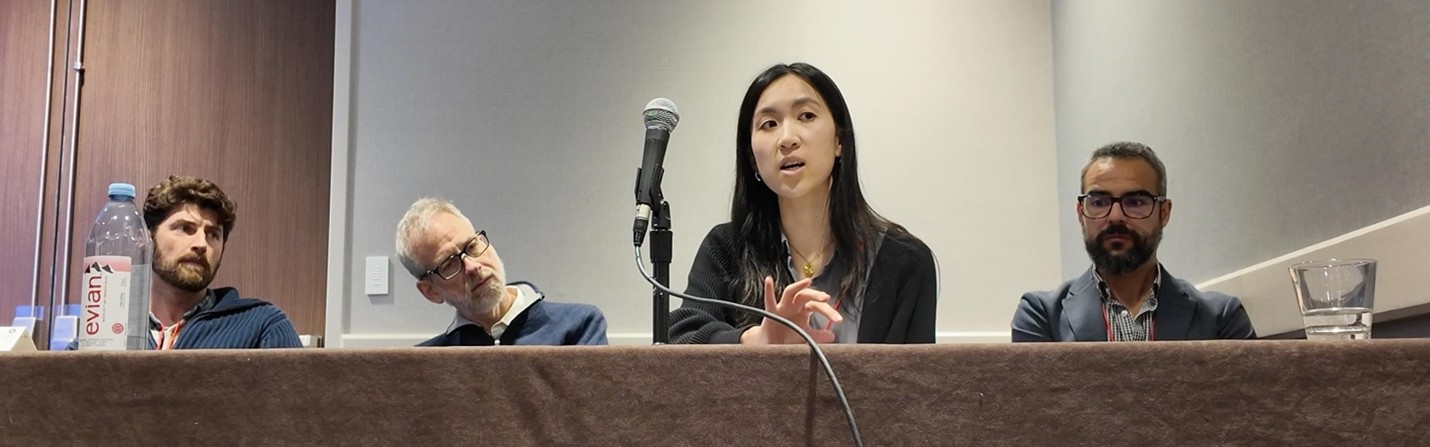
The Global Interculturalism and Musical Peripheries Interest Group (GIMP) held a panel on “Interculturalism in Brazilian, Ghanaian, and Nigerian Music” utilizing a broad range of analytical approaches reflective of the boundary-crossing nature of the musical works we celebrate as a community. The repertoires represented both embrace and defy categories such as art music and jazz, often alluding to features and forms of indigenous traditional, European classical, and contemporary popular musics. We thank Alcalde, Choi, Guerra and Vishio for their brief but thought-provoking presentations followed by a lively discussion with the audience that highlighted the important musical connections between West Africa and Brazil.
The GIMP IG is preparing for another exciting session for Milwaukee 2026, and we welcome ideas and especially offers for collaboration with the rest of SMT. Please be in touch with the co-chairs to join the interest group and get involved. We look forward to hearing from you!
Photo of 2025 GIMP Panelists. From left to right: Stephen Guerra, Anton Vishio, Hang Ki Choi, and Bruno Alcalde.
The Global Interculturalism and Musical Peripheries Interest Group (GIMP) held a panel on “Interculturalism in Brazilian, Ghanaian, and Nigerian Music” utilizing a broad range of analytical approaches reflective of the boundary-crossing nature of the musical works we celebrate as a community. The repertoires represented both embrace and defy categories such as art music and jazz, often alluding to features and forms of indigenous traditional, European classical, and contemporary popular musics. We thank Alcalde, Choi, Guerra and Vishio for their brief but thought-provoking presentations followed by a lively discussion with the audience that highlighted the important musical connections between West Africa and Brazil.
The GIMP IG is preparing for another exciting session for Milwaukee 2026, and we welcome ideas and especially offers for collaboration with the rest of SMT. Please be in touch with the co-chairs to join the interest group and get involved. We look forward to hearing from you!
Photo of 2025 GIMP Panelists. From left to right: Stephen Guerra, Anton Vishio, Hang Ki Choi, and Bruno Alcalde.
Stephen Gomez-Peck and Ben Wadsworth
The Hip-Hop/Rap Interest Group (HHRIG), founded in 2022 at SMT New Orleans, had a productive year that featured four events: a planning meeting in February, our traditional, online summer research forum in June, a joint meeting with the Jazz IG at SMT Minneapolis, and an off-site event in Minneapolis, organized by member Jacob P. Cupps (Washington University in St. Louis), which brought local hip-hop artists and HHRIG-affiliated scholars into dialogue. We also published our first Mixtape Award, HHRIG’s version of a publication award, which was in the design of a cassette tape and… Read More
The Hip-Hop/Rap Interest Group (HHRIG), founded in 2022 at SMT New Orleans, had a productive year that featured four events: a planning meeting in February, our traditional, online summer research forum in June, a joint meeting with the Jazz IG at SMT Minneapolis, and an off-site event in Minneapolis, organized by member Jacob P. Cupps (Washington University in St. Louis), which brought local hip-hop artists and HHRIG-affiliated scholars into dialogue. We also published our first Mixtape Award, HHRIG’s version of a publication award, which was in the design of a cassette tape and distributed to conference attendees. For this year, thanks to the work of our Program Committee Chair (Kjell-Andreas Odekkalv, University of Oslo) and member (Devin Guerrero, Texas Tech University), the award recognizes a wide range of publications on different subtopics such as sampling and flow. We have thereby fulfilled all stated goals from 2022, which include greater collaboration between scholars and practitioners of hip-hop/rap, and the recognition of outstanding research in the field of music theory on hip-hop/rap music.
For our joint meeting with Jazz in Minneapolis, a CFP for lightning talks was developed by a program committee including two co-chairs of each IG plus an additional member from Jazz and Hip-Hop/Rap. To make the review process more helpful, each applicant was given informal feedback on their proposal. At the meeting, five lightning talks were presented: “Deconstructing Jazz Rap: Footwork, Sampling, and Formal Process in RP Boo & Armand Hammer’s ‘Blood Running High’ (2023)” by Jacob. P. Cupps; “Hargrove’s Horns: An Analysis of Roy Hargrove’s Horn Arrangements for the Soulquarians” by Collin Felter (University of California, Irvine); “Analyzing Jazz–Hip-Hop Hybridity: Tension and Release in the Music of DOMi & JD BECK” by Anna Peloso (Indiana University); “Jazz as Collaborator and Canvas in Rap: McKinley Dixon’s Conversational Soundscape in Beloved! Paradise! Jazz!?” by Leah Amarosa (University of Oregon); and “Interactions Between Jazz Schemata, Melody, and Formal Position in Popular Music” by Kevin Costello (Queens College).
The off-conference outreach event, entitled Sound Ecologies: Sonic Environments in the Twin Cities, was attended by around 25 people drawing from members of SMT, AMS, and the wider Minneapolis community. HHRIG member Jacob P. Cupps coordinated this event with Alex Kohlmann, the manager of a shared arts space (Resource) in eastern Minneapolis. This innovative event featured dialogue between six local Hip-Hop musicians and four HHRIG-affiliated music theorists. After a light dinner, the event explored the metaphor of “sound ecologies” for their work. The discussion settled for a while on everyone’s sense of musical “home,” and which thoughts and emotions this idea brought up. All present encountered a wide variety of perspectives ranging from music-theoretical to a local DJ and radio host, to a noise and synth punk musician, to a producer, teacher, and mycologist. We hope to continue events like this that blur the disciplinary boundaries between the SMT and local communities.
In 2026, we plan to hold our post-conference business meeting, the online summer research forum, and an SMT meeting. We will also explore new possibilities with our Mixtape Award.
For more information or to get involved in the HHRIG, join our Humanities Commons group or e-mail Ben or Stephen (smthhrig@gmail.com).
The Hip-Hop/Rap Interest Group (HHRIG), founded in 2022 at SMT New Orleans, had a productive year that featured four events: a planning meeting in February, our traditional, online summer research forum in June, a joint meeting with the Jazz IG at SMT Minneapolis, and an off-site event in Minneapolis, organized by member Jacob P. Cupps (Washington University in St. Louis), which brought local hip-hop artists and HHRIG-affiliated scholars into dialogue. We also published our first Mixtape Award, HHRIG’s version of a publication award, which was in the design of a cassette tape and distributed to conference attendees. For this year, thanks to the work of our Program Committee Chair (Kjell-Andreas Odekkalv, University of Oslo) and member (Devin Guerrero, Texas Tech University), the award recognizes a wide range of publications on different subtopics such as sampling and flow. We have thereby fulfilled all stated goals from 2022, which include greater collaboration between scholars and practitioners of hip-hop/rap, and the recognition of outstanding research in the field of music theory on hip-hop/rap music.
For our joint meeting with Jazz in Minneapolis, a CFP for lightning talks was developed by a program committee including two co-chairs of each IG plus an additional member from Jazz and Hip-Hop/Rap. To make the review process more helpful, each applicant was given informal feedback on their proposal. At the meeting, five lightning talks were presented: “Deconstructing Jazz Rap: Footwork, Sampling, and Formal Process in RP Boo & Armand Hammer’s ‘Blood Running High’ (2023)” by Jacob. P. Cupps; “Hargrove’s Horns: An Analysis of Roy Hargrove’s Horn Arrangements for the Soulquarians” by Collin Felter (University of California, Irvine); “Analyzing Jazz–Hip-Hop Hybridity: Tension and Release in the Music of DOMi & JD BECK” by Anna Peloso (Indiana University); “Jazz as Collaborator and Canvas in Rap: McKinley Dixon’s Conversational Soundscape in Beloved! Paradise! Jazz!?” by Leah Amarosa (University of Oregon); and “Interactions Between Jazz Schemata, Melody, and Formal Position in Popular Music” by Kevin Costello (Queens College).
The off-conference outreach event, entitled Sound Ecologies: Sonic Environments in the Twin Cities, was attended by around 25 people drawing from members of SMT, AMS, and the wider Minneapolis community. HHRIG member Jacob P. Cupps coordinated this event with Alex Kohlmann, the manager of a shared arts space (Resource) in eastern Minneapolis. This innovative event featured dialogue between six local Hip-Hop musicians and four HHRIG-affiliated music theorists. After a light dinner, the event explored the metaphor of “sound ecologies” for their work. The discussion settled for a while on everyone’s sense of musical “home,” and which thoughts and emotions this idea brought up. All present encountered a wide variety of perspectives ranging from music-theoretical to a local DJ and radio host, to a noise and synth punk musician, to a producer, teacher, and mycologist. We hope to continue events like this that blur the disciplinary boundaries between the SMT and local communities.
In 2026, we plan to hold our post-conference business meeting, the online summer research forum, and an SMT meeting. We will also explore new possibilities with our Mixtape Award.
For more information or to get involved in the HHRIG, join our Humanities Commons group or e-mail Ben or Stephen (smthhrig@gmail.com).
Sean R. Smither
The SMT Jazz Interest Group held its thirty-first annual meeting at the 2025 Joint AMS–SMT Annual Meeting in Minneapolis. The meeting was held jointly with the SMT Hip-Hop and Rap Interest Group and featured a series of lightning talks fostering dialogue between jazz and hip-hop scholarship. Presenters included Jacob P. Cupps, Collin Felter, Anna Peloso, Leah Amarosa, and Kevin Costello. Many thanks to Varun Chandrasekhar and David Geary for serving on the program committee for this session alongside the chairs of both interest groups.
We also awarded Marc E.… Read More
The SMT Jazz Interest Group held its thirty-first annual meeting at the 2025 Joint AMS–SMT Annual Meeting in Minneapolis. The meeting was held jointly with the SMT Hip-Hop and Rap Interest Group and featured a series of lightning talks fostering dialogue between jazz and hip-hop scholarship. Presenters included Jacob P. Cupps, Collin Felter, Anna Peloso, Leah Amarosa, and Kevin Costello. Many thanks to Varun Chandrasekhar and David Geary for serving on the program committee for this session alongside the chairs of both interest groups.
We also awarded Marc E. Hannaford the 2025 Award for Excellence in Jazz Scholarship for his 2025 article “Eric Dolphy’s and Yusef Lateef’s Synthetic Formations," published in Music Theory Online 31, no. 2. The article sheds light on Dolphy's and Lateef's improvisational systems while persuasively arguing for the necessity of understanding these actions as both insurgent and political. The committee commended the author not only for his adept synthesis of archival work, theoretical analysis, and critical theory, but also for his virtuosic command of all three approaches. Congratulations, Marc! And many thanks to this year’s award committee: Varun Chandrasekhar (chair), Dustin Chau, and Ben Geyer.
We welcome anyone interested in jazz or improvised music to join the Jazz Interest Group! The primary hub for our year-round activity is on Knowledge Commons. Our group page is private to maintain a space for respectful and productive discourse, but our chair will quickly approve your membership request. Our online Jazz Theory Bibliography is managed by James McGowan (Carleton University); please contact him with any new entries, questions, or comments. Please contact Sean Smither (Juilliard) with other questions about the group.
–Sean R. Smither, Jazz IG chair
The SMT Jazz Interest Group held its thirty-first annual meeting at the 2025 Joint AMS–SMT Annual Meeting in Minneapolis. The meeting was held jointly with the SMT Hip-Hop and Rap Interest Group and featured a series of lightning talks fostering dialogue between jazz and hip-hop scholarship. Presenters included Jacob P. Cupps, Collin Felter, Anna Peloso, Leah Amarosa, and Kevin Costello. Many thanks to Varun Chandrasekhar and David Geary for serving on the program committee for this session alongside the chairs of both interest groups.
We also awarded Marc E. Hannaford the 2025 Award for Excellence in Jazz Scholarship for his 2025 article “Eric Dolphy’s and Yusef Lateef’s Synthetic Formations," published in Music Theory Online 31, no. 2. The article sheds light on Dolphy's and Lateef's improvisational systems while persuasively arguing for the necessity of understanding these actions as both insurgent and political. The committee commended the author not only for his adept synthesis of archival work, theoretical analysis, and critical theory, but also for his virtuosic command of all three approaches. Congratulations, Marc! And many thanks to this year’s award committee: Varun Chandrasekhar (chair), Dustin Chau, and Ben Geyer.
We welcome anyone interested in jazz or improvised music to join the Jazz Interest Group! The primary hub for our year-round activity is on Knowledge Commons. Our group page is private to maintain a space for respectful and productive discourse, but our chair will quickly approve your membership request. Our online Jazz Theory Bibliography is managed by James McGowan (Carleton University); please contact him with any new entries, questions, or comments. Please contact Sean Smither (Juilliard) with other questions about the group.
–Sean R. Smither, Jazz IG chair
Varun Chandrasekhra
The SMT-Philosophy Interest Group had a wonderful and well-attended meeting this year! Our meeting featured talks on musical ontologies from Stefanie Bilidas, Andrew Goldman, and Amy Bauer. We commend all three presenters for wonderful talks and look forward to Andrew Goldman's talk being published for SMT-V. In addition to these talks, we also solicited members to serve on the inaugural committee to give an annual award for excellence in Philosophy and Music Theory, and look forward to giving the award out next year.
Finally, we also are soliciting one person to serve a two-year… Read More
The SMT-Philosophy Interest Group had a wonderful and well-attended meeting this year! Our meeting featured talks on musical ontologies from Stefanie Bilidas, Andrew Goldman, and Amy Bauer. We commend all three presenters for wonderful talks and look forward to Andrew Goldman's talk being published for SMT-V. In addition to these talks, we also solicited members to serve on the inaugural committee to give an annual award for excellence in Philosophy and Music Theory, and look forward to giving the award out next year.
Finally, we also are soliciting one person to serve a two-year term as co-chair of the interest group. If you are interested in serving, please e-mail Varun Chandrasekhar (c.varun@wustl.edu) for more information!
Varun Chandrasekhar
The SMT-Philosophy Interest Group had a wonderful and well-attended meeting this year! Our meeting featured talks on musical ontologies from Stefanie Bilidas, Andrew Goldman, and Amy Bauer. We commend all three presenters for wonderful talks and look forward to Andrew Goldman's talk being published for SMT-V. In addition to these talks, we also solicited members to serve on the inaugural committee to give an annual award for excellence in Philosophy and Music Theory, and look forward to giving the award out next year.
Finally, we also are soliciting one person to serve a two-year term as co-chair of the interest group. If you are interested in serving, please e-mail Varun Chandrasekhar (c.varun@wustl.edu) for more information!
Varun Chandrasekhar
Aditya Chander
The Music Cognition Interest Group convened at the 2025 Joint Annual Meeting of AMS/SMT on Saturday, November 8. Our session aimed to support early-career scholars by giving them a venue to present their recent empirical projects. To this end, we were pleased to curate a program of talks from three undergraduate students, a Ph.D. candidate, and an assistant professor:
“Hearing As”: Prior Knowledge of Syntactic Structure Affects ERP Components for Musical ExpectationThe Music Cognition Interest Group convened at the 2025 Joint Annual Meeting of AMS/SMT on Saturday, November 8. Our session aimed to support early-career scholars by giving them a venue to present their recent empirical projects. To this end, we were pleased to curate a program of talks from three undergraduate students, a Ph.D. candidate, and an assistant professor:
Additionally, the 2025 annual meeting marked the end of Samuel Gardner's term as co-chair of the interest group. We would like to thank him for all the work he has done to keep the group running smoothly and create a space to share exciting new music cognition research!
The Music Cognition Interest Group convened at the 2025 Joint Annual Meeting of AMS/SMT on Saturday, November 8. Our session aimed to support early-career scholars by giving them a venue to present their recent empirical projects. To this end, we were pleased to curate a program of talks from three undergraduate students, a Ph.D. candidate, and an assistant professor:
Additionally, the 2025 annual meeting marked the end of Samuel Gardner's term as co-chair of the interest group. We would like to thank him for all the work he has done to keep the group running smoothly and create a space to share exciting new music cognition research!
Eric Isaacson
The Music Notation and Visualization Interest Group hosted a lively panel in Minneapolis. Moderated by Eric Isaacson, author of Visualizing Music (IU Press 2023), scholars Victoria Malawey, Leah Frederick, Johanna Frymoyer, Judith Lochhead, Mitchell Ohriner, and Steven Rings each discussed a high-quality diagram they had published in a recent book or article. The session drew attention to best practices and the decision-making process when creating music-related graphics, something that is the concern of any music theorist working on an article, conference paper, dissertation, or book.
The interest group has created a Humanities Commons site that will soon be populated with resources, blog posts, and announcements relating to the graphical representation of music.
The Music Notation and Visualization Interest Group hosted a lively panel in Minneapolis. Moderated by Eric Isaacson, author of Visualizing Music (IU Press 2023), scholars Victoria Malawey, Leah Frederick, Johanna Frymoyer, Judith Lochhead, Mitchell Ohriner, and Steven Rings each discussed a high-quality diagram they had published in a recent book or article. The session drew attention to best practices and the decision-making process when creating music-related graphics, something that is the concern of any music theorist working on an article, conference paper, dissertation, or book.
The interest group has created a Humanities Commons site that will soon be populated with resources, blog posts, and announcements relating to the graphical representation of music.
Timothy Chenette
The Music Theory Pedagogy Interest Group met at SMT on Friday, November 7, 2025 for a session on Values-Aligned Teaching. Eight lightning talks alternated with time for small-group discussion on articulating our values and how our teaching aligns with these values. Presenters included Phil Duker, Jennifer England, Peter Schubert, Alexandrea Jonker, Dave Easley, Jocelyn Ho, James Humberstone, Ellen Shaw, Leah Frederick, and Michael Chikinda. We ended with a brief business meeting.
The MTPIG is seeking feedback on several items, including whether to try to become a Standing Committee… Read More
The Music Theory Pedagogy Interest Group met at SMT on Friday, November 7, 2025 for a session on Values-Aligned Teaching. Eight lightning talks alternated with time for small-group discussion on articulating our values and how our teaching aligns with these values. Presenters included Phil Duker, Jennifer England, Peter Schubert, Alexandrea Jonker, Dave Easley, Jocelyn Ho, James Humberstone, Ellen Shaw, Leah Frederick, and Michael Chikinda. We ended with a brief business meeting.
The MTPIG is seeking feedback on several items, including whether to try to become a Standing Committee of SMT and ideas for next year's meeting. We are also looking for nominations for Chair, to start a three-year term at SMT 2026. The position involves planning our annual meeting at SMT, communicating with SMT and other interest groups as necessary, moderating our quiet e-mail list, and writing up a report like this one for the SMT Newsletter. For more information on these discussion items or to nominate someone (including yourself) for Chair, please e-mail Timothy Chenette (timothy.chenette@usu.edu).
For more information on our group or to sign up for our e-mail list, please visit the Music Theory Pedagogy Interest Group Page on the SMT website.
The Music Theory Pedagogy Interest Group met at SMT on Friday, November 7, 2025 for a session on Values-Aligned Teaching. Eight lightning talks alternated with time for small-group discussion on articulating our values and how our teaching aligns with these values. Presenters included Phil Duker, Jennifer England, Peter Schubert, Alexandrea Jonker, Dave Easley, Jocelyn Ho, James Humberstone, Ellen Shaw, Leah Frederick, and Michael Chikinda. We ended with a brief business meeting.
The MTPIG is seeking feedback on several items, including whether to try to become a Standing Committee of SMT and ideas for next year's meeting. We are also looking for nominations for Chair, to start a three-year term at SMT 2026. The position involves planning our annual meeting at SMT, communicating with SMT and other interest groups as necessary, moderating our quiet e-mail list, and writing up a report like this one for the SMT Newsletter. For more information on these discussion items or to nominate someone (including yourself) for Chair, please e-mail Timothy Chenette (timothy.chenette@usu.edu).
For more information on our group or to sign up for our e-mail list, please visit the Music Theory Pedagogy Interest Group Page on the SMT website.
Noah Kahrs
The Post-1945 Music Analysis Interest Group is a discursive space for scholars of music after 1945, with an emphasis on the modernist, experimental, and avant-garde.
At our 2025 meeting in Minneapolis, we met jointly with the Improvisation Interest Group to discuss the role of improvisation in recent concert music. Our meeting included presentations by Antares Boyle, John Scott, and Joel Hunt, and the lightning talk format allowed for an extensive Q & A with wide-ranging discussion between our presenters, chairs, and audience members.
At our meeting, we also… Read More
The Post-1945 Music Analysis Interest Group is a discursive space for scholars of music after 1945, with an emphasis on the modernist, experimental, and avant-garde.
At our 2025 meeting in Minneapolis, we met jointly with the Improvisation Interest Group to discuss the role of improvisation in recent concert music. Our meeting included presentations by Antares Boyle, John Scott, and Joel Hunt, and the lightning talk format allowed for an extensive Q & A with wide-ranging discussion between our presenters, chairs, and audience members.
At our meeting, we also announced the winners of our 2025 Publication Award: Nathan L. Lam for "Pentatonic Xuangong 旋宮 Transformations in Chinese Music" and Alexander Sanchez-Behar for "Jazz Influence and Synthesis in the Music of John Adams."
For more information about our Interest Group, join our Knowledge Commons page or visit our website. We are currently having elections to re-elect our co-chairs, before discussing a possible change to our election and meeting schedule at next year's business meeting.
—Noah Kahrs and Gui Hwan Lee, Co-Chairs
The Post-1945 Music Analysis Interest Group is a discursive space for scholars of music after 1945, with an emphasis on the modernist, experimental, and avant-garde.
At our 2025 meeting in Minneapolis, we met jointly with the Improvisation Interest Group to discuss the role of improvisation in recent concert music. Our meeting included presentations by Antares Boyle, John Scott, and Joel Hunt, and the lightning talk format allowed for an extensive Q & A with wide-ranging discussion between our presenters, chairs, and audience members.
At our meeting, we also announced the winners of our 2025 Publication Award: Nathan L. Lam for "Pentatonic Xuangong 旋宮 Transformations in Chinese Music" and Alexander Sanchez-Behar for "Jazz Influence and Synthesis in the Music of John Adams."
For more information about our Interest Group, join our Knowledge Commons page or visit our website. We are currently having elections to re-elect our co-chairs, before discussing a possible change to our election and meeting schedule at next year's business meeting.
—Noah Kahrs and Gui Hwan Lee, Co-Chairs
Sasha Drozzina
The SMT Russian and Soviet Music Interest Group Meeting was held on Friday, November 7, at the AMS-SMT Joint Annual Meeting in Minneapolis. This year, the interest group organized a special session titled “Soviet Music and Politics.” The session featured four guest speakers. The speakers and their presentations were:
Inessa Bazayev, “Collage, Nostalgia, and Photomontage in the Music of Alfred Schnittke”
Leah Batstone, “‘Growing on the Soil of the New’: Reading Roslavets from Sloboda Ukraine”
Inna Naroditskaya, “Mugham-Jazz, Soviet Media, and Politics”
Daniil Zavlunov, “…
Read More
The SMT Russian and Soviet Music Interest Group Meeting was held on Friday, November 7, at the AMS-SMT Joint Annual Meeting in Minneapolis. This year, the interest group organized a special session titled “Soviet Music and Politics.” The session featured four guest speakers. The speakers and their presentations were:
Inessa Bazayev, “Collage, Nostalgia, and Photomontage in the Music of Alfred Schnittke”
Leah Batstone, “‘Growing on the Soil of the New’: Reading Roslavets from Sloboda Ukraine”
Inna Naroditskaya, “Mugham-Jazz, Soviet Media, and Politics”
Daniil Zavlunov, “Political Realignment, Epistemological Conflict, and Professional Opportunism in Late-Soviet Musicology”
The meeting concluded with a roundtable discussion.
The group will be holding elections for the next Interest Group Chair early Spring 2026.
The SMT Russian and Soviet Music Interest Group Meeting was held on Friday, November 7, at the AMS-SMT Joint Annual Meeting in Minneapolis. This year, the interest group organized a special session titled “Soviet Music and Politics.” The session featured four guest speakers. The speakers and their presentations were:
Inessa Bazayev, “Collage, Nostalgia, and Photomontage in the Music of Alfred Schnittke”
Leah Batstone, “‘Growing on the Soil of the New’: Reading Roslavets from Sloboda Ukraine”
Inna Naroditskaya, “Mugham-Jazz, Soviet Media, and Politics”
Daniil Zavlunov, “Political Realignment, Epistemological Conflict, and Professional Opportunism in Late-Soviet Musicology”
The meeting concluded with a roundtable discussion.
The group will be holding elections for the next Interest Group Chair early Spring 2026.
Peter Silberman
The Music Theory Society of New York State (MTSNYS) will hold its fifty-fourth annual meeting at Vassar College (Poughkeepsie, NY) on April 11–12, 2026. Táhirih Motazedian will serve as local arrangements chair, Michèle Duguay (Harvard University) will deliver the meeting’s keynote address, and Catrina Kim (University of Massachusetts Amherst) will lead the conference workshop. The program committee consists of Derek Myler (East Carolina University), chair; Ellen Bakulina (McGill University); Tamyka Jordon-Conlin (Vassar College); Carmel Raz (Cornell University); … Read More
The Music Theory Society of New York State (MTSNYS) will hold its fifty-fourth annual meeting at Vassar College (Poughkeepsie, NY) on April 11–12, 2026. Táhirih Motazedian will serve as local arrangements chair, Michèle Duguay (Harvard University) will deliver the meeting’s keynote address, and Catrina Kim (University of Massachusetts Amherst) will lead the conference workshop. The program committee consists of Derek Myler (East Carolina University), chair; Ellen Bakulina (McGill University); Tamyka Jordon-Conlin (Vassar College); Carmel Raz (Cornell University); John Reef (Nazareth University); and Peter Silberman (Ithaca College), ex officio. The deadline for proposals has passed and the program committee will announce the conference program in early 2026, which will be posted on the MTSNYS website.
The Society’s scholarly journal, Theory and Practice, is now in an open-access format, with articles published online and freely accessible on the Theory and Practice website as well as a print version provided to MTSNYS members. This change began with volumes 47/48 and will remain in effect for all subsequent volumes. Volumes 47/48 and 49/50 are available with more to come. Submissions to Theory and Practice are accepted on a rolling basis, and the editors especially encourage shorter submissions within the range of 1,500–3,500 words (which corresponds roughly to the length of a spoken conference presentation). Please visit the Theory and Practice submissions page to review the guidelines and information for submitting manuscripts, or simply to contact the editors (theoryandpractice@mtsnys.org).
Graduate Student Conference Grants help graduate students defray the costs of attending annual MTSNYS conferences. Up to eight grants are awarded yearly, to be used to reimburse travel, lodging, and meal expenses. Each grant is for a maximum of $200 and also includes a waiver of the conference registration fee. Any student currently enrolled in a graduate program is eligible to apply. Applicants need not be members of MTSNYS. Awardees will be selected by lottery; students awarded a grant will be ineligible to receive one the following year. All decisions made by MTSNYS regarding conference grants are final. To apply for a 2026 conference grant, send an e-mail with your name, mailing address, e-mail, phone, name of institution and degree program, and proof of enrollment (scan of student ID or other documentation) to: Anna Stephan-Robinson, MTSNYS Treasurer (anna.stephanrobinson@westliberty.edu). The application deadline is March 13, 2026.
The spring 2026 elections will include candidacies for Vice President (two-year term) and two Members-at-Large (two-year term); those elected will begin their roles after the spring 2026 MTSNYS meeting. Self-nominations are welcome and encouraged. Please send nominations to MTSNYS Vice President Loretta Terrigno (lterrigno@esm.rochester.edu). The deadline to receive nominations is January 15, 2026.
The current MTSNYS officers are Peter Silberman (Ithaca College), President; Loretta Terrigno (Eastman School of Music), Vice President; Stephanie Venturino (Yale School of Music), Secretary; Anna Stephan-Robinson (West Liberty University), Treasurer. Board Members at-Large are Jacob Eichhorn (Eastman School of Music), Hanisha Kulothparan (University of Rochester), Lukas Perry (University of Nevada, Las Vegas), and Ruka Shironishi (University of Wisconsin-Madison).
The Music Theory Society of New York State (MTSNYS) will hold its fifty-fourth annual meeting at Vassar College (Poughkeepsie, NY) on April 11–12, 2026. Táhirih Motazedian will serve as local arrangements chair, Michèle Duguay (Harvard University) will deliver the meeting’s keynote address, and Catrina Kim (University of Massachusetts Amherst) will lead the conference workshop. The program committee consists of Derek Myler (East Carolina University), chair; Ellen Bakulina (McGill University); Tamyka Jordon-Conlin (Vassar College); Carmel Raz (Cornell University); John Reef (Nazareth University); and Peter Silberman (Ithaca College), ex officio. The deadline for proposals has passed and the program committee will announce the conference program in early 2026, which will be posted on the MTSNYS website.
The Society’s scholarly journal, Theory and Practice, is now in an open-access format, with articles published online and freely accessible on the Theory and Practice website as well as a print version provided to MTSNYS members. This change began with volumes 47/48 and will remain in effect for all subsequent volumes. Volumes 47/48 and 49/50 are available with more to come. Submissions to Theory and Practice are accepted on a rolling basis, and the editors especially encourage shorter submissions within the range of 1,500–3,500 words (which corresponds roughly to the length of a spoken conference presentation). Please visit the Theory and Practice submissions page to review the guidelines and information for submitting manuscripts, or simply to contact the editors (theoryandpractice@mtsnys.org).
Graduate Student Conference Grants help graduate students defray the costs of attending annual MTSNYS conferences. Up to eight grants are awarded yearly, to be used to reimburse travel, lodging, and meal expenses. Each grant is for a maximum of $200 and also includes a waiver of the conference registration fee. Any student currently enrolled in a graduate program is eligible to apply. Applicants need not be members of MTSNYS. Awardees will be selected by lottery; students awarded a grant will be ineligible to receive one the following year. All decisions made by MTSNYS regarding conference grants are final. To apply for a 2026 conference grant, send an e-mail with your name, mailing address, e-mail, phone, name of institution and degree program, and proof of enrollment (scan of student ID or other documentation) to: Anna Stephan-Robinson, MTSNYS Treasurer (anna.stephanrobinson@westliberty.edu). The application deadline is March 13, 2026.
The spring 2026 elections will include candidacies for Vice President (two-year term) and two Members-at-Large (two-year term); those elected will begin their roles after the spring 2026 MTSNYS meeting. Self-nominations are welcome and encouraged. Please send nominations to MTSNYS Vice President Loretta Terrigno (lterrigno@esm.rochester.edu). The deadline to receive nominations is January 15, 2026.
The current MTSNYS officers are Peter Silberman (Ithaca College), President; Loretta Terrigno (Eastman School of Music), Vice President; Stephanie Venturino (Yale School of Music), Secretary; Anna Stephan-Robinson (West Liberty University), Treasurer. Board Members at-Large are Jacob Eichhorn (Eastman School of Music), Hanisha Kulothparan (University of Rochester), Lukas Perry (University of Nevada, Las Vegas), and Ruka Shironishi (University of Wisconsin-Madison).
Megan Lavengood

The Music Theory Society of the Mid-Atlantic will hold its 2026 annual conference virtually on February 20–21. All papers and addresses for this conference will be presented in a live, online format. John Peterson and Kim Loeffert will be delivering a keynote address together. I am grateful to Eugene Montague for chairing the program committee. For more information about the conference, please visit the MTSMA website. The deadline to submit proposals has passed.
This year, we are electing five new executive committee members: a president, a secretary, and three members-at-large. New committee members will be announced at the 2026 meeting. The deadline for nominations has passed.
Jia Yi Lee has recently agreed to serve as the Web Editor for the Society. With a virtual conference upcoming, I am especially grateful to her for agreeing to serve in this capacity.
I unfortunately neglected to send a report to the Summer edition of last year’s Newsletter, so it’s appropriate for me to additionally recap the highlights of our 2025 conference now!
The Dorothy Payne Award for best student paper at the 2025 conference went to Jacob Eichhorn (Eastman School of Music): “Twelve-Tone as Topic: Satire, Politics, and Postwar American Concert Music.” A special thank you goes to Gretchen Horlacher for delivering the professional development workshop and keynote address. At the business meeting and executive board meeting, we enacted positive change for our Society. MTSMA will begin implementing dues beginning with the 2026 virtual conference, which will allow us to better track membership and support the Society. This will not result in more money paid by members, as we are lowering conference fees in tandem with the implementation of dues. We also adopted many amendments to our bylaws to clarify them and reflect current practices.
I look forward to another productive and captivating 2026 conference!
Megan Lavengood, MTSMA President
The Music Theory Society of the Mid-Atlantic will hold its 2026 annual conference virtually on February 20–21. All papers and addresses for this conference will be presented in a live, online format. John Peterson and Kim Loeffert will be delivering a keynote address together. I am grateful to Eugene Montague for chairing the program committee. For more information about the conference, please visit the MTSMA website. The deadline to submit proposals has passed.
This year, we are electing five new executive committee members: a president, a secretary, and three members-at-large. New committee members will be announced at the 2026 meeting. The deadline for nominations has passed.
Jia Yi Lee has recently agreed to serve as the Web Editor for the Society. With a virtual conference upcoming, I am especially grateful to her for agreeing to serve in this capacity.
I unfortunately neglected to send a report to the Summer edition of last year’s Newsletter, so it’s appropriate for me to additionally recap the highlights of our 2025 conference now!
The Dorothy Payne Award for best student paper at the 2025 conference went to Jacob Eichhorn (Eastman School of Music): “Twelve-Tone as Topic: Satire, Politics, and Postwar American Concert Music.” A special thank you goes to Gretchen Horlacher for delivering the professional development workshop and keynote address. At the business meeting and executive board meeting, we enacted positive change for our Society. MTSMA will begin implementing dues beginning with the 2026 virtual conference, which will allow us to better track membership and support the Society. This will not result in more money paid by members, as we are lowering conference fees in tandem with the implementation of dues. We also adopted many amendments to our bylaws to clarify them and reflect current practices.
I look forward to another productive and captivating 2026 conference!
Megan Lavengood, MTSMA President
J. Daniel Jenkins
Music Theory Southeast (MTSE) will hold its annual meeting on February 27–28, 2025 at Morehouse College (Atlanta, GA). The conference will include scholarly presentations, a concert by Society members, and a graduate student workshop led by Horace Maxile (Baylor University). The program committee, chaired by Evan Jones (Florida State University), includes Sabrina Clarke (Meredith College), Tamika Howard (Lanier Technical College), J. Daniel Jenkins (University of South Carolina, ex officio), and Jess Forgione, 2025 Irna Priore Prize for Student Research Winner (Michigan State… Read More
Music Theory Southeast (MTSE) will hold its annual meeting on February 27–28, 2025 at Morehouse College (Atlanta, GA). The conference will include scholarly presentations, a concert by Society members, and a graduate student workshop led by Horace Maxile (Baylor University). The program committee, chaired by Evan Jones (Florida State University), includes Sabrina Clarke (Meredith College), Tamika Howard (Lanier Technical College), J. Daniel Jenkins (University of South Carolina, ex officio), and Jess Forgione, 2025 Irna Priore Prize for Student Research Winner (Michigan State University). Local arrangements will be coordinated by Benjamin Dawson (Morehouse College).
Music Theory Southeast (MTSE) will hold its annual meeting on February 27–28, 2025 at Morehouse College (Atlanta, GA). The conference will include scholarly presentations, a concert by Society members, and a graduate student workshop led by Horace Maxile (Baylor University). The program committee, chaired by Evan Jones (Florida State University), includes Sabrina Clarke (Meredith College), Tamika Howard (Lanier Technical College), J. Daniel Jenkins (University of South Carolina, ex officio), and Jess Forgione, 2025 Irna Priore Prize for Student Research Winner (Michigan State University). Local arrangements will be coordinated by Benjamin Dawson (Morehouse College).
Jennifer Shafer England
The Rocky Mountain Society for Music Theory (RMSMT) is pleased to announce our 2026 Annual Meeting, which will take place March 27–28, 2026 at the University of Arizona in Tucson, Arizona. This will be a joint meeting with the Rocky Mountain chapter of the American Musicological Society. For more information, please consult the RMSMT website.
Read MoreThe Rocky Mountain Society for Music Theory (RMSMT) is pleased to announce our 2026 Annual Meeting, which will take place March 27–28, 2026 at the University of Arizona in Tucson, Arizona. This will be a joint meeting with the Rocky Mountain chapter of the American Musicological Society. For more information, please consult the RMSMT website.
The Rocky Mountain Society for Music Theory (RMSMT) is pleased to announce our 2026 Annual Meeting, which will take place March 27–28, 2026 at the University of Arizona in Tucson, Arizona. This will be a joint meeting with the Rocky Mountain chapter of the American Musicological Society. For more information, please consult the RMSMT website.
Clare Sher Ling
The Annual Meeting of the South Central Society for Music Theory will be from March 20–21 in Louisville, Kentucky on the campus of the University of Louisville.
The conference will feature a keynote address by Dr. Nancy Yunhwa Rao (Rutgers University). Dr. Rao will also lead a workshop, “How We Get Into Intercultural Analysis and How to Get Out From Under.”
In addition to paper presentations and lightning talks, which are a mainstay at every conference, we are also working on partnering with Rising Software (the maker of Auralia and Musition) to include a workshop or presentation of their educational products at the conference.
On the 2026 conference webpage, you can browse the program, view local arrangement information, and register for the conference. This year, we are pleased to continue the roommate/rideshare partner locator service that we started in 2025. Just fill out the form that is linked to the conference webpage, and someone will reach out with more information.
For questions about the 2026 conference program, please e-mail the Program Committee Chair, John Latartara (jlatarta@olemiss.edu). For questions about the South Central Society for Music Theory, please e-mail us at scsmt@yahoo.com.
We look forward to seeing you in Louisville!
The Annual Meeting of the South Central Society for Music Theory will be from March 20–21 in Louisville, Kentucky on the campus of the University of Louisville.
The conference will feature a keynote address by Dr. Nancy Yunhwa Rao (Rutgers University). Dr. Rao will also lead a workshop, “How We Get Into Intercultural Analysis and How to Get Out From Under.”
In addition to paper presentations and lightning talks, which are a mainstay at every conference, we are also working on partnering with Rising Software (the maker of Auralia and Musition) to include a workshop or presentation of their educational products at the conference.
On the 2026 conference webpage, you can browse the program, view local arrangement information, and register for the conference. This year, we are pleased to continue the roommate/rideshare partner locator service that we started in 2025. Just fill out the form that is linked to the conference webpage, and someone will reach out with more information.
For questions about the 2026 conference program, please e-mail the Program Committee Chair, John Latartara (jlatarta@olemiss.edu). For questions about the South Central Society for Music Theory, please e-mail us at scsmt@yahoo.com.
We look forward to seeing you in Louisville!
Daniele Shlomit Sofer
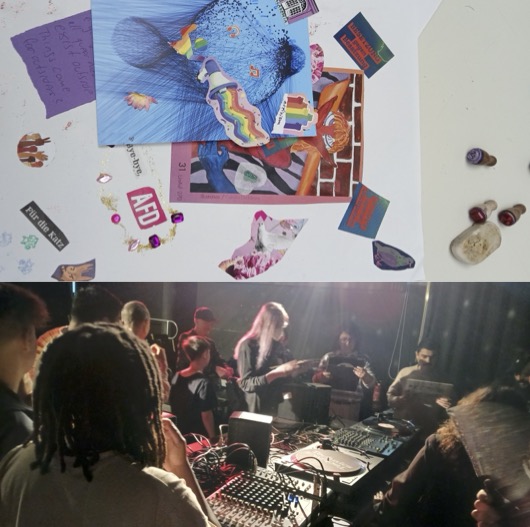
Daniele Shlomit Sofer
What does it mean to survive, to resist, to care and connect through music, sound, and queer practice and how can scholarly work engage with this? These questions formed the heart of the inaugural Summer School of the LGBTQ+ Music Study Group, held at Humboldt University, Berlin, Germany from July 22–25, 2025.
Nearly sixty scholars, artists, and activists—many of whom were all or several of these things at the same time—gathered under the theme "Queer Survival, Organizing, and Worldmaking“ to exchange ideas, share practices, and build community. Organized by Stefanie Alisch, Jules de Bouverie, Luis Manuel Garcia-Mispireta, Thomas R. Hilder, Daniele Shlomit Sofer, Shirley Wick, and Ilgaz Yalçınoğlu, the Summer School offered lectures and panels, as well as embodied workshops, sonic explorations, and collective experiences in worldmaking. The event encouraged mutual learning between participants—who hailed from over twenty countries—by centering diasporic, Indigenous, and postcolonial perspectives, and reflecting on white norms of knowledge production. Many participants expressed that the event provided a much-needed space for queer dialogue, creativity, and critique, and they hope it will become a recurring forum.
The Summer School’s program reflected its commitment to blending scholarly discussion with creative practices. Each day, workshops and talks invited participants to engage beyond traditional academic formats. Omar Kasmani led a writing workshop titled Writing, Feeling, Worlding, encouraging participants to explore stories as vessels or places of refuge, writing in scenes that defy a coherent story, but which “invite queer forms of gathering” (Kasmani 2021, 166). Equally engaging was the roundtable Gender and Queer Studies in Germany Today with Elahe Haschemi Yekani, R. Aslı Koruyucu, and Patrick Wielowiejski, moderated by Shanti Suki Osman, which mapped the current institutional and political landscapes and highlighted the challenges and opportunities for queer people in the academy.
Sound, as a medium of resistance, featured prominently: in the listening session Meshwar Mixtapes, Deema Amr, also known as DJ DumTak, took listeners on a sonic meshwar (Arabic for “journey”) through Palestinian memory. In their DJ talk, Sound System Epistemologies in Practice, GIN reflected on their musical journey and political practice within sound system culture, while Aporia Barrage introduced participants to the intricacies and pleasures of working with vinyl in a hands-on DJ workshop. Isabel Bredenbröker and Adam Pultz Melbye guided a sound walk through Berlin, inviting participants to experience the city at a slower pace by focusing on what and who gets to be heard.
Additional highlights included a zine workshop and a guided tour of the archive of Schwules Museum, underlining the importance of archives for queer survival, as well as a Rage Session, hosted by Holden Madagame, which offered a space for the embodied expression of anger and grief.
Beyond invited talks, the Summer School created space for participants to present their own work in themed sessions such as “Sonic Activism”, “Politics of the Dancefloor”, “Bodies in Motion and Space”, and “Queering Central and Eastern Europe”. Many scholars presented their ethnographic fieldwork, which repeatedly documented queer lives as an act of resistance in the face of oppressive regimes as well as the diverse and creative ways found to express themselves artistically, provide communal care and engage in political and educational work, detailing projects from Latin America to Eastern Europe, Western and Southeast Asia. The research presented also spanned media analysis, archival work, artistic research, historical and sociological approaches. The need to organize outside of (academic) institutions was discussed for safety reasons such as Gender Studies reading groups meeting at local cafés after being banned from Iranian universities, as well as to resist white hegemonic structures, where the reproduction of hierarchies and the silencing of marginalized groups impedes collaborative work.
Participants highlighted how irony and playfulness—e.g., the queering of heteronormative musical genres and codes—can dissolve norms and build heterotopic or utopian worlds in nightlife, on stage, and in online spaces. From preserving silenced narratives through oral histories to resisting erasure through auto-archiving, history and memory work played a vital role in this conversation. This was made explicit by one participant whose project transformed into archival work after the venues under study shut down. Layers of queer belonging and loneliness, the pressure of disclosure and the need for escapism were addressed as dimensions between survival and worldbuilding. Several participants advocated for ballroom and drag culture as significant forms of worldmaking, where growth and recognition of ballroom artists emerge through competition and queer kinship.
The Summer School was as much about discussing findings as it was about raising and refining questions. Research ethics and methodology were recurring topics: how can reciprocity and care guide scholarly work? What role can researchers play in sustaining communities, thus contributing rather than extracting through their work? What form of writing might convey the density and ambiguity of our observations?
The LGBTQ+ Music Study Group has been organizing symposia, disseminating via a blog and a podcast, and forging a strong international community of LGBTQ+ scholars over the last nine years. Attempting a new format that could nurture new forms of creativity, sharing, and community, the inaugural Summer School was made possible through the collaboration of several institutions. Hosted by Humboldt University’s Department of Musicology and Media Studies, the event was supported financially by the Alexander von Humboldt Foundation, the Emmy Noether research group “Sound System Epistemologies: Knowledge Engendered Through Practice” funded by the Deutsche Forschungsgemeinschaft, as well as the Popular Music Studies chair at the Humboldt University. Other key figures offered generous support to the event, including members of the Center for Transdisciplinary Gender Studies at the Humboldt University. The organizing committee worked to create a program that not only showcased diverse scholarly and artistic practices but also fostered an atmosphere of care, collaboration, and community. For many, the Summer School offered more than an opportunity for academic exchange, it also served as a reminder of the importance of queer gathering to imagine and enact alternative futures.
Kasmani, Omar: Thin, Cruisy, Queer: Writing Through Affect, in: Tauber, Elisabeth; Zinn, Dorothy L. (eds.): Gender and Genre in Ethnographic Writing, Cham: Palgrave Macmillan 2021, pp. 163–188.
Prepared October 1, 2025 by Shirley Wick
What does it mean to survive, to resist, to care and connect through music, sound, and queer practice and how can scholarly work engage with this? These questions formed the heart of the inaugural Summer School of the LGBTQ+ Music Study Group, held at Humboldt University, Berlin, Germany from July 22–25, 2025.
Nearly sixty scholars, artists, and activists—many of whom were all or several of these things at the same time—gathered under the theme "Queer Survival, Organizing, and Worldmaking“ to exchange ideas, share practices, and build community. Organized by Stefanie Alisch, Jules de Bouverie, Luis Manuel Garcia-Mispireta, Thomas R. Hilder, Daniele Shlomit Sofer, Shirley Wick, and Ilgaz Yalçınoğlu, the Summer School offered lectures and panels, as well as embodied workshops, sonic explorations, and collective experiences in worldmaking. The event encouraged mutual learning between participants—who hailed from over twenty countries—by centering diasporic, Indigenous, and postcolonial perspectives, and reflecting on white norms of knowledge production. Many participants expressed that the event provided a much-needed space for queer dialogue, creativity, and critique, and they hope it will become a recurring forum.
The Summer School’s program reflected its commitment to blending scholarly discussion with creative practices. Each day, workshops and talks invited participants to engage beyond traditional academic formats. Omar Kasmani led a writing workshop titled Writing, Feeling, Worlding, encouraging participants to explore stories as vessels or places of refuge, writing in scenes that defy a coherent story, but which “invite queer forms of gathering” (Kasmani 2021, 166). Equally engaging was the roundtable Gender and Queer Studies in Germany Today with Elahe Haschemi Yekani, R. Aslı Koruyucu, and Patrick Wielowiejski, moderated by Shanti Suki Osman, which mapped the current institutional and political landscapes and highlighted the challenges and opportunities for queer people in the academy.
Sound, as a medium of resistance, featured prominently: in the listening session Meshwar Mixtapes, Deema Amr, also known as DJ DumTak, took listeners on a sonic meshwar (Arabic for “journey”) through Palestinian memory. In their DJ talk, Sound System Epistemologies in Practice, GIN reflected on their musical journey and political practice within sound system culture, while Aporia Barrage introduced participants to the intricacies and pleasures of working with vinyl in a hands-on DJ workshop. Isabel Bredenbröker and Adam Pultz Melbye guided a sound walk through Berlin, inviting participants to experience the city at a slower pace by focusing on what and who gets to be heard.
Additional highlights included a zine workshop and a guided tour of the archive of Schwules Museum, underlining the importance of archives for queer survival, as well as a Rage Session, hosted by Holden Madagame, which offered a space for the embodied expression of anger and grief.
Beyond invited talks, the Summer School created space for participants to present their own work in themed sessions such as “Sonic Activism”, “Politics of the Dancefloor”, “Bodies in Motion and Space”, and “Queering Central and Eastern Europe”. Many scholars presented their ethnographic fieldwork, which repeatedly documented queer lives as an act of resistance in the face of oppressive regimes as well as the diverse and creative ways found to express themselves artistically, provide communal care and engage in political and educational work, detailing projects from Latin America to Eastern Europe, Western and Southeast Asia. The research presented also spanned media analysis, archival work, artistic research, historical and sociological approaches. The need to organize outside of (academic) institutions was discussed for safety reasons such as Gender Studies reading groups meeting at local cafés after being banned from Iranian universities, as well as to resist white hegemonic structures, where the reproduction of hierarchies and the silencing of marginalized groups impedes collaborative work.
Participants highlighted how irony and playfulness—e.g., the queering of heteronormative musical genres and codes—can dissolve norms and build heterotopic or utopian worlds in nightlife, on stage, and in online spaces. From preserving silenced narratives through oral histories to resisting erasure through auto-archiving, history and memory work played a vital role in this conversation. This was made explicit by one participant whose project transformed into archival work after the venues under study shut down. Layers of queer belonging and loneliness, the pressure of disclosure and the need for escapism were addressed as dimensions between survival and worldbuilding. Several participants advocated for ballroom and drag culture as significant forms of worldmaking, where growth and recognition of ballroom artists emerge through competition and queer kinship.
The Summer School was as much about discussing findings as it was about raising and refining questions. Research ethics and methodology were recurring topics: how can reciprocity and care guide scholarly work? What role can researchers play in sustaining communities, thus contributing rather than extracting through their work? What form of writing might convey the density and ambiguity of our observations?
The LGBTQ+ Music Study Group has been organizing symposia, disseminating via a blog and a podcast, and forging a strong international community of LGBTQ+ scholars over the last nine years. Attempting a new format that could nurture new forms of creativity, sharing, and community, the inaugural Summer School was made possible through the collaboration of several institutions. Hosted by Humboldt University’s Department of Musicology and Media Studies, the event was supported financially by the Alexander von Humboldt Foundation, the Emmy Noether research group “Sound System Epistemologies: Knowledge Engendered Through Practice” funded by the Deutsche Forschungsgemeinschaft, as well as the Popular Music Studies chair at the Humboldt University. Other key figures offered generous support to the event, including members of the Center for Transdisciplinary Gender Studies at the Humboldt University. The organizing committee worked to create a program that not only showcased diverse scholarly and artistic practices but also fostered an atmosphere of care, collaboration, and community. For many, the Summer School offered more than an opportunity for academic exchange, it also served as a reminder of the importance of queer gathering to imagine and enact alternative futures.
Kasmani, Omar: Thin, Cruisy, Queer: Writing Through Affect, in: Tauber, Elisabeth; Zinn, Dorothy L. (eds.): Gender and Genre in Ethnographic Writing, Cham: Palgrave Macmillan 2021, pp. 163–188.
Prepared October 1, 2025 by Shirley Wick
Brandon Scribner
The Music Theory Society at Florida State University successfully conducted its forty-second Music Theory Forum on March 1, 2025! Many thanks to Professor Vivian Luong (University of Oklahoma) for wrapping up the conference with her excellent keynote addresses entitled “The Stories We Tell.” Further thanks to the officers for the 2024–25 academic year who helped to make this conference possible: President Hayden Harper, Vice-President Gillian Radcliffe, Treasurer Jasmine Becerra, and Secretary Zachary Simonds, as well as to our forum co-chairs Cameron Gwynn and Brittney Pflanz. Our officers for the upcoming 2025–26 academic year are: Albert Wheeler, president; Gillian Radcliffe, vice president; Cameron Gwynn, treasurer; Brittney Pflanz, secretary; and Luis Matos-Tovar and Brandon Scribner, Forum co-chairs.
The forty-third annual Music Theory Forum will be held in person from Friday, March 6 through Saturday, March 7, 2026 at Florida State University. This year our conference will feature two keynote speakers: Yayoi Uno Everett (Hunter College and the Graduate Center, CUNY) and Jane Piper Clendinning (in honor of her final year of teaching at FSU and many years of service to FSU-MTS). General information about our MTS Forum can be found on our website. Additional questions about MTS Forum should be directed to the Forum co-chairs, Luis Matos-Tovar and Brandon Scribner (fsumts.forum@gmail.com).
The Music Theory Society at Florida State University successfully conducted its forty-second Music Theory Forum on March 1, 2025! Many thanks to Professor Vivian Luong (University of Oklahoma) for wrapping up the conference with her excellent keynote addresses entitled “The Stories We Tell.” Further thanks to the officers for the 2024–25 academic year who helped to make this conference possible: President Hayden Harper, Vice-President Gillian Radcliffe, Treasurer Jasmine Becerra, and Secretary Zachary Simonds, as well as to our forum co-chairs Cameron Gwynn and Brittney Pflanz. Our officers for the upcoming 2025–26 academic year are: Albert Wheeler, president; Gillian Radcliffe, vice president; Cameron Gwynn, treasurer; Brittney Pflanz, secretary; and Luis Matos-Tovar and Brandon Scribner, Forum co-chairs.
The forty-third annual Music Theory Forum will be held in person from Friday, March 6 through Saturday, March 7, 2026 at Florida State University. This year our conference will feature two keynote speakers: Yayoi Uno Everett (Hunter College and the Graduate Center, CUNY) and Jane Piper Clendinning (in honor of her final year of teaching at FSU and many years of service to FSU-MTS). General information about our MTS Forum can be found on our website. Additional questions about MTS Forum should be directed to the Forum co-chairs, Luis Matos-Tovar and Brandon Scribner (fsumts.forum@gmail.com).
Philip Ewell
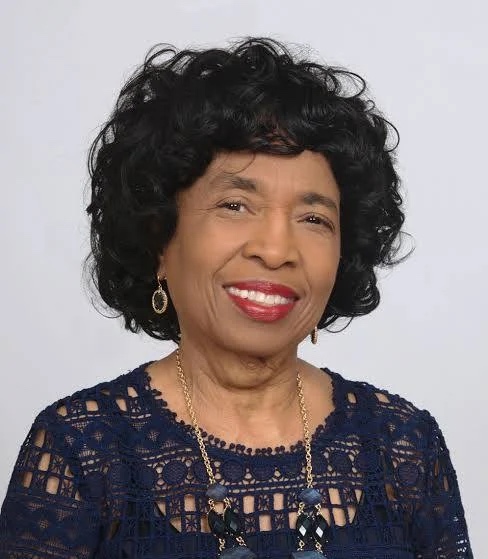
Jewel Thompson, who passed away on June 27, 2025, at the age of 89, was the first African American woman to receive the Ph.D. in music theory, from the Eastman School of Music, in 1982. Her dissertation, “Samuel Coleridge-Taylor: The Development of His Compositional Style,” represented another milestone, as likely the first such dissertation dedicated entirely to an African diasporic composer, the Brit Coleridge-Taylor.
Jewel Thompson received a Bachelor of Science degree at the historically black Virginia State University in 1956 and was at the Eastman School of Music for her Master of Arts degree in the late 1950s, after which she taught at Virginia State University, West Virginia State College, and West Virginia Institute of Technology in the 1960s and early 1970s. She began teaching at Hunter College as an adjunct assistant professor in 1972, and she became an assistant professor in 1985 and a full professor in 1997. Remarkably, Thompson taught at Hunter College’s music department for over 50 years, and she was always known as a dedicated and passionate teacher and a warm and insightful colleague. On a personal note, as a fellow black music theorist, Thompson helped me enormously, and I will be forever grateful for her friendship and mentorship, especially early in my career at Hunter College.
I had the good fortune to interview Thompson in June 2024 for an upcoming publication in a music journal. She spoke of her beginnings as a church pianist in Virginia, and her long tenure as church organist and choirmaster at Abyssinian Baptist Church in Harlem. She spoke excitedly about her studies at Virginia State University with Undine Smith Moore, one of the most significant composers and music theorists of the twentieth century. And she raved about the year abroad in England and France that she spent with her husband, Leon Everette Thompson, who was a conductor and director of music at Abyssinian and who tragically died early of a heart attack, at the age of 55, in 1983.
As I ended the interview, I asked what advice Thompson might have for future generations of black music academics, and she emphasized that, above all else, you should follow your passion and never give up. And though there will be hardships in your journeys, she said, the passion for your art will always shine through. Thompson’s passion for music and music theory was clearly evident to all who knew her. She is dearly missed—rest in peace Jewel.
Jewel Thompson, who passed away on June 27, 2025, at the age of 89, was the first African American woman to receive the Ph.D. in music theory, from the Eastman School of Music, in 1982. Her dissertation, “Samuel Coleridge-Taylor: The Development of His Compositional Style,” represented another milestone, as likely the first such dissertation dedicated entirely to an African diasporic composer, the Brit Coleridge-Taylor.
Jewel Thompson received a Bachelor of Science degree at the historically black Virginia State University in 1956 and was at the Eastman School of Music for her Master of Arts degree in the late 1950s, after which she taught at Virginia State University, West Virginia State College, and West Virginia Institute of Technology in the 1960s and early 1970s. She began teaching at Hunter College as an adjunct assistant professor in 1972, and she became an assistant professor in 1985 and a full professor in 1997. Remarkably, Thompson taught at Hunter College’s music department for over 50 years, and she was always known as a dedicated and passionate teacher and a warm and insightful colleague. On a personal note, as a fellow black music theorist, Thompson helped me enormously, and I will be forever grateful for her friendship and mentorship, especially early in my career at Hunter College.
I had the good fortune to interview Thompson in June 2024 for an upcoming publication in a music journal. She spoke of her beginnings as a church pianist in Virginia, and her long tenure as church organist and choirmaster at Abyssinian Baptist Church in Harlem. She spoke excitedly about her studies at Virginia State University with Undine Smith Moore, one of the most significant composers and music theorists of the twentieth century. And she raved about the year abroad in England and France that she spent with her husband, Leon Everette Thompson, who was a conductor and director of music at Abyssinian and who tragically died early of a heart attack, at the age of 55, in 1983.
As I ended the interview, I asked what advice Thompson might have for future generations of black music academics, and she emphasized that, above all else, you should follow your passion and never give up. And though there will be hardships in your journeys, she said, the passion for your art will always shine through. Thompson’s passion for music and music theory was clearly evident to all who knew her. She is dearly missed—rest in peace Jewel.
Philip Ewell
We're pleased to announce the launch of Black Music, in Theory, an online open-access peer-reviewed journal of University of Michigan journals. We are excited to bring you this new publication venue focusing on Black and African American music. We encourage all interested parties to submit work to our journal, and we hope you enjoy the inaugural issue. Welcome to Black Music, in Theory!
We're pleased to announce the launch of Black Music, in Theory, an online open-access peer-reviewed journal of University of Michigan journals. We are excited to bring you this new publication venue focusing on Black and African American music. We encourage all interested parties to submit work to our journal, and we hope you enjoy the inaugural issue. Welcome to Black Music, in Theory!
The Society for Music Theory publishes its Newsletter in February and August, with deadlines for submission December 1 and June 1, respectively.
It is customary for all SMT officers, committee chairs, and Interest Group chairs to submit a report for each issue of the Newsletter. The Society also welcomes news from affiliate and related organizations as well as items of interest to its members.
Please complete the Newsletter submission form to share your announcements in the next issue of the Newsletter. If you include hyperlinks, please test their accuracy before submission. If a photograph or graphic image would enhance your article, please obtain and provide any necessary copyright permission or attribution and contact the editor prior to submitting it. Inclusion of any article is subject to the approval of the Executive Board.
Alex Martin, editor, SMT Newsletter
Paul Miller, associate editor, SMT Newsletter